Ecuador Coffee Sourcing Calendar
Quick Summary: Specialty coffee sourcing calendar for Ecuador (Loja): harvest cycles, dry mill queues, air freight from UIO/GYE, ocean transit times, and reserve windows.
Sourcing specialty green coffee from Ecuador requires an understanding of both agricultural cycles and international export mechanics. Unlike larger origins with year-round availability, Ecuador’s premium micro-lots, particularly high-altitude Typica Mejorado, Sidra, and Gesha, are highly seasonal.
This guide outlines the complete sourcing timeline for Ecuadorian green coffee, covering crop calendars, dry milling bottlenecks, export document processing, and shipping windows to help B2B buyers plan their purchasing pipelines.
1. The Sourcing and Harvest Calendar
Specialty Arabica in Ecuador is harvested once a year. While minor picking occurs in northern regions at different times, the primary specialty producing areas in the southern province of Loja follow a strict seasonal cycle dictated by altitude and weather patterns.
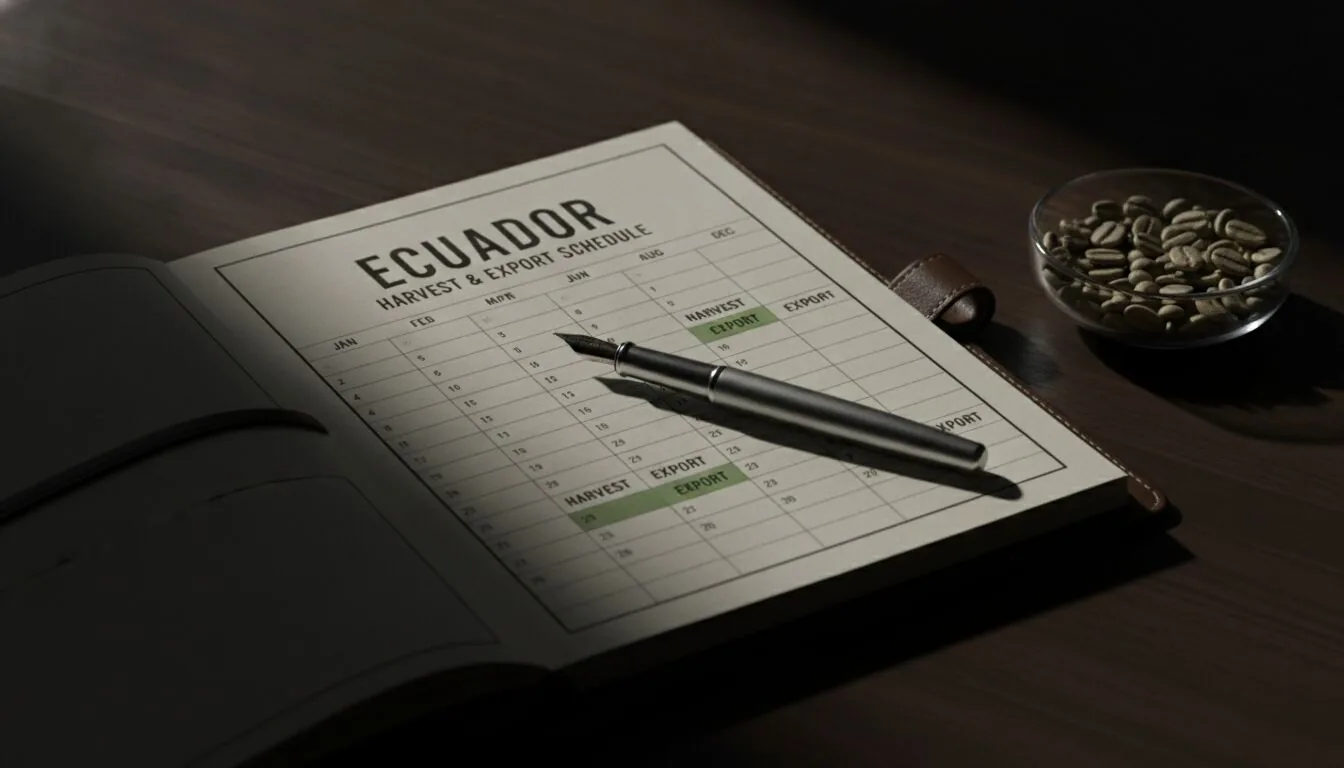
Ecuador Specialty Coffee Annual Sourcing Cycle (Loja):
- Crop Cycle: Harvest/Picking (Jun–Oct), Wet Mill/Drying (Jul–Nov)
- Quality Control: Cupping PSS (Aug–Oct), Contracting (Sep–Nov)
- Logistics: Dry Milling (Sep–Dec), Air Freight (Oct–Jan+), Ocean Freight (Nov–Jan+)
Phase A: Harvest & Picking (June – October)
-
Peak Window: July – September.
-
Terroir Factors: High-altitude farms (1,600 to 2,100+ masl) experience cooler nights, delaying cherry maturation. This slow maturation concentrates organic sugars, but pushes the harvest later in the year compared to lower-altitude origins.
-
Sourcing Action: Buyers should maintain contact with exporters during this phase to receive early reports on cherry quality, sugar content (Brix degrees), and volume projections.
Phase B: Wet Milling & Drying (June – November)
-
Process Duration: 15 to 25 days depending on the processing method (washed, honey, anaerobic, natural) and ambient humidity.
-
Quality Preservation: In Loja, drying is conducted on raised beds under parabolic shade structures. Slow, uniform drying is critical to protecting the cellular structure of the green seed, ensuring shelf-life stability during international transit.
-
Sourcing Action: Exporters cup early screen-dry batches to construct preliminary lot catalogs.
Phase C: Selection, Cupping & Reservation (August – November)
-
PSS Window: Pre-Shipment Samples (PSS) are prepared and shipped via DHL to buyers starting in late August.
-
Sourcing Action: Roasters and importers evaluate samples and lock in contracts. Because volumes of top-tier varieties like Sidra and Typica Mejorado are limited, the window to reserve select micro-lots is narrow.
2. Dry Milling & Export Preparation (September – December)
Once green coffee is dried and rested in parchment (a process called curing, which takes 30 to 45 days), it must undergo dry milling before export.
Dried Parchment Rested 30-45 Days → Dry Mill Hulling (Parchment Removal) → Density & Size Grading (Uniform Screens) → Optical & Manual Sorting (Defect Removal) → Packaging (GrainPro / Vacuum Bricks)
Dry milling in Loja is a seasonal bottleneck. Because the local infrastructure is built around small-holder producers, scheduling dry mill time requires close coordination:
-
Hulling & Grading: Removing the dry parchment and grading the green seeds by screen size (typically screen 15+ for specialty) and density.
-
Defect Sorting: Passing the coffee through density separators, optical color sorters, and manual sorting tables to meet SCA specialty grade requirements (zero primary defects, fewer than 5 secondary defects per 300g).
-
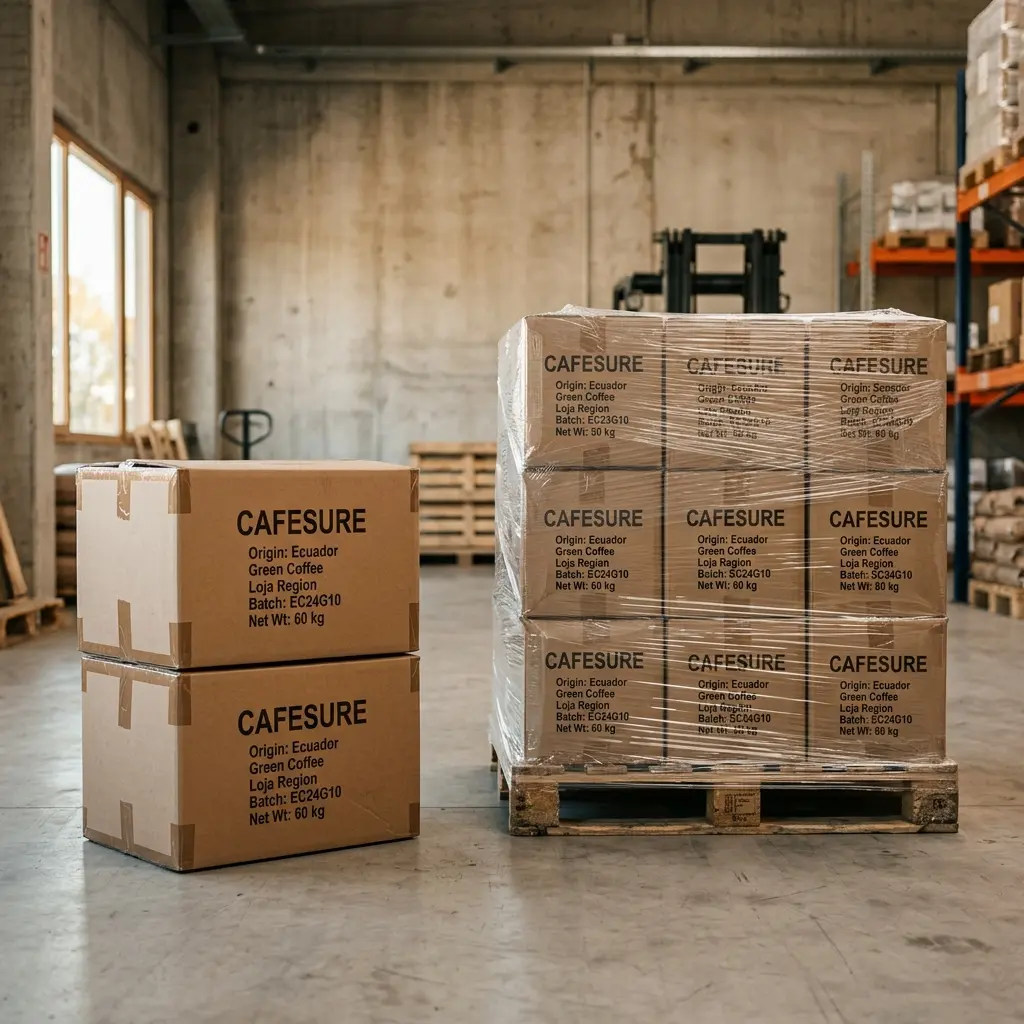
Packaging: Micro-lots are packaged in GrainPro liners or hermetically sealed vacuum bricks (15 kg or 24 kg) to prevent moisture reabsorption and maintain quality during transit.
3. Shipping Windows & Logistics Timelines
Cafesure operates primarily via air freight for quality preservation, utilizing ocean freight for volume orders. The timelines below define the export process from Loja to your warehouse.
Air Freight Timeline (3 to 5 Weeks Total)
-
FCA/CIP Terms: Primarily recommended for high-value lots to eliminate the risk of thermal degradation during ocean transit.
-
Transit Routes: Cargo is trucked from Loja to Quito (UIO) or Guayaquil (GYE) international airports, flying directly to major transit hubs (Miami, Houston, JFK, LAX, Frankfurt, Amsterdam).
| Sourcing Phase | Timeline | Operational Focus |
|---|---|---|
| Contracting & Deposit | Week 1 | Lock in lot numbers, sign Purchase Order, complete SWIFT transfer. |
| Milling & Packaging | Week 2 | Dry milling, sizing, density sorting, packaging in vacuum seal. |
| Export Clearance | Week 3 | Agrocalidad inspection, SAE export certification, delivery to airport. |
| Air Transit | 3–5 Days | Freight flight, arrival at destination hub. |
| Customs Brokerage | 3–5 Days | FDA Prior Notice filing, customs clearance, local courier dispatch. |
Ocean Freight Timeline (6 to 10 Weeks Total)
-
FOB/CIF Terms: Used for bulk consolidations (LCL) or full container loads (FCL).
-
Port of Departure: Port of Guayaquil (Puerto Marítimo de Guayaquil).
-
Transit Details: Port operations in Guayaquil add logistical steps. Containers crossing the equator are subject to high humidity and temperature swings; use of insulated container liners (thermal blankets) is highly recommended for LCL/FCL shipments.
4. B2B Sourcing Checklist for Buyers
To ensure a smooth importing experience, align your internal buying operations with the following dates:
-
May – June: Define your origin targets (e.g., target volume of Typica Mejorado, desired cup profile, budget).
-
July – August: Request early cupping data from Cafesure.
-
September: Receive Pre-Shipment Samples (PSS) via air courier.
-
October: Finalize purchase contracts, secure lot allocations, and file FDA Facility Registrations if importing directly.
-
November – December: Execute shipping instructions (FCA Quito/Guayaquil for air, FOB Guayaquil for ocean) to ensure arrival before holiday logistical delays.
For a detailed breakdown of the legal and regulatory steps required for customs clearance, see our Ecuador Coffee Import Guide.