Typica Mejorado from Ecuador: Profile & Price
Quick Summary: Typica Mejorado is Ecuador’s heirloom Arabica with jasmine, stone fruit, and syrupy sweetness. Sourced direct-trade from Loja at 1,600–2,100 masl. Request a sample.
Typica Mejorado is an heirloom Arabica variety from southern Ecuador. It is genetically close to Typica but cups very differently, floral, syrupy, and complex.
Key points:
-
Origin: Southern Ecuador, mostly Loja province (Cariamanga, Sozoranga, Quilanga)
-
Genetics: Close to Typica lineage, but cup-distinct
-
Altitude: 1,600–2,100 masl for best results
-
Cup profile: Jasmine, stone fruit (peach, apricot), syrupy body, long sweet finish
-
SCA score: 86–89 points for well-produced lots
-
Price position: Above standard washed Arabica, below Gesha, a versatile specialty offering
Cafesure is based in Loja, where Typica Mejorado was first identified. We source it directly from high-altitude producers across the cantons of Cariamanga, Sozoranga, and Quilanga. This guide is the exporter-side technical overview we wish more green buyers had before evaluating their first lot. For a broader comparison, see Typica Mejorado vs Sidra vs Gesha.
Origins and genetics: where Typica Mejorado comes from
Typica Mejorado is an Ecuadorian heirloom Arabica. It is genetically close to the Typica lineage but behaves differently in the cup and at the farm level.
The most common story, that it is a natural mutation of Typica identified in Loja province, matches what long-standing producers in the region describe. It also matches the genetic closeness to Typica reported by labs that have tested samples from southern Ecuador.
Three points worth clarifying for buyers
-
It is not a Bourbon selection, despite occasional confusion in importer catalogs.
-
It is not the same as Typica in the cup. Standard Typica is clean, mild, and sweet. Mejorado is markedly more aromatic, with floral and stone fruit notes that put it closer to Gesha or Sidra than to a classic Central American Typica.
-
The “Mejorado” (improved) name refers to the cup improvement buyers observe, not to a formal breeding program.
Why genetic research is still limited
Genetic work on Ecuadorian heirlooms is still limited compared to Ethiopian, Colombian, or Central American varieties. What is well established at the farm level:
-
Typica Mejorado trees are tall
-
They are low-yielding
-
They are late-ripening relative to Caturra or Bourbon lines grown in the same areas
All three factors directly influence the price. Read more about the Loja coffee region to understand why these heirloom varieties persist here.
Cupping profile: jasmine, stone fruit, and syrupy sweetness
The Typica Mejorado flavor profile is the main reason it has attracted a following among microroasters. When grown above 1,600 masl and carefully washed-processed, the variety shows a recognizable signature that holds up across harvests and producers.
Typical cupping descriptors, using the SCA cupping protocol:
| Attribute | Typical Profile | Intensity | Notes |
|---|---|---|---|
| Aroma | Jasmine, orange blossom, honey, brown sugar | High | Distinctive floral nose |
| Flavor | Stone fruit (peach, apricot), ripe plum, floral notes | High | Complex fruit-forward cup |
| Acidity | Bright, citric-to-malic, well integrated | Medium-High | Balanced sweetness |
| Body | Syrupy, rounded, heavier than typical washed Arabica | High | Smooth mouthfeel |
| Aftertaste | Long, floral, sweet, clean finish | High | Persistent finish |
| SCA Score | 86–89 points (well-produced lots) | Specialty grade range |
What makes the cup unusual
The combination of floral high notes with a heavy, syrupy body is rare. Most floral varieties (Gesha being the classic example) are delicate and thin in body. Typica Mejorado delivers aromatic complexity without sacrificing mouthfeel.
This is a key reason roasters find it versatile on both filter and espresso bar menus. For a detailed breakdown of the cost structure behind these premium varieties, see our article on the economics of Ecuadorian specialty coffee.
Growing conditions: altitude, terroir, and microclimate
Typica Mejorado reaches its characteristic profile only under specific conditions. The main variables, in order of impact on the cup:
-
Altitude. Producers plant it between 1,600 and 2,100 masl in Loja. Above 1,800 masl the density and aromatic complexity increase noticeably.
-
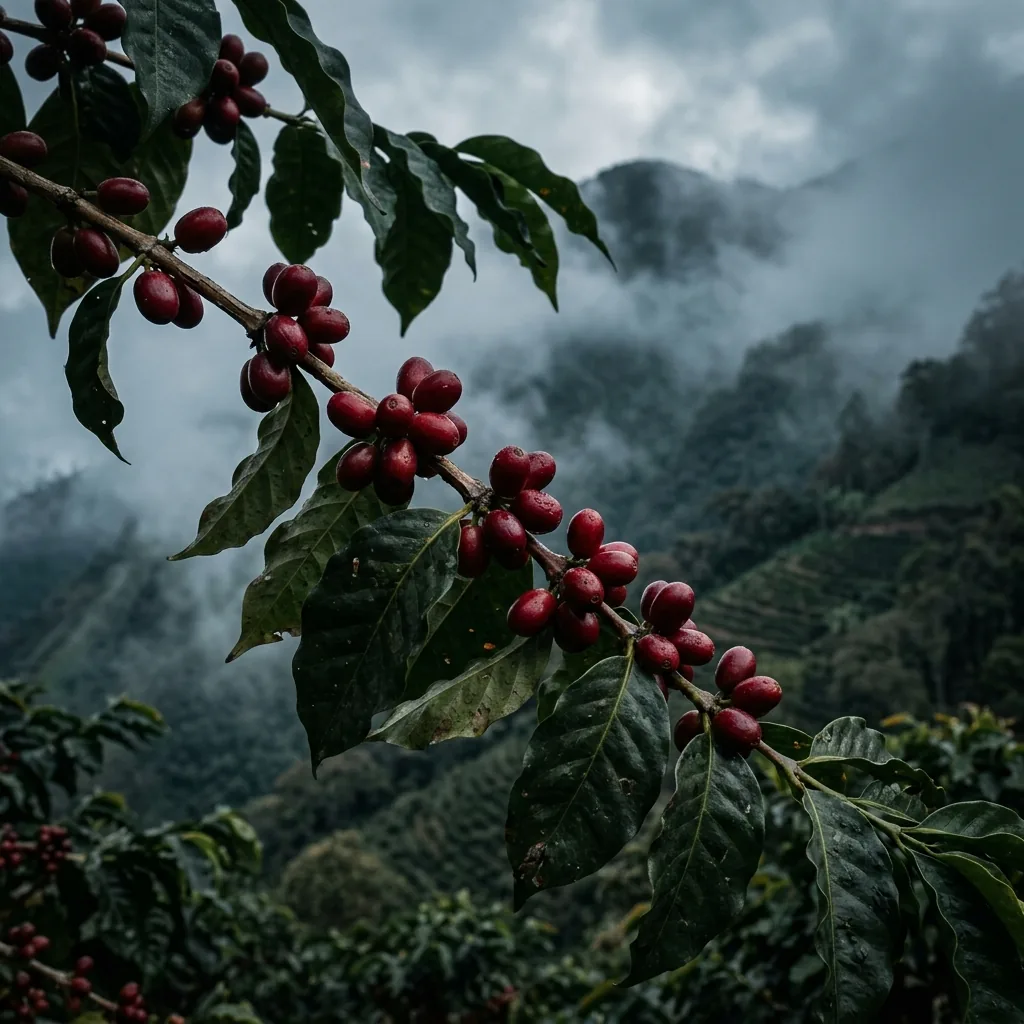
Temperature swings. Southern Ecuador’s Andean foothills see cool nights (10–14°C) and warm days (22–28°C) during maturation. This slows cherry development and concentrates sugars.
-
Soil. Volcanic-andic soils with good organic matter feed the potassium and magnesium uptake that drives fruit expression.
-
Shade. Most Typica Mejorado in Loja is grown under mixed shade (inga, guabo, native forest). Shade extends ripening and protects floral aromatics from sun-scald.
-
Harvest timing. Selective, multi-pass picking is essential. The variety’s late ripening means it is often harvested after Caturra and Bourbon lots on the same farm.
A signal to watch for
Producers who manage these variables consistently produce lots that cup above 87 SCA. Producers who push yields with full-sun cultivation or single-pass strip picking tend to lose the floral top notes, a useful warning sign when evaluating offers.
Why Typica Mejorado commands a premium
Typica Mejorado coffee from Ecuador is priced well above standard washed Arabica, and it pays to understand why before budgeting a lot. Three structural factors explain it:
Typica Mejorado price: why it costs what it costs
-
Yield. Trees produce significantly less cherry than Caturra or Catimor lines on the same land.
-
Planted area. Almost the entire global supply is grown in southern Ecuador, mostly Loja and parts of Zamora-Chinchipe. There is no large commercial planting elsewhere.
-
Cup quality. When well produced, the variety competes sensorially with Gesha and Sidra. Both trade at far higher numbers.
Demand is growing faster than supply
Demand has grown faster than supply over the last several harvests. The main drivers:
-
Nordic roasters seeking alternatives to Gesha at more sustainable pricing
-
Latin American and Asian roasters looking for story-driven, scarce varieties
Well-processed Typica Mejorado lots routinely clear FOB pricing levels associated with recognized denomination varieties.
How Cafesure sources Typica Mejorado
Our sourcing model is built on direct, multi-year producer relationships, not spot purchases. As an exporter physically located in Loja, we work with a defined group of producer partners across the high-altitude cantons of the province.
Features that matter to green buyers:
-
Pre-harvest planning. We agree on volume and quality targets before flowering. This lets producers invest in selective picking and fermentation without commercial risk.
-
Lot separation. Each producer’s lot is kept separate through cherry reception, fermentation, drying, milling, and bagging. No blending across farms.
-
Cupping at origin. Every lot is cupped by our QC team in Loja before it enters our export inventory, using SCA protocol.
-
Transparent pricing. Farmgate, milling, and FOB components are documented per lot. This is part of our broader commitment to coffee traceability from origin.
-
B.I.C. structure. As a Benefit and Collective Interest company, our purchasing agreements include producer-economic provisions. More on this in our sustainable coffee sourcing overview.
Roast recommendations for Typica Mejorado
Typica Mejorado is forgiving on the roaster compared to Gesha, but it rewards careful development. Our recommendations, validated across multiple lots:
-
Filter roasts. Aim for a moderate first-crack finish with end-drops between 198 and 206°C. Underdevelopment mutes the stone fruit; over-development bakes out the jasmine.
-
Espresso roasts. Extend development 30–45 seconds past first crack. The syrupy body makes it a strong single-origin espresso, especially in milk drinks where the stone fruit carries through.
-
Rest. The cup improves markedly after 5–7 days of post-roast degassing, particularly for the floral aromatics.
Comparing to other aromatic varieties
For buyers comparing Typica Mejorado to other aromatic varieties, the Sidra coffee profile is the closest in terms of aromatic intensity. The main difference: Sidra tends toward brighter citrus, while Typica Mejorado leans stone fruit.
How to evaluate a Typica Mejorado lot
If you are buying Typica Mejorado for the first time, standard specialty green evaluation guidelines apply, with a few variety-specific notes:
-
Cup against a reference. Use a Gesha or high-end Sidra to calibrate your palate to the floral-stone-fruit signature.
-
Inspect the green coffee. Look for the variety’s characteristic elongated bean and tight central cut.
-
Ask for farm-level traceability. Genuine Typica Mejorado lots should trace to a named farm or producer group, not a regional aggregator.
-
Verify altitude. Lots sourced below 1,600 masl rarely show the full aromatic expression.
Typica Mejorado FAQ
What is Typica Mejorado coffee?
Typica Mejorado is an heirloom Arabica variety from southern Ecuador, genetically close to Typica but markedly different in the cup. It delivers jasmine and stone-fruit aromatics with a heavy, syrupy body, positioning it between Gesha and Sidra for aromatic complexity at a more accessible price.
Where is Typica Mejorado grown?
Almost the entire global supply comes from southern Ecuador, concentrated in the Loja province cantons of Cariamanga, Sozoranga, and Quilanga, at 1,600 to 2,100 masl. There is no significant commercial planting outside this region.
What does Typica Mejorado taste like?
A well-produced washed lot shows jasmine, orange blossom, peach, and apricot, with bright citric-to-malic acidity, a syrupy body, and a long sweet finish. It cups 86 to 89 SCA points on well-managed lots.
Why is Typica Mejorado more expensive than standard Arabica?
Three structural factors: the trees are tall and low-yielding, the entire supply is confined to southern Ecuador, and the cup competes with far pricier varieties like Gesha and Sidra. Demand has also grown faster than supply across recent harvests.
Where to buy Typica Mejorado
Cafesure exports Typica Mejorado microlots direct from Loja to qualified buyers in the United States, Canada, the Middle East, and Asia. Available volumes rotate by harvest, and the best lots tend to go to existing customer relationships before they reach the open market.
How to request a sample
The fastest path is to reach our QC team via our contact form with:
-
Your target volume
-
Destination country
-
Process preference (washed, honey, or natural)
We ship 350 g green samples internationally with full traceability documentation, SCA cupping score, and producer information. For first-time importers, our guide to importing coffee from Ecuador walks through the logistics and documentation involved.
Why we do not list specific lots or prices
Harvest-cycle availability and lot-level scoring mean an up-to-date offer sheet is always more accurate than a static catalog. Message us for the current Typica Mejorado inventory.