Typica Mejorado vs Sidra vs Gesha
Quick Summary: Typica Mejorado vs Sidra vs Gesha compared: genetics, altitude, flavor, and availability for specialty green coffee buyers. Direct trade micro-lots from Ecuador.
When international buyers ask us which Ecuadorian variety to commit shelf space to, the question almost always narrows to three names: Typica Mejorado, Sidra, and Gesha. A clear comparison of the three is not a marketing exercise, it is a sourcing decision that shapes roast curves, retail pricing, and how a roaster positions an Ecuadorian offering to their customers. In this guide we compare the three side by side so specialty buyers can choose with confidence. For individual deep dives, see our pages on Typica Mejorado, Sidra, and Gesha from Ecuador.
Quick Comparison Table
The table below summarizes the three Ecuadorian flagship varieties across the variables that matter most to a green buyer. Numbers represent typical ranges we see at origin, not absolute limits.
| Attribute | Typica Mejorado | Sidra | Gesha | Best For |
|---|---|---|---|---|
| Genetic Origin | Typica heirloom (Loja, Ecuador) | Bourbon × Typica (Ecuador) | Ethiopian landrace | |
| Altitude Range | 1,600–2,100 masl | 1,600–2,000 masl | 1,800–2,100 masl | |
| Bean Shape | Elongated, narrow | Rounded, dense | Very elongated, light | |
| Flavor Profile | Jasmine, stone fruit, syrupy body | Stone fruit, brown sugar, soft florals | Jasmine, bergamot, tea-like | |
| Aromatic Intensity | High | Medium-High | Very High | ✅ Gesha (premium) |
| Cup Body | Syrupy, rounded | Creamy, substantial | Delicate, tea-like | |
| Yield | Low–Moderate | Moderate | Low | ✅ Sidra (production) |
| Availability | Limited (micro-lots) | Moderate (micro-lots) | Scarce (small micro-lots) | ✅ Sidra (access) |
| Buyer Profile | Floral-driven SO | Balanced everyday specialty | Competition/retail |
Use this table as a starting point. The detail in each variety deep dive below explains why these differences exist and how they translate to the roastery.
Typica Mejorado: The Ecuadorian Heirloom
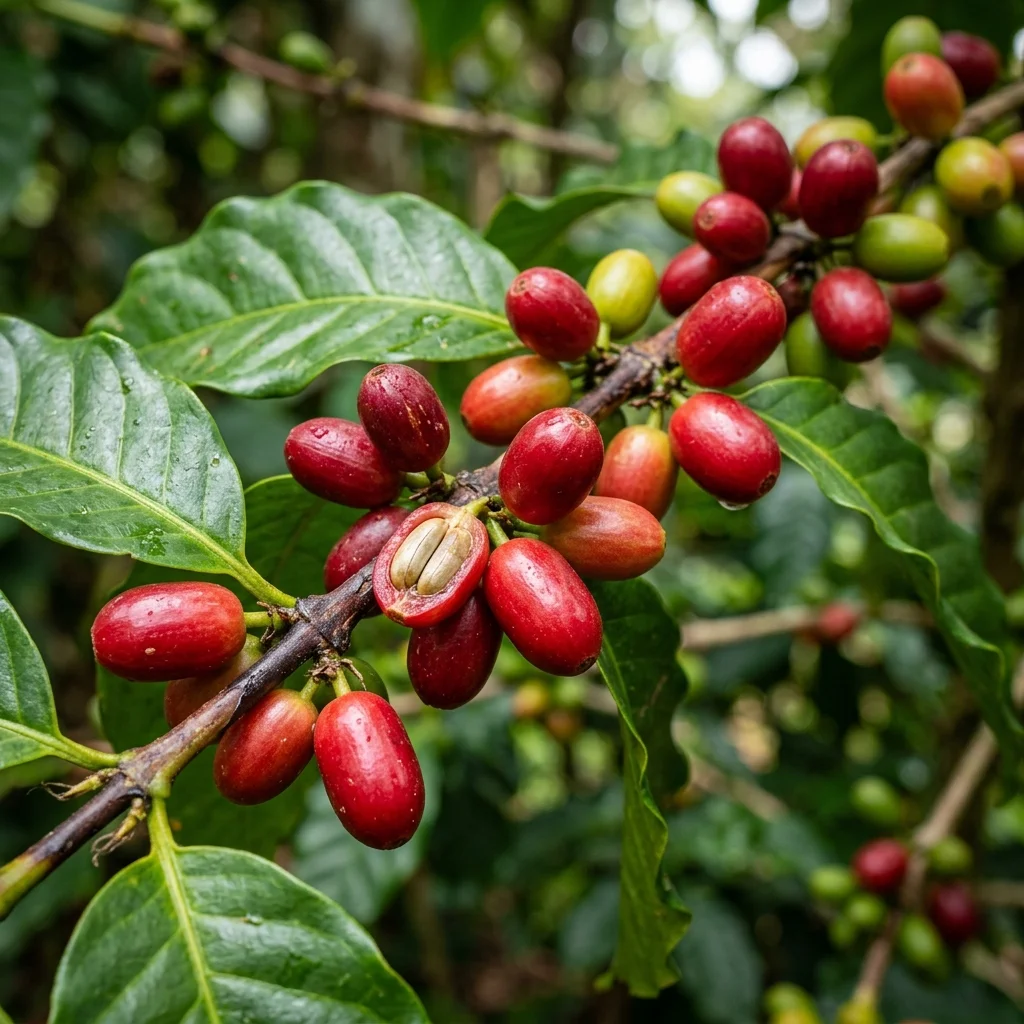
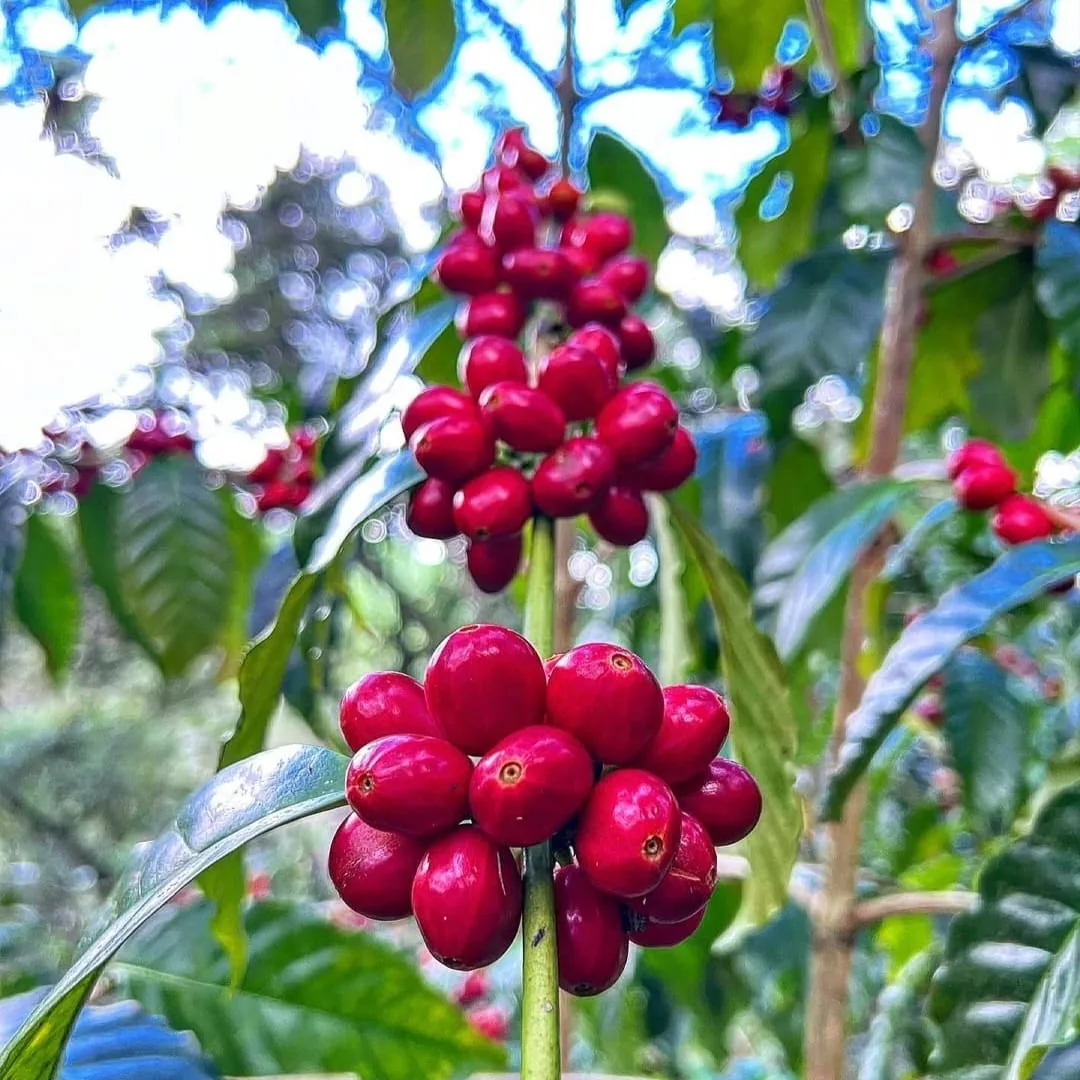
Typica Mejorado is the variety most closely associated with modern Ecuadorian specialty coffee. It is a selection of Typica, the heirloom Arabica that traveled from Ethiopia to Yemen to the Americas, refined over generations in the highlands of Loja. The plants grow tall, with elongated cherries and a distinct bronze tip on new leaves, the classic Typica marker.
What sets Typica Mejorado apart agronomically is its adaptation to high-altitude Andean microclimates. Between 1,600 and 2,100 meters above sea level, the cool nights and strong sun exposure slow cherry maturation, concentrating sugars and organic acids in the bean. That slow maturation is the foundation of the variety’s cup character. You can read our full varietal breakdown at Typica Mejorado from Ecuador.
Typica Mejorado Flavor Profile
On the cupping table, Typica Mejorado is recognizable by its floral top notes, most often jasmine, layered over stone fruit such as peach or apricot, supported by a syrupy, almost honeyed body. Acidity is typically citric and bright but well integrated. The aftertaste is prolonged and sweet. Compared with a standard Typica, Mejorado selections tend to show more aromatic complexity and a denser mouthfeel, which is why they command a premium among buyers looking for a distinctive single-origin offering. For roasters, the variety takes well to light and medium-light roasts that preserve its aromatics.
Sidra: The Balanced Ecuadorian Workhorse
Sidra occupies a different position in the cluster. Genetically, Sidra is widely accepted to be a cross between Bourbon and Typica, and it has become a flagship Ecuadorian variety in its own right, with documented plantings across several Andean growing regions. The plant is vigorous, with good disease resistance and a relatively generous yield for a specialty selection, which makes it a more accessible option for buyers who want an Ecuadorian micro-lot at scale.
Sidra Cupping Notes
In the cup, Sidra is less overtly floral than Typica Mejorado and more focused on ripe stone fruit, brown sugar, and a soft, creamy body. The acidity is rounded rather than piercing. This balance is exactly what makes Sidra valuable: it works as a standalone single origin but also blends gracefully into seasonal espresso blends where complexity without sharpness is the goal. Buyers comparing Sidra against Gesha often discover that Sidra delivers approachable complexity at a more sustainable price point for everyday service. See our dedicated Sidra Coffee page for sourcing details.
Gesha: The Delicate Benchmark
Gesha is the most famous of the three and the most demanding to grow. Originally an Ethiopian landrace, Gesha was selected in Central America in the mid-20th century and has since been planted across the specialty world. Ecuadorian Gesha, grown at 1,800–2,100 meters in the Andes, has earned a reputation for clarity and aromatic punch that rivals Panamanian lots at a fraction of the price.
The Gesha plant is low-yielding and agronomically finicky, which is why true Gesha micro-lots remain scarce and command premium pricing. Cupping notes are unmistakable: intense jasmine and bergamot on the aroma, a delicate, almost tea-like body, and a long, refined finish. Gesha is the variety buyers reach for when the goal is a competition-ready lot, a flagship retail offering, or a tasting-flight highlight. For an in-depth look at Ecuadorian Gesha terroir, see our Gesha from Ecuador page.
Flavor Profile Comparison: How the Three Stack Up
Putting the three side by side on a cupping table clarifies the choice in a way that no data sheet can. The comparison below reflects what we consistently observe across our export-grade lots; specific lots will always vary with processing and farm practices.
Aroma Intensity and Character
Gesha leads on aromatic intensity. Its bouquet is loud and unmistakable, floral, citrus-peel, sometimes tropical. Typica Mejorado follows closely, with jasmine as the dominant floral note and a stone-fruit undertone. Sidra is the most restrained on the nose, leaning toward brown sugar, ripe plum, and gentle floral hints rather than high-intensity aromatics.
Body and Mouthfeel
Sidra delivers the most substantial body of the three, creamy, rounded, and dessert-like. Typica Mejorado sits in the middle with a syrupy, coating texture. Gesha is the lightest, with a delicate, almost tea-like mouthfeel that some buyers describe as elegant rather than full.
Acidity Structure
All three present clean, refined acidity when grown at altitude. Typica Mejorado tends toward citric brightness. Sidra’s acidity is malic and rounded, which makes it approachable. Gesha’s acidity is often described as sparkling or jewel-like, intense but weightless, and is one of the variety’s signature traits.
Best Use Cases by Variety
-
Gesha: competition lots, single-origin pour-over programs, flagship retail bags, tasting flights.
-
Typica Mejorado: distinctive single origins, seasonal filter offerings, premium espresso blends that benefit from aromatic lift.
-
Sidra: everyday specialty single origins, balanced espresso blends, wholesale accounts that need consistency and approachability.
Price and Availability Considerations
Pricing and availability are where the comparison gets practical. Gesha is the most expensive of the three because of low yields and the small number of farms producing genuine export-grade Gesha. Typica Mejorado is a step below Gesha on price but still commands a meaningful premium over standard specialty Arabica due to limited plantings and strong buyer demand. Sidra is generally the most accessible of the three on both price and volume, which is why it appears more frequently in wholesale and private-label programs.
At Cafesure, all three varieties are sourced through direct-trade relationships with high-altitude producers in Loja and surrounding cantones. Lot sizes are small by design, single-variety, single-farm or single-cooperative micro-lots, fully traceable from harvest to export. This is also why we publish full coffee traceability data on every lot: when a variety is this scarce and this premium, buyers should be able to verify exactly what they are getting.
How to Choose the Right Variety for Your Program
The right choice depends on what your program needs. If you are building a tasting flight or a flagship retail offering that justifies a premium price point, Gesha is the answer. If you want a distinctive, aromatic single origin that still works at scale and at a defensible margin, Typica Mejorado is the strongest candidate. If you need an approachable, balanced lot that performs across brewing methods and customer preferences, Sidra is the workhorse.
A practical approach many of our buyers take is to evaluate all three side by side. We ship sample lots of each variety from current crop so roasters can cup them under identical conditions, compare against their own roast profiles, and make a sourcing decision based on actual flavor performance rather than a data sheet.
Request Samples and Compare Side by Side
The most reliable way to settle which variety fits your roastery is to cup the three together. We prepare sample lots from current harvest, each labeled by variety, farm, altitude, and process, with full traceability documentation. If you are evaluating an Ecuadorian single-origin program, request a sample set and we will ship a comparative set so your team can make an informed decision on the cupping table.