PYMES Coffee Sourcing: Flexible Volumes
Quick Summary: Specialty coffee suppliers for North American roasters who need volume flexibility. Source from 40 kg (2 boxes) to pallet lots with no industrial minimums.
Most specialty coffee exporters structure their business around container-load minimums: 17 to 19 metric tons per SKU, one variety, one contract. This model works for large importers and volume roasters, but it creates a structural gap for the thousands of craft roasters and brand owners who need specialty coffee suppliers in North America that can deliver at PYMES-friendly volumes.
Cafesure was built to fill that gap. Our origin structure, own farm, own export license, direct air-freight logistics, lets us work at volume tiers that industrial exporters cannot touch. This article explains how the flexibility works, the volume tiers we offer, and why small-order capability matters for the specialty coffee supply chain.
The Problem With Container-Load Minimums
The conventional export model assumes that coffee moves in full-container loads. A standard 20-foot shipping container holds roughly 275 bags of green coffee (at 69 kg per bag), about 19 metric tons. Most exporters set their minimum order at a half-container (roughly 9 to 10 metric tons) or a full container.
For a craft roaster buying 200 to 500 kg per quarter for a seasonal offering, a 10-ton minimum is not just impractical, it is financially impossible. The roaster would need to either:
-
Find warehousing for multi-ton inventory they cannot sell before the next harvest
-
Take on debt to finance a year’s supply of a single origin
-
Buy through an importer who breaks containers, adding a markup layer
This structural exclusion of small and medium buyers from direct-origin sourcing is not a feature of the market, it is a legacy of a supply chain built for commodity volume, not specialty differentiation.
According to the Specialty Coffee Association’s 2024 roaster survey, 63% of US roasters roast less than 50,000 lb (22,680 kg) annually. For those roasters, direct container buying is not a realistic option. Yet the same survey shows that origin-direct sourcing correlates with higher average pricing to producers. Small roasters are locked out of the model that pays producers best.
How Cafesure’s Structure Enables Volume Flexibility
Cafesure’s ability to offer flexible volumes is not a policy we can reverse next quarter, it is built into how the company operates at a structural level.
Own export license
Cafesure holds a direct export registration with SENAE (Ecuador’s customs authority) and an FDA Food Facility Registration. We do not consolidate through third-party exporters who impose minimums to cover their own overhead. Every shipment, from two boxes to a full pallet, files through our own DAE (Declaración Aduanera de Exportación).
Own processing plant at origin
Our dry mill at Hacienda La Florida in Malacatos, Loja, handles every lot individually. Industrial exporters run continuous-flow mills designed for truckloads of cherry. Our mill is configured for micro-lot separation: each variety, producer, and process run is hulled, graded, sorted, and bagged independently. Running a 40 kg lot through our mill costs the same per kg as running a 1,000 kg lot because the equipment and labor are sized for precision, not throughput.
Air freight as primary logistics
Because we ship primarily by air (from Quito UIO or Guayaquil GYE), the logistics chain does not require container consolidation. Air freight carriers charge by weight and volume, not by container slot. This removes the single biggest structural incentive for large minimums: the need to fill a shipping container. Our typical air freight orders range from 40 kg to 500 kg, with pallet consolidation up to 1,000 kg for regular clients. See our import guide for detailed lead times on air vs ocean freight.
Direct relationship with producers
Our sourcing team works directly with producers in Loja, Sozoranga, and Quilanga. We are not buying from a cooperative pool where minimum lots are measured in tons. Each producer’s parchment is tracked and processed separately. If a producer delivers 80 kg of exceptional Typica Mejorado parchment, that lot can be separated, cupped, and offered as a distinct micro-lot. There is no need to commingle it into a larger pool to meet a minimum contract size. For more on how we verify these relationships, see our direct trade explainer.
Volume Tiers and What Each Tier Gets You
Our volume structure is designed around the buying patterns of real craft roasters and brand owners. Here are the practical tiers:
Sample tier (300 to 350 g)
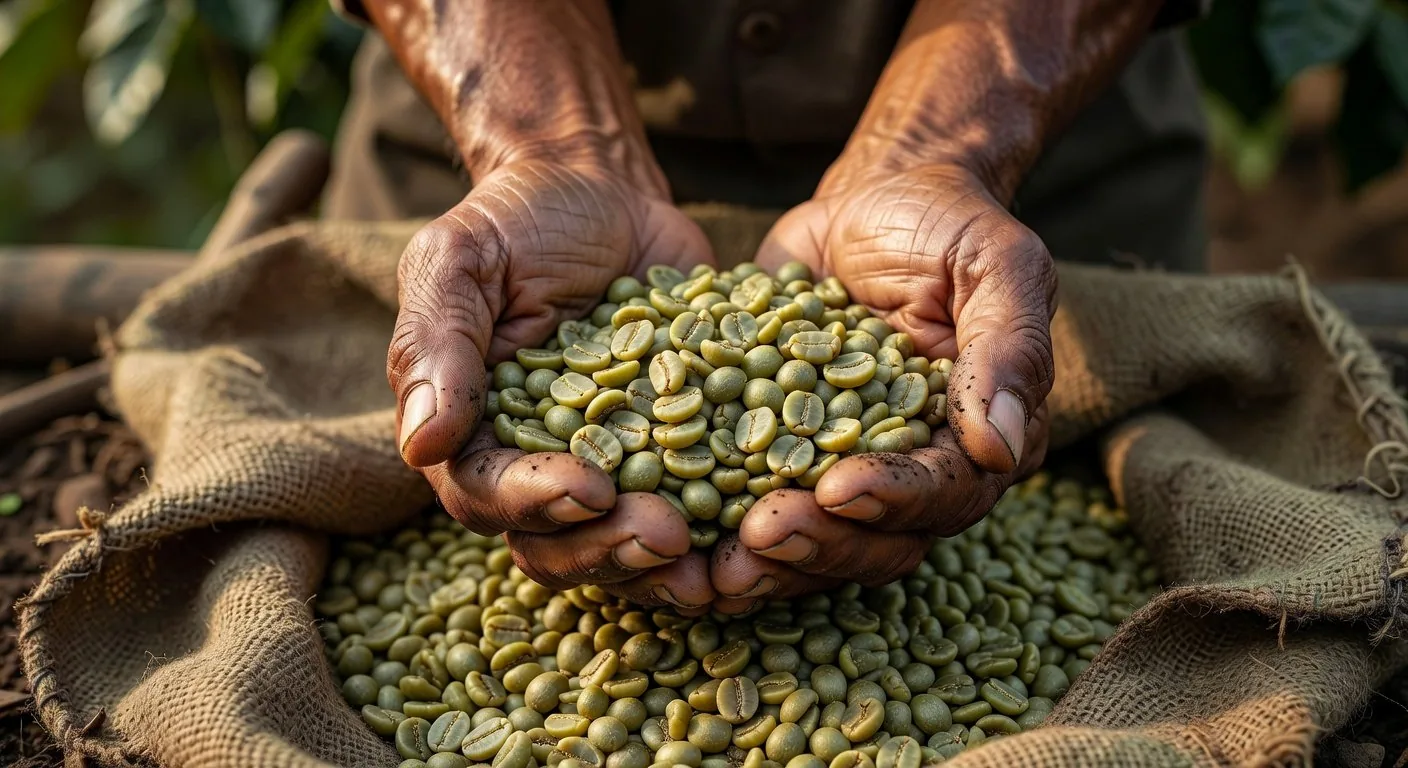
Every new buyer starts here. We ship 300 to 350 g sample lots of available varieties with full provenance documentation. This is the evaluation tier, you roast, cup, and decide before committing commercial volume. Samples are shipped FCA Quito, with the buyer covering international courier costs. We process sample requests within one week.
Entry tier (40 to 100 kg)
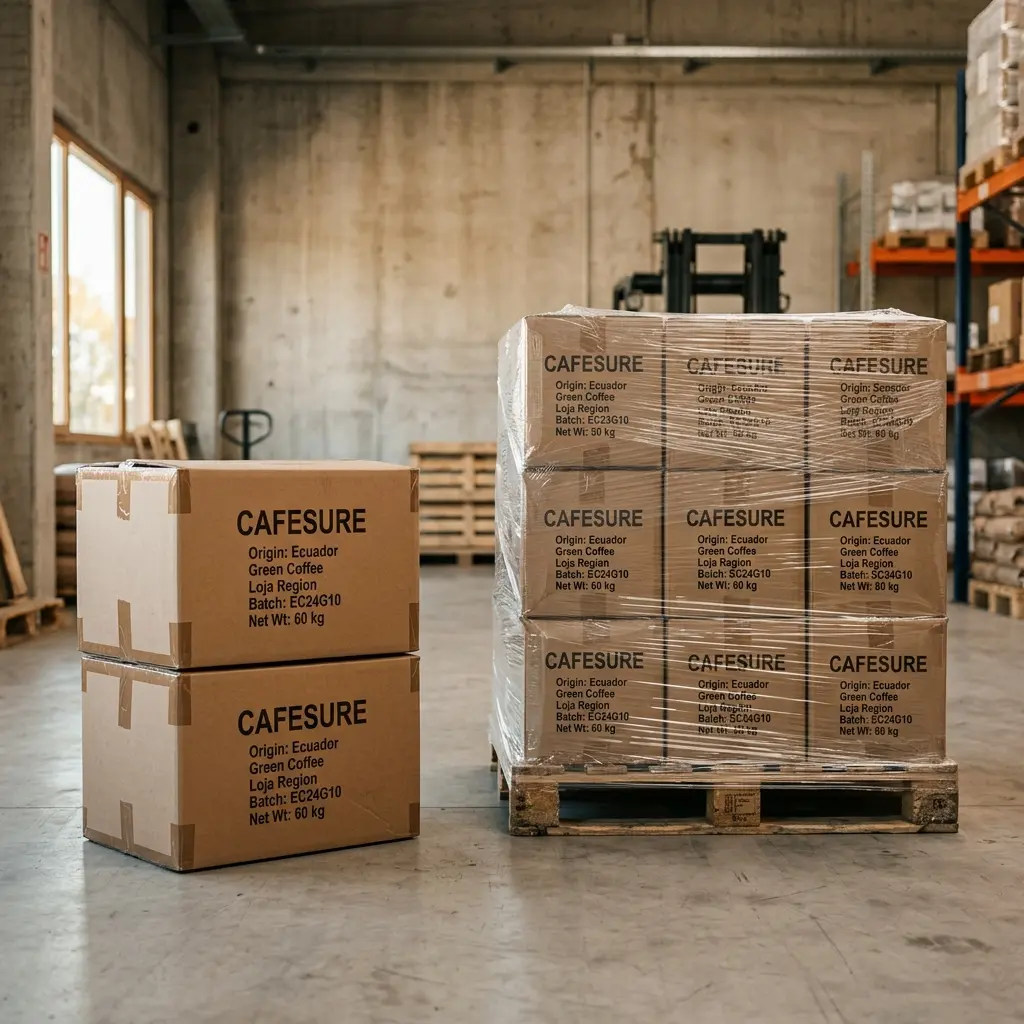
Two to five vacuum-sealed boxes of a single variety. This tier serves:
-
Seasonal single-origin offerings for microroasters
-
Evaluation of a new origin before scaling
-
Blend component testing
At 40 kg, you can produce roughly 400 to 500 twelve-ounce bags of roasted coffee (assuming 15 to 18% roasting weight loss). For a microroaster serving 100 to 200 wholesale accounts, this is a one- to two-month offering volume.
Growth tier (100 to 500 kg)
Two to ten bags (46 kg or 69 kg each). This is our most common order bracket for established craft roasters. At this tier, buyers can:
-
Secure a named producer lot for a seasonal core offering
-
Order two varieties simultaneously (e.g., 250 kg Typica Mejorado + 250 kg Sidra)
-
Begin building a multi-year relationship with a specific producer
Pricing at this tier is identical per kg to the entry tier. The only cost difference is shipping, which becomes more efficient as volume increases.
Pallet tier (500 to 1,000 kg)
A full air-freight pallet or consolidated ocean freight. This tier suits:
-
Roasters with multiple cafe or wholesale accounts
-
Regional importers evaluating Ecuador as a new origin
-
Buyers who want to secure six to twelve months of a single lot
At 1,000 kg, we can offer CIP (Carriage and Insurance Paid) pricing to major North American airports, including Miami, New York JFK, Los Angeles, Toronto, and Amsterdam.
| Tier | Volume | Typical Buyer | Shipping Mode |
|---|---|---|---|
| Sample | 300–350 g | New buyer evaluation | Courier (FCA Quito) |
| Entry | 40–100 kg | Microroaster seasonal offering | Air freight (FCA/CIP) |
| Growth | 100–500 kg | Established craft roaster | Air freight (FCA/CIP) |
| Pallet | 500–1,000 kg | Multi-account roaster or regional importer | Air freight or ocean (FOB/CIF) |
No tier carries a volume commitment beyond the single order. There are no annual volume minimums, no exclusivity requirements, and no penalties for ordering at different tiers across harvests.
Pricing Transparency Across Volumes
A common concern from small buyers is that flexible-minimum exporters charge higher per-kg rates to compensate for the logistics overhead of small lots. We do not. Our FOB pricing is uniform per lot regardless of quantity.
| Volume | Per-kg FOB Price (Typica Mejorado)* | Total FOB |
|---|---|---|
| 40 kg (2 boxes) | $12.50 / kg | $500 |
| 200 kg (4–5 bags) | $12.50 / kg | $2,500 |
| 500 kg (pallet) | $12.50 / kg | $6,250 |
| 1,000 kg (full pallet) | $12.50 / kg | $12,500 |
*Indicative pricing for washed Typica Mejorado, 86+ SCA score, current crop, FOB Guayaquil. Actual pricing varies by lot score, variety, and harvest.
The only cost variable by volume is shipping. A 40 kg air-freight shipment to the US East Coast runs approximately $3 to $5 per kg in freight costs. A 500 kg pallet runs approximately $1.50 to $2.50 per kg, roughly half the per-unit cost. We provide shipping quotes on every proforma invoice so buyers can calculate landed cost precisely before committing.
This contrasts with the typical industrial export model, where buyers who cannot fill a container pay “less-than-container-load” (LCL) premiums that can add 30 to 50% to per-unit freight costs, plus consolidation fees at origin and deconsolidation fees at destination.
Sample Program: Testing Before Committing
Every buyer relationship at Cafesure starts with a documented sample evaluation. We ship 300 to 350 g samples of available varieties along with:
-
Producer name and farm GPS coordinates
-
Farm altitude (typically 1,600 to 2,100 masl)
-
Variety and processing method
-
Cupping score from a licensed Q-grader
-
Indicative FOB pricing
-
Harvest date and crop year
Buyers roast probe batches, cup blind against their reference lots, and decide whether to proceed. There is no charge for the sample itself; the buyer covers international courier shipping.
This evaluation process is especially important for buyers who are new to Ecuadorian origin. The flavor profiles of Typica Mejorado, Sidra, and Gesha from Loja differ meaningfully from Colombian or Ethiopian coffees at similar scores. Sampling before scaling prevents costly inventory mistakes. We provide a detailed overview of Loja’s profile in our Loja coffee region guide.
Contracts and Seasonality
We offer two contract structures, both designed for flexible volume:
Seasonal spot contracts
For a specific available lot already processed and in our dry mill. The buyer selects the volume (from 40 kg to the full lot size), agrees on the FOB or CIP price, and we ship within one to two weeks of the signed contract and deposit. This is the most common structure for first-time buyers and small seasonal orders.
Forward contracts (pre-harvest commitment)
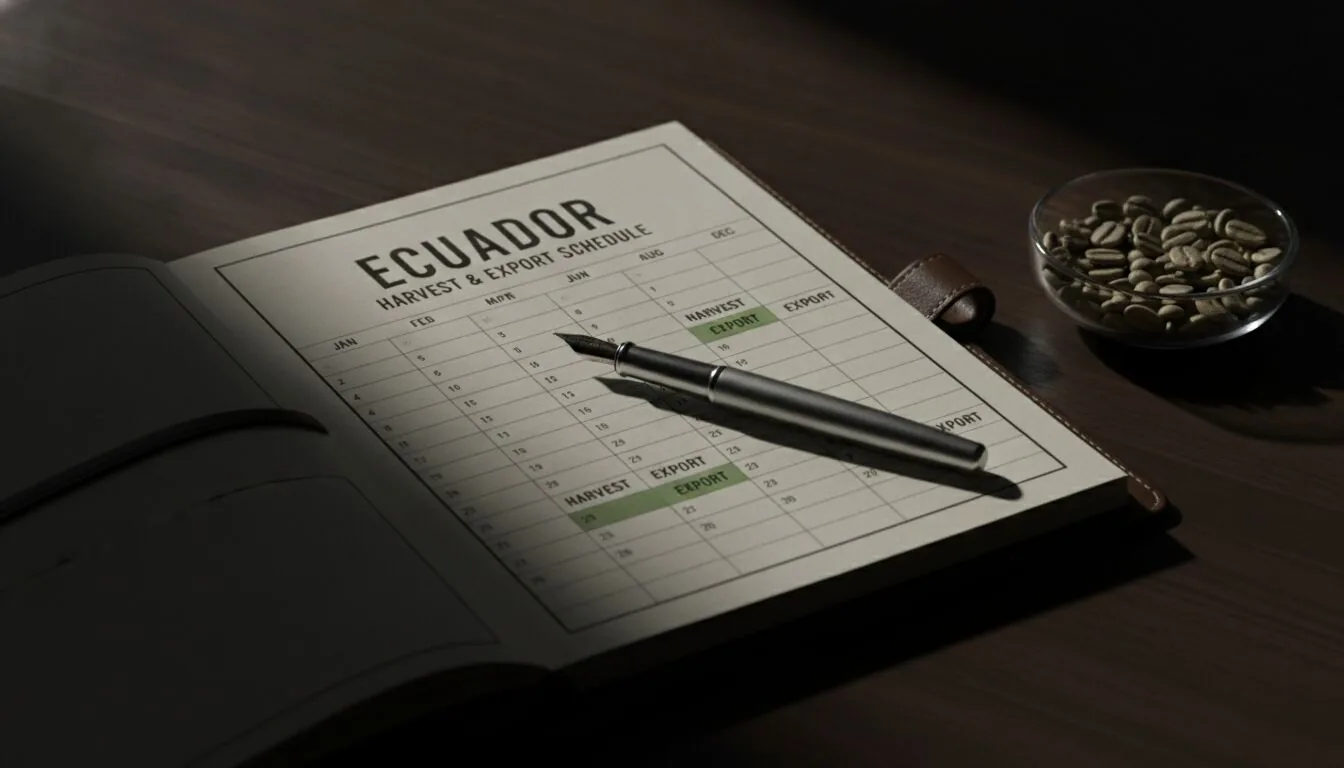
For buyers who want to secure a specific producer’s upcoming harvest. The buyer commits to a volume (typically 200 kg or more) and a price range before the harvest begins. We manage the agronomic relationship with the producer, and the buyer receives the lot as soon as processing and export clearance are complete. Lead time from commitment to shipment is 8 to 16 weeks, depending on the harvest window.
Forward contracts offer two advantages: priority access to the best-scoring lots, and typically a 5 to 10% price advantage versus spot purchase of the same quality tier. They also represent the kind of multi-year relationship that defines genuine direct trade coffee.
Neither contract type imposes minimum annual volumes. A buyer can order 40 kg on a spot contract in Q1 and 500 kg on a forward contract in Q3 without any change to terms.
Why Volume Flexibility Is a Structural Advantage
Volume flexibility in coffee sourcing is not difficult to execute, but it is difficult to build a business model around. It requires:
-
Small-lot dry mill infrastructure that does not depend on high throughput to be profitable
-
Direct air-freight relationships that bypass container consolidation
-
Own export license so every lot size clears customs at the same cost structure
-
Producer relationships that yield traceable small lots, not blended commodity pools
These are structural choices, not marketing policies. They are the reason Cafesure can serve buyers that industrial exporters cannot reach.
For a craft roaster or brand owner evaluating specialty coffee suppliers in North America, the question is not whether you can find Ecuadorian coffee, it is whether you can find a supplier whose minimum order fits your actual business volume. If the answer is yes, you can buy directly from origin, at producer-linked pricing, with full traceability, without financing inventory you do not need.
Start With a Sample
The most practical way to evaluate Cafesure’s volume flexibility is to request a sample of our current crop lots. We ship 300 to 350 g samples of Typica Mejorado, Sidra, Gesha, and seasonal microlots from Loja, each with full provenance documentation. Message us through our contact form to discuss your volume needs, or visit our green coffee page to see our current offerings.
If you already know your volume range and target price point, we can identify the best lot match from our available inventory and send a targeted sample set within one week.