Direct Trade Coffee Explained
Quick Summary: What is direct trade coffee? How it differs from fair trade, how to verify claims, and documentation buyers should request from suppliers.
Direct trade coffee has become one of the most loaded phrases in specialty sourcing. Used carefully, it describes a verifiable, producer-level commercial relationship with documented pricing. Used carelessly, it is a marketing label applied to anything that did not pass through a public auction. For green buyers and roasters who use the term as a sourcing criterion, the gap between the two definitions matters. This article explains what direct trade should mean, how it differs from fair trade, how to spot direct-trade washing, and how to verify claims with documentation you can request from any supplier.
What Direct Trade Coffee Actually Means
Direct trade coffee is, at its core, a sourcing model built on three pillars: identity, transparency, and continuity. Identity means the coffee is traceable to a named farm, producer group, or single mill, not an exporter’s blend code. Transparency means the price paid to the producer (or the FOB price) is disclosed and verifiable. Continuity means the relationship extends beyond a single harvest.
The term emerged in the late 1990s and early 2000s among US specialty roasters who wanted to bypass the commodity C-market and build producer relationships themselves. Pioneers including Intelligentsia, Counter Culture, and Stumptown formalized direct-trade programs with published pricing floors and annual transparency reports. The model has since been adopted by exporters and importers worldwide, including exporter-direct operations like ours in Loja.
The important nuance is that direct trade is not a certification. There is no governing body, no audit, and no logo. Any seller can claim it. That freedom is also the model’s vulnerability, which is why verification matters more than the label itself.
Direct Trade vs Fair Trade: A Practical Comparison
Buyers regularly conflate direct trade with fair trade. They are different instruments designed for different segments of the coffee market.
| Dimension | Fair Trade | Direct Trade |
|---|---|---|
| What it is | A certification scheme with audited standards | A relational sourcing model without a central body |
| Who runs it | Fairtrade International (FLO) and regional labels | No single authority; defined by each buyer’s program |
| Producer eligibility | Cooperatives and smallholder organizations | Individual farms, mills, or producer groups of any size |
| Price mechanism | Published minimum price floor plus social premium | Negotiated per lot, often tied to cup score and quality |
| Quality focus | Secondary; covers both commercial and specialty | Primary; most direct-trade lots score 84+ SCA points |
| Traceability | Cooperative level | Farm, lot, or micro-lot level |
| Verification | Third-party audits of cooperative and supply chain | Documentation provided by the buyer or exporter |
Fair trade remains a meaningful tool for cooperatives selling into certified markets, and the social premium funds real community projects. Direct trade is better suited to specialty lots where quality and traceability drive the price. The two are not mutually exclusive, a cooperative can sell some volume as fair trade and reserve its top lots for direct relationships.
The Problem with Direct-Trade Washing
Direct-trade washing is the practice of labeling coffee as “direct trade” when the underlying transaction fails the identity, transparency, or continuity test. It is the specialty industry’s equivalent of greenwashing, and it is widespread because no one polices the term.
Common patterns include:
-
Spot purchases relabeled. A buyer acquires coffee through an importer or broker but markets it as direct trade because someone at the roastery has exchanged emails with a producer.
-
Anonymous “direct” blends. A bag or lot lists a country and region but no farm, no producer name, and no price, yet carries a direct-trade claim.
-
Importer-pass-through. Coffee that moved through two or three intermediaries before reaching the final buyer is presented as a direct relationship.
-
Cherry-picked stories. A single farm visit or photo is used to imply an ongoing commercial relationship that does not exist in the contract trail.
The damage is twofold. Producers receive less than the marketing implies, and buyers who pay a premium for direct trade cannot distinguish real relationships from narrative. The remedy is not more marketing copy, it is documentation. For a deeper look at supply-chain transparency mechanics, see our companion piece on coffee traceability from origin.
How to Verify Real Direct Trade: A Buyer’s Checklist
If you are a green buyer or head roaster evaluating a supplier, ask for the following. A genuine direct-trade partner will provide most of these without hesitation.
-
Named producer or farm. Full name of the farm, producer, or cooperative, plus the canton or municipality. GPS coordinates are a plus.
-
Lot-level traceability. A lot number, harvest date, and processing method tied to that specific coffee, not the exporter’s general catalog.
-
Documented price. The farm-gate price or FOB price expressed in USD per pound or per kilogram. Sellers who refuse to share pricing are not operating transparently.
-
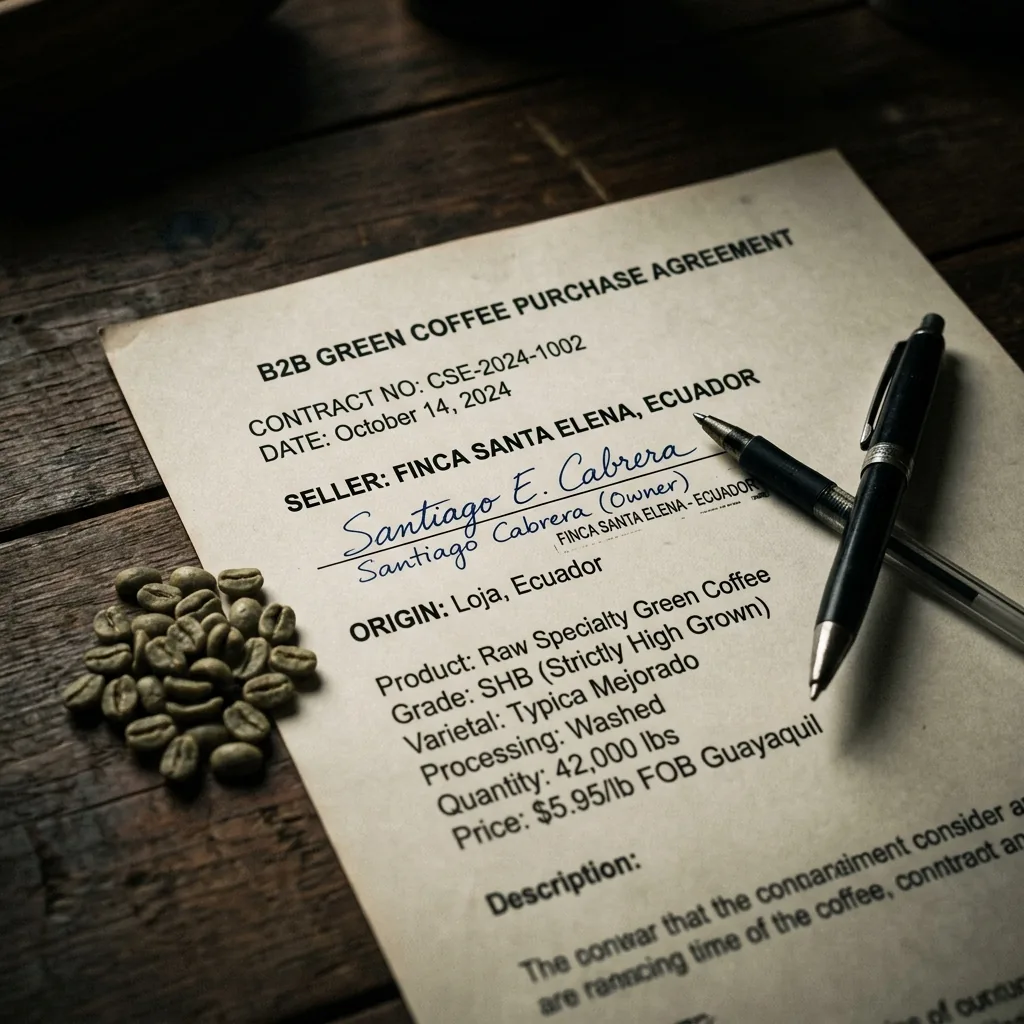
Purchase contract or PO. A redacted contract, purchase order, or proof-of-sale document linking the buyer to the producer.
-
Cupping score and Q-grader credentials. An SCA score from a licensed Q-grader, with the cupping form available on request.
-
Multi-year history. Evidence of prior harvests purchased from the same producer, which demonstrates continuity rather than a one-off spot buy.
-
Visit records. Photos, dated reports, or trip summaries from farm visits. These are supporting evidence, not substitutes for the items above.
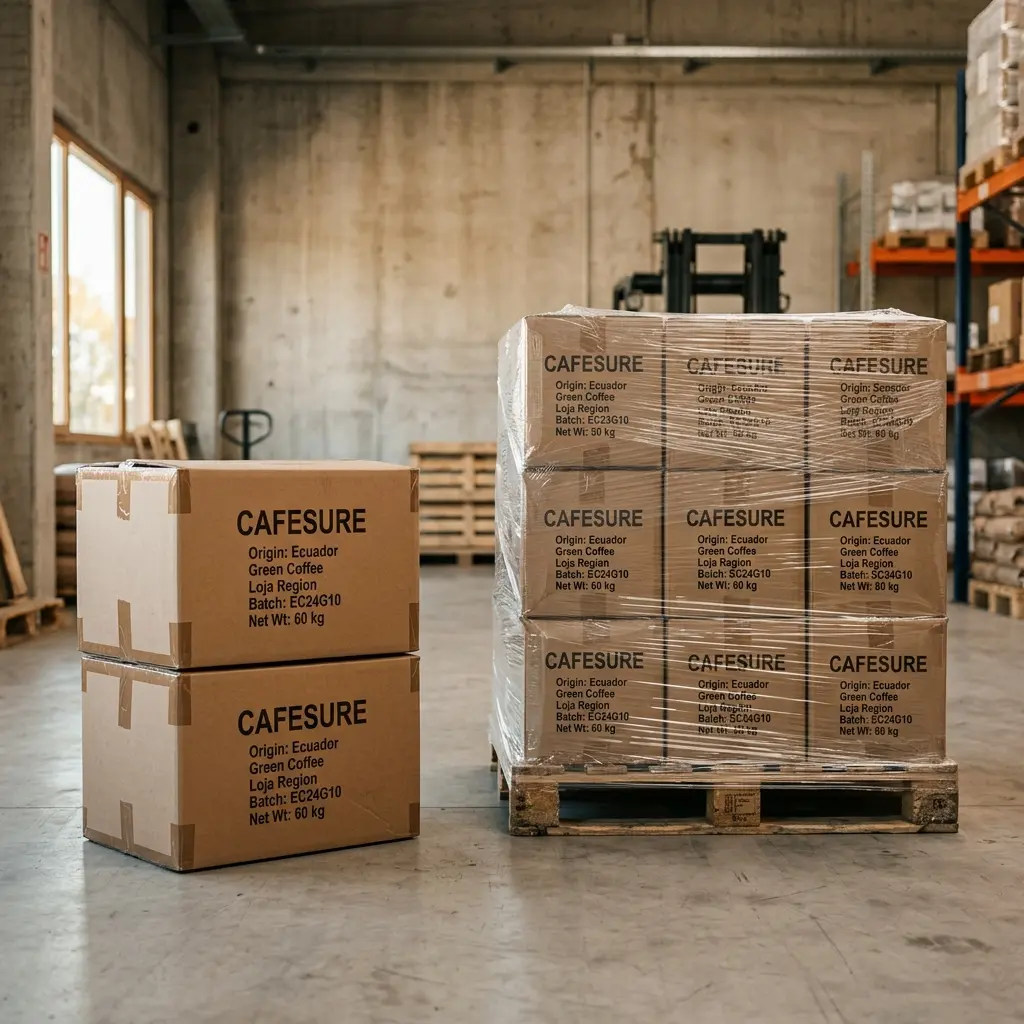
For a working example, the documentation we provide on a typical Cafesure lot, Typica Mejorado from a named producer in Loja, covers all seven items. We provide this documentation with every specialty coffee sample request.
Cafesure’s Radical Transparency Playbook
As an exporter based in Loja, we sit on the origin side of the supply chain, which changes the transparency question. We are not a US importer marketing a relationship from a distance, we are the entity writing the purchase contracts with producers and loading the containers at port.
Our playbook is straightforward:
-
Named producers on every lot. Each micro-lot ships with the producer’s name, farm, altitude, variety, processing method, and harvest date embedded in the lot documentation.
-
FOB and farm-gate pricing available. We share pricing transparency with buyers under NDA, and publish indicative ranges in our annual transparency report.
-
Purchase contracts on request. Buyers evaluating a relationship can request redacted purchase documentation as part of their due diligence.
-
Cupping forms attached. Every lot ships with a cupping score and form from a licensed Q-grader.
-
Farm visits facilitated. Buyers are welcome to visit our producer partners in Loja on scheduled trips.
This is the operational definition of direct trade from an exporter’s seat: documentation, pricing disclosure, and physical presence at origin. The sustainable B.I.C. model that governs our company makes transparency a statutory obligation, not a marketing choice. For buyers shipping into the EU, these traceability systems also satisfy the due diligence requirements of the EUDR.
Case-Style Examples From Practice
A few patterns repeat across the lots we ship. They illustrate what direct trade looks like at the transaction level.
A microroaster buying a single varietal micro-lot. A 1,200-pound Typica Mejorado lot from a producer in Cariamanga, Loja, sold FOB Guayaquil. The buyer receives the producer’s name, farm altitude (1,850 masl), processing method (washed), cupping score, FOB price, and a redacted purchase contract. The relationship has continued for three harvests. This is direct trade in its classic form.
A mid-size roaster sourcing a regional blend. A 12-bag blended lot from three producers in the same canton, with each producer named in the lot documentation and a weighted average price disclosed. The blend is traceable even though it is not a single-farm lot.
A new importer evaluating Ecuador as an origin. A buyer requests samples of Typica Mejorado, Sidra, and Gesha. Samples ship with full provenance. After cupping, the buyer signs a purchase contract with lot numbers, pricing, and Incoterms defined. The transaction is exporter-direct, no US intermediary, no pass-through.
Each of these transactions is verifiable. None relies on narrative alone.
Requesting Samples and Verifying for Yourself
The most effective way to evaluate a direct-trade claim is to test it on a real lot. Request a sample. Ask for the documentation above. Cup the coffee against the score provided. If the paperwork matches the marketing and the cup quality justifies the price, you are looking at direct trade as it should work.
We ship sample lots of Typica Mejorado, Sidra, and Gesha from our producer partners in Loja to qualified buyers. Each sample arrives with full provenance documentation, producer name, farm altitude, variety, processing method, cupping form, and indicative FOB pricing. Contact our sourcing team to begin the evaluation process, and we will walk you through the documentation on a live lot.
Direct trade is only as strong as the evidence behind it. Demand the evidence.