Deforestation-Free Coffee: How Cafesure Works to Comply with the European Regulation (EUDR)
Quick Summary: The European Union requires that coffee must not come from land deforested after 2020. At Cafesure, we have implemented an advanced traceability and satellite verification system to ensure EUDR compliance in every exported batch, protecting smallholders and ensuring complete transparency for our clients.
The European Union is one of the most important and demanding destinations for Ecuadorian specialty coffee. Historically, Europe has driven sustainability and traceability trends globally, and today it is raising its standards to an unprecedented level. With the enforcement of the European Union Deforestation Regulation (EUDR), the EU seeks to ensure that key commodities like coffee, cocoa, soy, and wood reaching its markets are not linked to forest loss anywhere in the world.
At Cafesure, we believe that this requirement is far from just another bureaucratic hurdle. It represents a golden opportunity to strengthen trust with our international buyers and highlight the hard, responsible work of our producers at origin. That is why we have spent months preparing the technological and operational infrastructure necessary to comply with this regulation rigorously, transparently, and sustainably over time.
What does the EUDR actually require and why is it challenging?
In simple terms, the regulation demands that every batch of coffee exported to the European Union must be able to demonstrate its exact origin and confirm, through scientific evidence, that the farm it comes from has not been deforested after the strict cut-off date: December 31, 2020.
This poses two major challenges for exporters and producers alike:
- Strict Geolocation: For farms under 4 hectares, an exact coordinate point (latitude and longitude) is required. For farms over 4 hectares, the complete polygon of the property must be mapped, accurately delineating its borders.
- Technical Evidence of Zero Deforestation: A sworn statement from the producer is no longer enough. Geospatial farm data must be cross-referenced with satellite databases to prove that the intact forest cover from 2020 remains present today.
The application schedule for the regulation has been adjusted, setting differentiated timelines based on the size of the operator and granting small and medium enterprises an extra margin. At Cafesure, we have leveraged this additional time to build a robust and scalable solution, rather than rushing a makeshift response that could risk excluding our smallholder partners.
The Cafesure Model: Technology meets Fieldwork
To meet these strict demands, our technical and agronomic teams have developed an EUDR compliance module integrated directly into Cafesure’s supply chain management platform. Our approach is based on three foundational pillars:
1. Origin Traceability, Farm by Farm
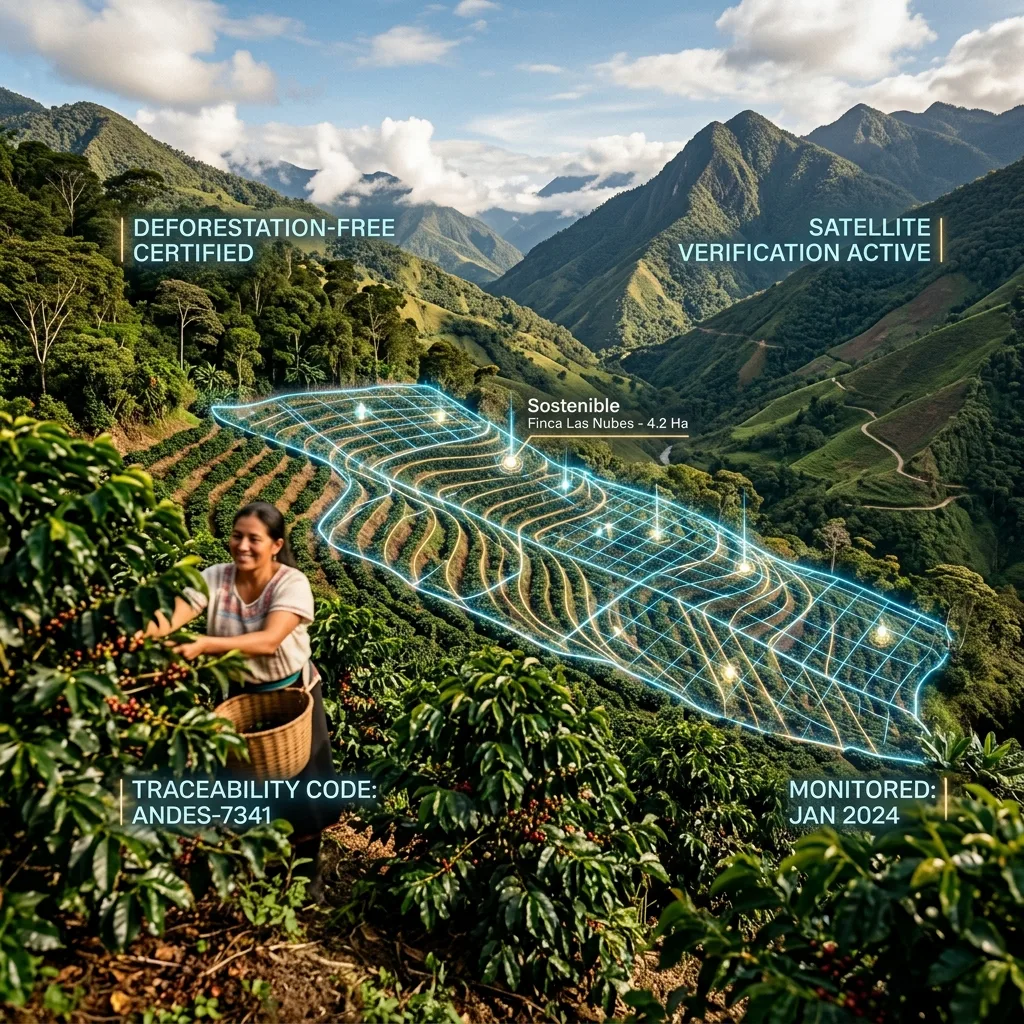
The cornerstone of our system is the detailed mapping of our supply network. Every producer and every plot that is part of our supply chain is registered with its exact geographic location. Our agronomy team visits coffee-growing areas in southern Ecuador (Loja, Zamora, etc.), mapping polygons using high-precision GPS devices. This living database is continuously updated and strictly adheres to the technical criteria demanded by the European Union.
2. Satellite Forest Cover Verification
Once coordinates and polygons are registered, each farm goes through an automated verification process. We compare the current forest cover with that existing at the end of 2020, relying on high-resolution satellite tools (such as data from the European Space Agency, Sentinel-2, and Global Forest Watch platforms).
This data cross-referencing allows us to detect any land-use anomalies. If a batch originates from a high-risk zone, the system raises an early alert. This guarantees that the analysis is consistent, auditable, and perfectly aligned with the standards European customs officials and our most demanding buyers expect.
3. Automated Documentation per Export (Due Diligence)
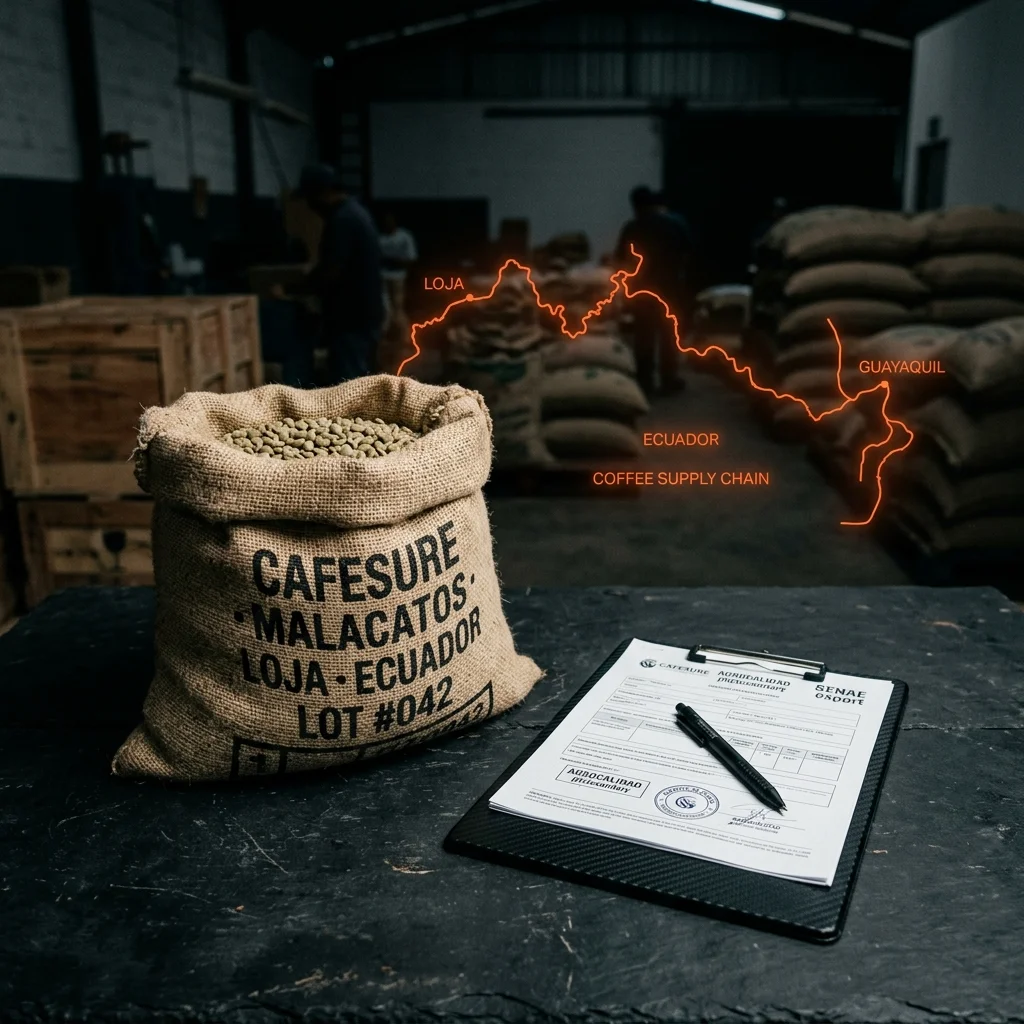
The EUDR requires the submission of a Due Diligence Statement before the coffee can enter European territory. At Cafesure, every shipment we prepare automatically generates a consolidated technical dossier. This file links the bag traceability codes with producer information, farm coordinates, and satellite analysis results. It’s a “frictionless” process for the European buyer, who receives all the necessary evidence ready to be presented to their local authorities.
Protecting the Smallholder Producer
One of the industry’s biggest fears regarding the EUDR is that technical complexity will end up excluding small coffee farmers who lack the resources to map their farms or prove compliance, despite maintaining excellent agricultural practices.
We decided to build our module by taking on the operational and technological burden ourselves. We prioritized data quality and working side-by-side with communities. This allows us to:
- Continuous Support: Provide our producers with clear training on what information we need to collect and how this secures the future of their sales to Europe.
- Preventing Exclusion: Cover the technological costs of satellite data mapping so no responsible producer is left out of the market.
- Agronomic Improvement: Use spatial data not just for legal compliance, but to advise on soil health and shade management.
Looking Ahead: Verified ESG Impact
Compliance with the EUDR is, deep down, a natural extension of our DNA. As a registered Benefit and Collective Interest (B.I.C.) corporation in Ecuador, Cafesure already had a binding commitment to its producers: knowing the origin of every bean, supporting regenerative agroforestry practices, and protecting the ecosystems surrounding our coffee zones.
We will continue to report on the progress of this process and regulatory updates. We are working hand-in-hand with producers, technical allies, and roasters so that the extraordinary coffee leaving our facilities reaches Europe with maximum transparency—providing absolute certainty that enjoying our coffee helps conserve, rather than destroy, the Andean forests.
Do you have questions about Cafesure’s EUDR compliance process, or are you looking to secure your supply of deforestation-free Ecuadorian coffee for the upcoming harvest? Contact us and we will gladly walk you through our operational details.