Air Freight Green Coffee From Quito
Quick Summary: Ship green coffee from Quito (UIO) to North America by air freight. 5-10 day transit, cost vs ocean comparison, freshness advantage, customs clearance process.
For specialty coffee roasters in North America buying green from Ecuador, the logistics decision comes down to one question: air or ocean? For the majority of specialty lots, micro-lots scoring 84+ SCA points, high-value varieties, and small-to-mid volume orders, air freight out of Quito is the right answer.
This guide explains why. We cover Mariscal Sucre International Airport (UIO) cargo capabilities, transit times, cost vs ocean comparison for small-to-medium volumes, the freshness advantage of air transit, carbon footprint considerations, customs clearance processes, and which types of coffee are best suited to air freight. If you are evaluating Ecuador as a green coffee origin, understanding this logistics option is essential to making the right sourcing decision.
Why Air Freight for Specialty Coffee
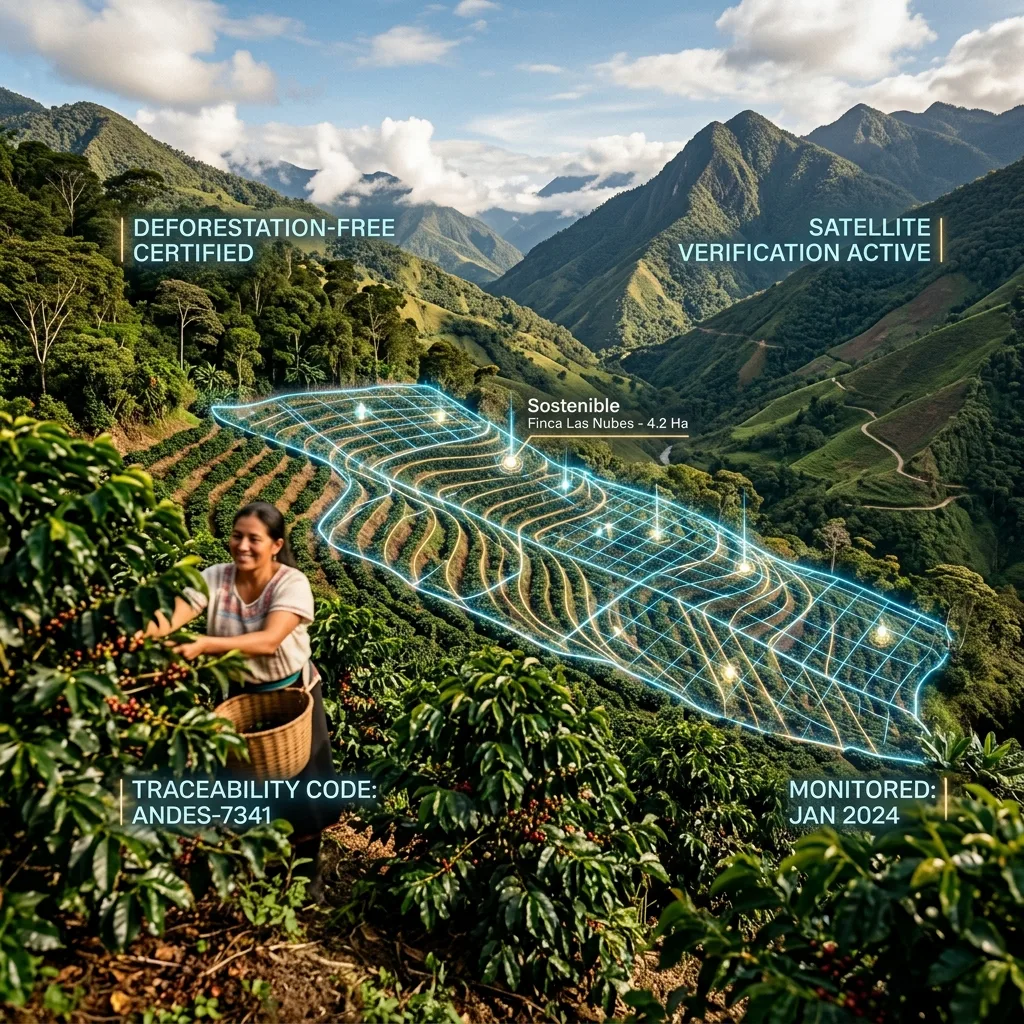
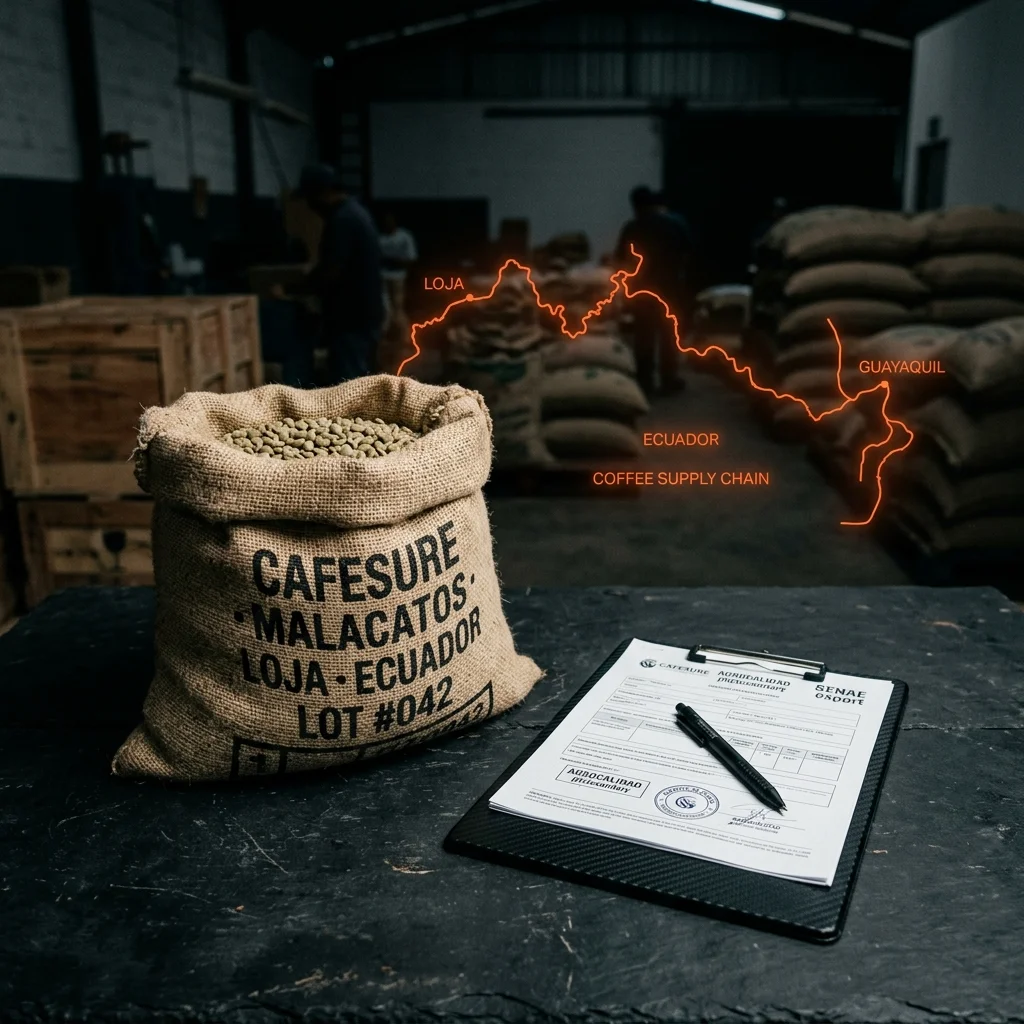
Ecuador sits on the equator. Green coffee from Loja (1,500 to 2,100 masl) crosses the equator by truck on its way to either Guayaquil for ocean freight or Quito for air freight. For ocean freight, that green coffee then spends 14 to 25 days inside a metal shipping container crossing the equator again, this time by sea, with temperature swings, humidity condensation inside the container, and no climate control.
Air freight eliminates those risks entirely. The case for air freight rests on four factors:
-
Temperature stability. The cargo hold of a commercial aircraft is pressurized and temperature-controlled. Your green coffee never experiences the 15°C to 45°C swing common inside ocean containers crossing tropical latitudes.
-
Time reduction. 5 to 10 business days door-to-door vs 6 to 10 weeks by ocean. For roasters who buy fresh-crop microlots, that time difference means the coffee lands in-season and stays fresher on the shelf.
-
Moisture control. Container sweat (container rain) is a real problem for green coffee shipped by ocean from humid origins. Air freight eliminates the risk of moisture migration and condensation damage.
-
Small-volume economics. For 40 to 300 kg orders, the absolute cost difference between air and ocean is small enough that the quality advantage outweighs the savings.
Ecuador’s geography makes this especially relevant. Unlike Colombia or Brazil, where coffee-producing regions are closer to major ports, Ecuador’s best specialty coffee comes from Loja, a 700 km truck journey from Quito Airport. The coffee is already on the road; routing it through UIO instead of Guayaquil adds one more day of trucking but eliminates weeks of maritime exposure.
For a detailed look at the physical truck routes from Loja to both terminals, see our Ecuador coffee export logistics guide.
UIO Airport: Cargo Capabilities and Infrastructure
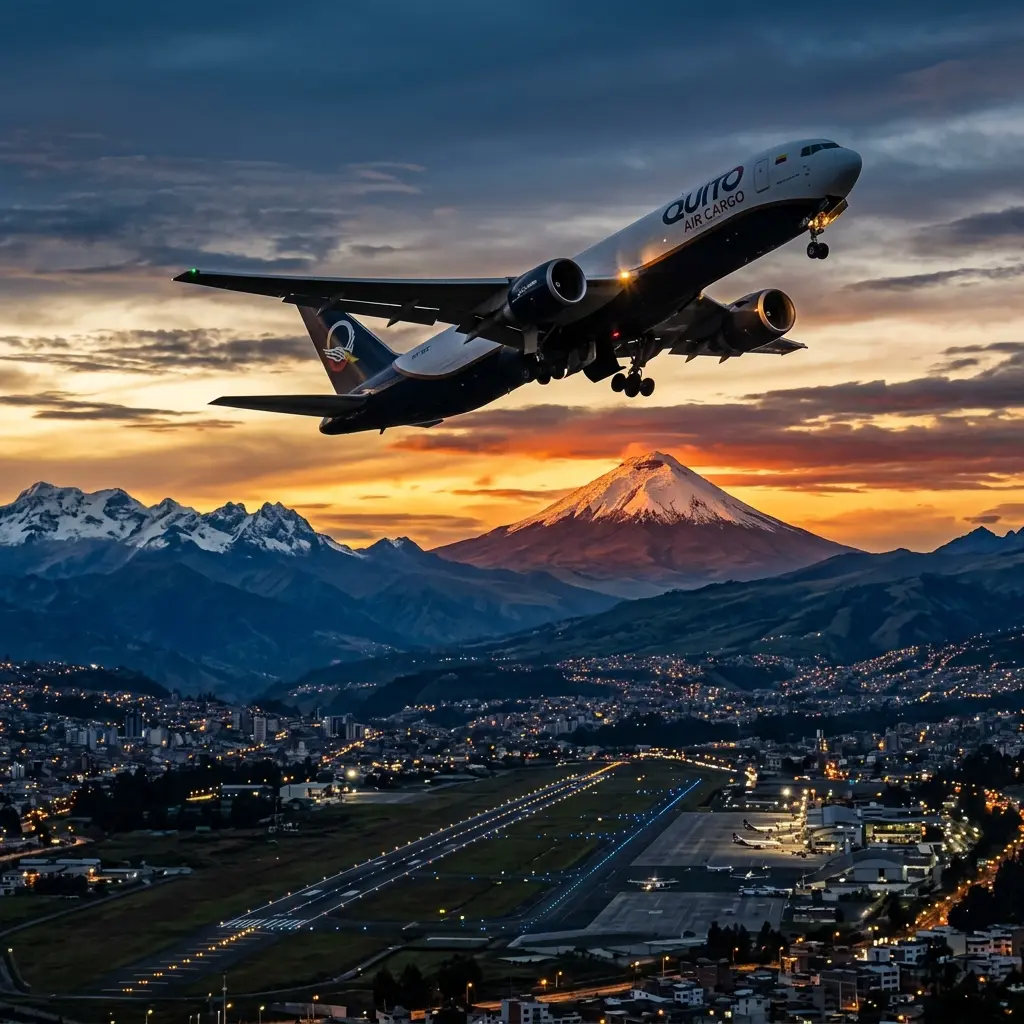
Mariscal Sucre International Airport (UIO), located in the Tababela valley northeast of Quito at 2,400 masl, is Ecuador’s primary cargo airport for high-value exports. It is not the largest cargo airport in the region by tonnage, but it is the most capable for perishable and high-value agricultural goods, including specialty coffee.
Key cargo statistics:
-
Annual cargo volume: Approximately 380,000 tonnes (2025), of which flowers, coffee, cacao, and fresh produce represent the bulk of export cargo
-
Cold chain facilities: Temperature-controlled cargo warehouses operated by Zurich Airport’s cargo division
-
Direct cargo flights to: Miami (MIA), Houston (IAH), Los Angeles (LAX), Amsterdam (AMS), Madrid (MAD), and São Paulo (GRU), with onward connections to most global destinations
-
Cargo handling: Two cargo terminals with combined capacity exceeding 400,000 tonnes/year
-
Aircraft capability: Regular cargo service on Boeing 777, 767, and Airbus A330 passenger aircraft (belly cargo), plus dedicated freighter operators (Atlas Air, Avianca Cargo, DHL)
For green coffee exports, the most important routes are UIO–MIA (daily passenger and cargo flights, 4.5 hours transit) and UIO–LAX (direct cargo connections). Coffee arriving in Miami clears customs at MIA and can be forwarded to any US destination within 1 to 2 days.
Air Freight Cost Dynamics: Volume and Scale
Green coffee air freight pricing from Quito to North America operates on a tiered structure standard in air logistics. Rather than a flat rate, air cargo costs are highly volume-dependent. As the total weight of the shipment increases, the rate per kilogram decreases significantly, reflecting the airline industry’s weight-break system (typically split at thresholds like 45 kg, 100 kg, 300 kg, 500 kg, and 1,000 kg).
Understanding this dynamic allows specialty buyers to optimize their logistics:
-
Single-Bag Shipments: Shipping a single bag (around 46 kg) incurs the highest rate per kilogram, as it falls under the base weight category.
-
Pallet Consolidation: Consolidating lots into half-pallets (approx. 300 kg) or full pallets (approx. 500 kg to 1,000 kg) allows buyers to trigger lower tariff brackets. The reduction in the per-kilogram rate at these thresholds makes pallet-sized shipments significantly more cost-effective per unit of coffee.
-
Seasonal Fluctuations: Rates also vary depending on the time of year. For instance, the high season for Ecuadorian flower exports (October to February) temporarily increases demand for air cargo space out of Quito, which can compress capacity and influence shipping rates.
These rates cover the international air leg and cargo insurance, while local inland transport, export customs, and final-mile delivery are calculated separately.
Air vs. Ocean Cost Considerations
When comparing air cargo to ocean freight, the pricing dynamics are fundamentally different. Ocean shipping operates on container rates, which are highly economical for very large volumes but carry fixed overhead costs that disproportionately affect small shipments (Less than Container Load or LCL).
For micro-lots and small-to-medium volumes:
-
The Premium: Air freight requires a larger investment per kilogram than ocean freight. However, for smaller shipments, this total difference is a manageable premium.
-
Value Proportionality: For high-value micro-lots (such as Typica Mejorado, Sidra, or Gesha), this logistics premium represents a small fraction of the overall value of the green coffee.
-
Indirect Savings: The higher shipping cost is often balanced by indirect savings: avoiding weeks of storage fees, reducing capital tied up in large annual inventories, and eliminating the risk of quality loss (such as moisture damage) during long sea transit.
For a direct comparison on documentation and the import process, see our import guide. Buyers shipping into the EU should also review the EUDR compliance requirements, which add geolocation and satellite-verified documentation to every shipment.
Freshness and Quality Retention
The freshness argument for air freight is not theoretical. Specialty green coffee is a living agricultural product. After harvest and processing, the bean continues to undergo chemical changes. Moisture content, ideally 10.5% to 11.5% for green Arabica, is the critical stability factor.
Container rain (moisture condensation inside shipping containers that occurs when warm, humid air inside the container cools overnight) is a documented cause of quality degradation in green coffee shipped by ocean from tropical origins. The condensation wets the outer bags, which can lead to localized mold growth, increased moisture content, and flavor dulling in cupping tests.
Air freight completely avoids this risk. The coffee is loaded into a pressurized, temperature-controlled aircraft hold at UIO and arrives at the destination gateway within 5 days maximum. It then moves to a climate-controlled warehouse for customs clearance and final-mile delivery.
For high-aromatic varieties, Typica Mejorado with its jasmine and stone fruit notes, Sidra with its red berry and florals, and Gesha with its tea-like delicacy, the difference between air-freighted and ocean-freighted coffee is detectable in the cup. These coffees contain volatile aromatic compounds that are sensitive to heat, humidity, and time. Minimizing all three is the point of air freight.
For more on why these varieties are particularly suited to air cargo, see our comparison of Typica Mejorado vs Sidra vs Gesha.
The Customs Clearance Process for Air Cargo
Importing green coffee into the United States by air freight follows a faster process compared to ocean. Because air cargo moves faster, the documentation window is compressed, but the requirements are the same.
Required Documentation
-
Commercial invoice prepared by Cafesure, showing HS code 0901.21, FOB value, weight, and buyer details
-
Air waybill (AWB) issued by the airline, serving as the contract of carriage and receipt
-
Packing list detailing bag count, weights, marks, and pallet dimensions
-
FDA Prior Notice filed by your customs broker through the FDA’s Prior Notice System Interface
-
Phytosanitary certificate issued by Agrocalidad (Ecuador), confirming the coffee is free of quarantine pests
-
Exporter’s FDA Food Facility Registration number: Cafesure provides this on every shipment
-
Certificate of origin (if claiming duty-free treatment)
Step-by-Step Air Cargo Clearance
-
Pre-arrival filing. Your customs broker files the CBP entry and FDA Prior Notice 2 to 4 hours before the flight lands, using the AWB number and commercial invoice data.
-
Arrival at US gateway. The cargo is offloaded and transferred to the airline’s cargo warehouse. Perishable cargo (including green coffee) is prioritized for outbound processing.
-
CBP review and release. CBP reviews the entry. Most green coffee entries are processed electronically and released within 2 to 4 hours. Random physical inspections do occur; they typically add 24 to 48 hours.
-
FDA review (concurrent). FDA receives the Prior Notice data. Most green coffee shipments are released without physical examination. If FDA requests sampling, a sample is drawn at the airport and the cargo is held pending lab results, typically 5 to 10 additional days.
-
Cargo release and delivery. Once CBP and FDA release the shipment, your broker arranges courier pickup and final-mile delivery to your roastery.
The key difference from ocean clearance: air cargo is cleared before the cargo arrives (through pre-arrival filing), and the entire process typically completes within 24 to 48 hours of landing. Ocean cargo clearance cannot begin until the vessel docks and the container is available for examination, which adds 2 to 5 days to the timeline.
Carbon Footprint: Air vs Ocean
The carbon footprint question is legitimate and increasingly relevant for buyers who track Scope 3 emissions. Here are the comparative figures based on ICAO and Maersk emissions data:
| Shipping Mode | CO₂e per kg | Environmental Impact | Typical Use Case |
|---|---|---|---|
| Air freight (belly cargo) | 0.8 – 1.2 kg CO₂e/kg | ⚠️ Higher emissions | Time-sensitive microlots, limited volume |
| Air freight (freighter) | 1.2 – 1.8 kg CO₂e/kg | ⚠️ Highest emissions | Large-volume air shipments |
| Ocean freight (reefer) | 0.15 – 0.30 kg CO₂e/kg | ✅ Lower emissions | Climate-controlled bulk shipments |
| Ocean freight (dry) | 0.10 – 0.20 kg CO₂e/kg | ✅ Lowest emissions | Standard bulk green coffee |
Air freight emits approximately 5x to 10x more CO₂e per kilogram of coffee than ocean freight for the Ecuador-to-US route. This is a real difference.
However, the calculation is more nuanced for specialty coffee:
-
Lower total volume shipped. A roaster buying 300 kg of micro-lot Typica Mejorado by air generates 240 to 360 kg CO₂e. The same roaster buying 10,000 kg of a core blend by ocean generates 1,000 to 3,000 kg CO₂e. The absolute emissions of the air-freighted microlot are lower because the volume is smaller.
-
Quality preservation reduces waste. Coffee that arrives in better condition has lower waste rates. A roaster who loses 5% of inventory to moisture damage or flavor degradation from ocean transit has effectively wasted the carbon footprint of that 5% as well.
-
Air freight enables smaller, more frequent orders. Roasters using air freight can order fresh-crop lots 3 to 4 times per year instead of placing one large annual ocean order and warehousing green for 12 months. The carbon cost of warehousing (climate-controlled storage for 12 months) is non-trivial.
If your carbon accounting is granular, the right comparison is between one ocean shipment per year of 1,000 kg (total 100 to 200 kg CO₂e for shipping, plus 6 to 12 months of climate-controlled storage) vs 3 to 4 air shipments per year of 250 to 300 kg each (total 600 to 1,440 kg CO₂e for shipping, zero long-term storage). The air option emits more for shipping but less for storage, and the quality outcome is measurably better.
Air freight is also compatible with carbon offset programs. Several cargo carriers serving UIO (including LATAM Cargo and Avianca Cargo) offer certified carbon offset options at the time of booking.
Which Coffee Types Are Best Suited for Air Freight
Not every lot needs to fly. The decision should be based on the coffee’s value, volume, and the buyer’s inventory strategy.
Ideal for Air Freight (Always Recommended)
-
Micro-lots of rare varieties: Typica Mejorado, Sidra, Gesha, and Pacamara scoring 87+ SCA points. The aromatic profile is delicate and time-sensitive.
-
Experimental processes: Honey-processed, natural, and anaerobic-fermentation lots where the processing flavor is the selling point. These are at higher risk of flavor drift during long ocean transits.
-
Small-batch seasonal offerings: Any lot under 500 kg that a roaster plans to feature as a limited edition. The speed-to-market advantage of air freight aligns with the seasonal marketing window.
-
Buyer evaluation samples: First-time buyers evaluating a new origin or producer. A small air-freighted order (40 to 100 kg) lets you test the coffee in your market before committing to ocean volumes.
Suitable for Either Mode (Buyer’s Discretion)
-
Standard specialty lots (84 to 86 points): Washed Typica and Caturra lots at middle scores. Many buyers ship these by ocean and accept the quality trade-off.
-
Volume orders (500 to 1,000 kg): The cross-over zone where cost-based decision-making becomes the norm. Air freight is still viable; ocean freight is more economical.
Better Suited for Ocean Freight
-
Commodity-grade coffee (below 83 points, standard screen sizes, no traceability requirements)
-
Full-container orders (10,000+ kg or 20,000 kg FCL), the scale of ocean economics is overwhelming
-
Non-perishable processing methods (fully washed, standard fermentation) where flavor stability is higher
Making the Decision: Air Freight Checklist for Your First Order
If you are a North American roaster preparing to place your first green coffee order from Ecuador, use this checklist to decide whether air freight is right for you:
-
What is your shipment volume? If under 500 kg, choose air. Between 500 and 1,000 kg, compare quotes for both. Above 1,000 kg, evaluate carefully.
-
What is the coffee’s cup score? If 87+ points, choose air regardless of volume. The quality premium justifies the logistics.
-
Is this a seasonal or limited offering? If you have a specific launch date, air freight gives you schedule certainty.
-
Do you have climate-controlled green storage? If you lack long-term cold storage, air freight lets you order smaller, fresher lots more frequently.
-
What is your margin on this coffee? If the coffee retails at premium specialty prices or is a flagship single-origin, the air freight premium represents a minor fraction of the final retail price.
For a comprehensive comparison of shipping routes, see our import guide. For more on the origin journey from Loja to UIO, read the logistics route guide.
Ready to Ship Green Coffee From Ecuador?
If you are a roaster or green buyer evaluating Ecuadorian specialty coffee, we can prepare an air-freight-ready sample lot within 3 to 5 business days of receiving your inquiry. We handle all origin logistics, cupping documentation, lot traceability, GrainPro packing, export customs clearance, and cargo booking from UIO to your nearest gateway airport.
Contact us through our contact form to discuss your first air freight order, or explore our available lots on the green coffee page. We can provide a full air freight quote, including all-in landed cost to your roastery, within 48 hours.