Sustainable Coffee: B.I.C. Exporter Framework
Quick Summary: Sustainability in coffee sourcing goes beyond marketing claims. In Ecuador, a B.I.C. (Sociedad de Beneficio e Interés Colectivo) is a formal corporate structure where a company adopts a legal obligation to generate positive social and environmental impact. For coffee buyers, Cafesure’s B.I.C. framework provides measurable accountability across producer economics, traceability, farm-level environmental practices, and governance, ensuring sustainability claims are backed by corporate commitments and reporting mechanisms.
What a Benefit and Collective Interest Company means for responsible coffee sourcing
Sustainability has become an increasingly important part of coffee sourcing. For importers and roasters, however, the challenge is not finding suppliers that use words such as sustainable, ethical, or direct trade.
The challenge is determining what those claims actually mean, how they are documented, and whether they are part of the company’s operating framework.
Cafesure operates in Ecuador as a Sociedad de Beneficio e Interés Colectivo (B.I.C.). Under Ecuadorian company law, a B.I.C. is a company that voluntarily adopts a legal obligation to generate a material positive impact for society and the environment, incorporating that obligation into its statutes.
For coffee buyers, this creates an important distinction between a sustainability initiative and a company’s formal corporate commitments.
What Is a B.I.C.?
B.I.C. stands for Sociedad de Beneficio e Interés Colectivo, or Benefit and Collective Interest Company.
It is not a separate type of company. An existing company can voluntarily adopt B.I.C. status while maintaining its original corporate form. To do so, it must incorporate the obligation to generate a material positive social or environmental impact into its statutes.
The Superintendencia de Compañías identifies five potential areas of impact for B.I.C. companies:
- Governance
- Labor capital
- Community
- Customers
- Environment
This is important because B.I.C. status does not simply place “sustainability” on a marketing page. It creates a formal corporate framework around the company’s impact commitments.
Why This Matters to Coffee Buyers
A sustainability statement on a website can be useful, but it is difficult for a buyer to evaluate without supporting information.
A more useful sourcing question is:
What does the supplier actually measure, document, and report?
For specialty coffee, that can include information about:
- Producer economics.
- Farm-level sourcing.
- Environmental practices.
- Geographic origin.
- Traceability.
- Quality control.
- Business governance.
Cafesure’s B.I.C. structure provides the framework within which we organize these commitments.
It does not mean that every environmental or social claim is automatically certified or independently verified. Rather, it means that the company’s impact purpose is incorporated into its corporate structure and subject to the reporting and accountability mechanisms applicable to B.I.C. companies.
Cafesure’s Approach to Impact
At Cafesure, our B.I.C. framework is built around the way we operate as an origin-based specialty coffee exporter.
We focus on three connected areas:
Environmental
Understanding the production environment and improving the information available about farm-level conditions, land use, processing, and conservation.
Social and producer economics
Maintaining direct relationships with producers and documenting the economics of individual sourcing relationships.
Governance and accountability
Connecting these commitments to the company’s formal corporate structure and reporting responsibilities.
The specific indicators and areas of impact are part of Cafesure’s own B.I.C. framework. They should not be interpreted as a universal definition of what every Ecuadorian B.I.C. must measure.
Producer Economics: Beyond the Sustainability Story
For coffee buyers, one of the most meaningful questions is simple:
Does value actually reach the producer?
A coffee can have an attractive environmental story while providing little information about the economics behind the purchase.
Cafesure therefore considers the relationship between farm-gate value and the final export price an important part of responsible sourcing.
A simplified coffee price chain can include:
Farm-gate coffee value → processing and milling → origin logistics and export costs → FOB price → freight and destination costs
Understanding these stages helps buyers distinguish the price paid for coffee at origin from the total landed cost in their market.
We do not present farm-gate share as a universal sustainability score. Producer economics are one important indicator within a broader sourcing assessment.
Traceability Supports Responsible Sourcing
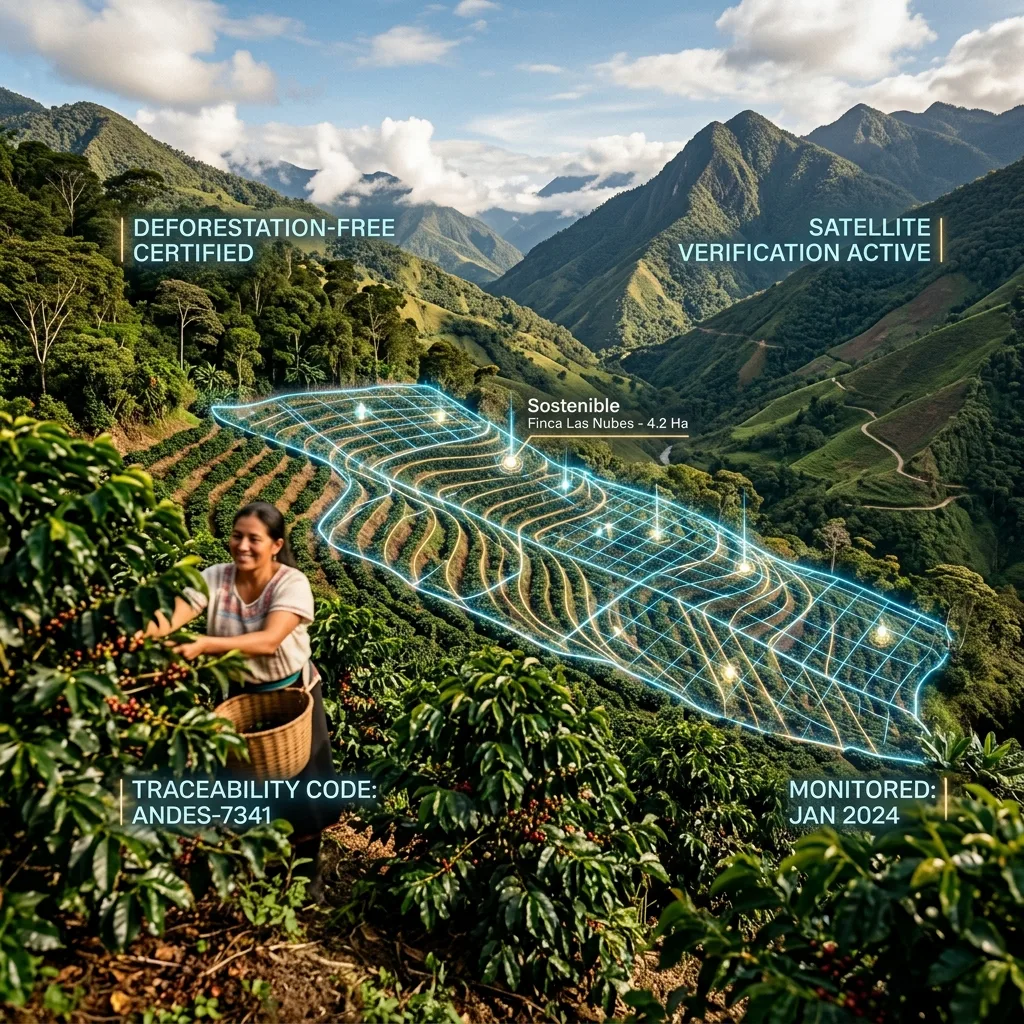
Environmental and social claims become more useful when they can be connected to a specific coffee.
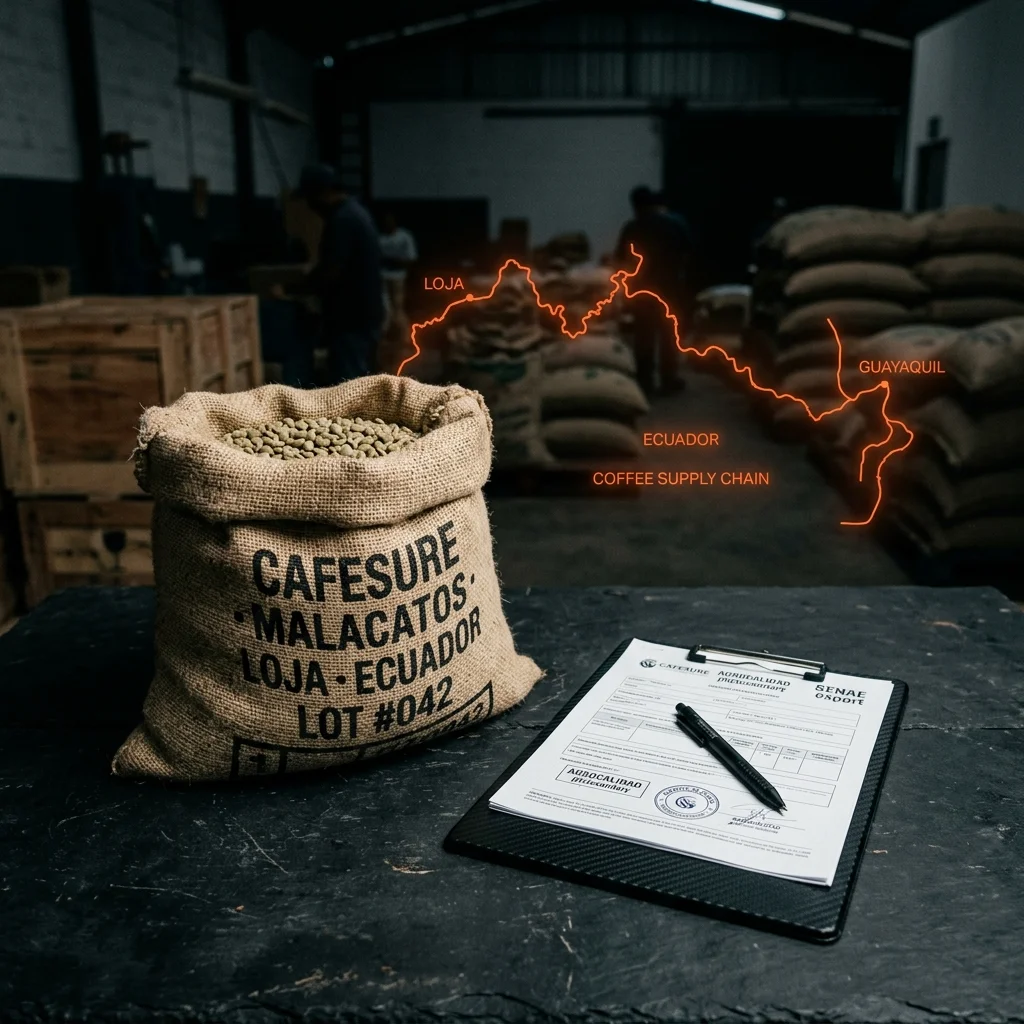
At Cafesure, lot-level sourcing records can connect information such as: Producer → Farm → Variety → Harvest → Processing → Quality → Export Lot
Depending on the sourcing program, additional information can include geographic data, agronomic records, pricing information, and other documentation relevant to the buyer’s due-diligence requirements.
This creates a useful link between sustainability and traceability:
A claim becomes more useful when a buyer can identify the coffee, the producer, and the origin information behind it.
For more detail, see our guide on Coffee Traceability From Origin.
Environmental Responsibility at Origin
Our environmental approach focuses on the conditions surrounding the farms and processing systems within our sourcing network.
Depending on the producer and lot, relevant practices and information can include:
Shade and agroforestry
Many partner farms use shade-based production systems, with environmental conditions varying by location and farm management.
Water management
For washed coffees, processing practices and water management are monitored at the mill level where applicable.
Soil and organic matter
Coffee pulp, plant residues, compost, and other farm resources can form part of soil-management practices depending on the producer.
Native vegetation
Farm-level geographic information can support the documentation of vegetation and land-use conditions and can also contribute to regulatory due diligence.
These practices should be understood as farm-level conditions, not as a claim that every producer follows exactly the same system.
B.I.C. Is Not a Certification
This distinction is important.
Cafesure’s B.I.C. status should not be confused with:
- Organic certification.
- Fairtrade certification.
- Rainforest Alliance certification.
- A carbon-neutral certification.
- An EUDR compliance certificate.
B.I.C. is a legal corporate status and impact framework in Ecuador. Similarly, B.I.C. status does not automatically mean that every coffee lot is organic, deforestation-free, or independently audited.
Those claims require their own evidence and, where applicable, their own certification or due-diligence process.
For European buyers, EUDR is a separate regulatory requirement. Our approach to geographic traceability and environmental due diligence is covered separately in our EUDR Coffee Compliance Guide.
Reporting and Accountability
Ecuador’s B.I.C. framework establishes obligations around impact reporting. The legal framework requires B.I.C. companies to create material positive impact and incorporate that commitment into their statutes.
The regulatory framework also identifies reporting and accountability mechanisms for B.I.C. companies, including areas of impact that are registered with the Superintendencia de Compañías.
For Cafesure, this matters because our impact commitments are designed to be part of the company itself rather than a separate marketing initiative.
Where appropriate, the resulting reports and supporting documentation can give buyers additional information for supplier due diligence.
What Should a Buyer Ask a Sustainable Coffee Supplier?
Whether you are sourcing from Ecuador, Colombia, Peru, or another origin, a practical sustainability review should include questions such as:
Is the supplier’s sustainability commitment formally incorporated into its business structure? Can the supplier identify the producer and origin of the coffee? What information is available about producer economics? What environmental information is documented at farm level? Which claims are independently certified, and which are company commitments? Can the supplier provide documentation relevant to your own due-diligence requirements?
These questions are more useful than simply asking whether a supplier considers itself sustainable.
What B.I.C. Means at Cafesure
Cafesure did not adopt B.I.C. status as a marketing label. We adopted it because we wanted the way the company operates to reflect a broader responsibility toward producers, customers, communities, and the environment.
Our role as an Ecuadorian exporter is therefore not only to move coffee from origin to destination.
It is to build a sourcing system in which:
- the producer is identifiable,
- the coffee is traceable,
- the sourcing relationship is documented,
- the quality is evaluated,
- and the company’s impact commitments have a formal place within its corporate structure.
That does not make every sustainability claim automatically true. It does provide a stronger framework for making those claims measurable, documented, and accountable.
Why This Matters for Specialty Coffee Buyers
For a specialty roaster, responsible sourcing is ultimately about more than a label.
It is about knowing:
- Who produced the coffee?
- Where was it grown?
- How was it processed?
- What value was created at origin?
- What environmental information is available?
- What can the supplier actually document?
Cafesure’s B.I.C. structure is one part of that system. Traceability, producer relationships, quality control, and environmental due diligence are the operational layers that make the framework useful in practice.
Source Ecuadorian Coffee With Documented Origin
Cafesure works directly with producer partners in southern Ecuador to source specialty coffees with lot-level origin information and documented sourcing records.
To review current coffees, samples, producer information, and available documentation, visit our Ecuador Coffee Sourcing Calendar or Contact our Sourcing Team.
For the broader origin-traceability framework, read Coffee Traceability From Origin: What Buyers Should Be Able to Verify.