Vacuum Packed Coffee: Shelf Life Guide
Quick Summary: Technical guide to vacuum packed roasted coffee shelf life: 12-18 months for vacuum bricks vs 3-6 months non-vacuum, GrainPro vs standard bags, storage best practices, degassing timing, and flavor retention data.
For bulk buyers of roasted coffee, D2C coffee brands, importers building roasted coffee programs, or foodservice operators contracting direct, the packaging format you choose directly determines how long the coffee stays fresh enough to sell.
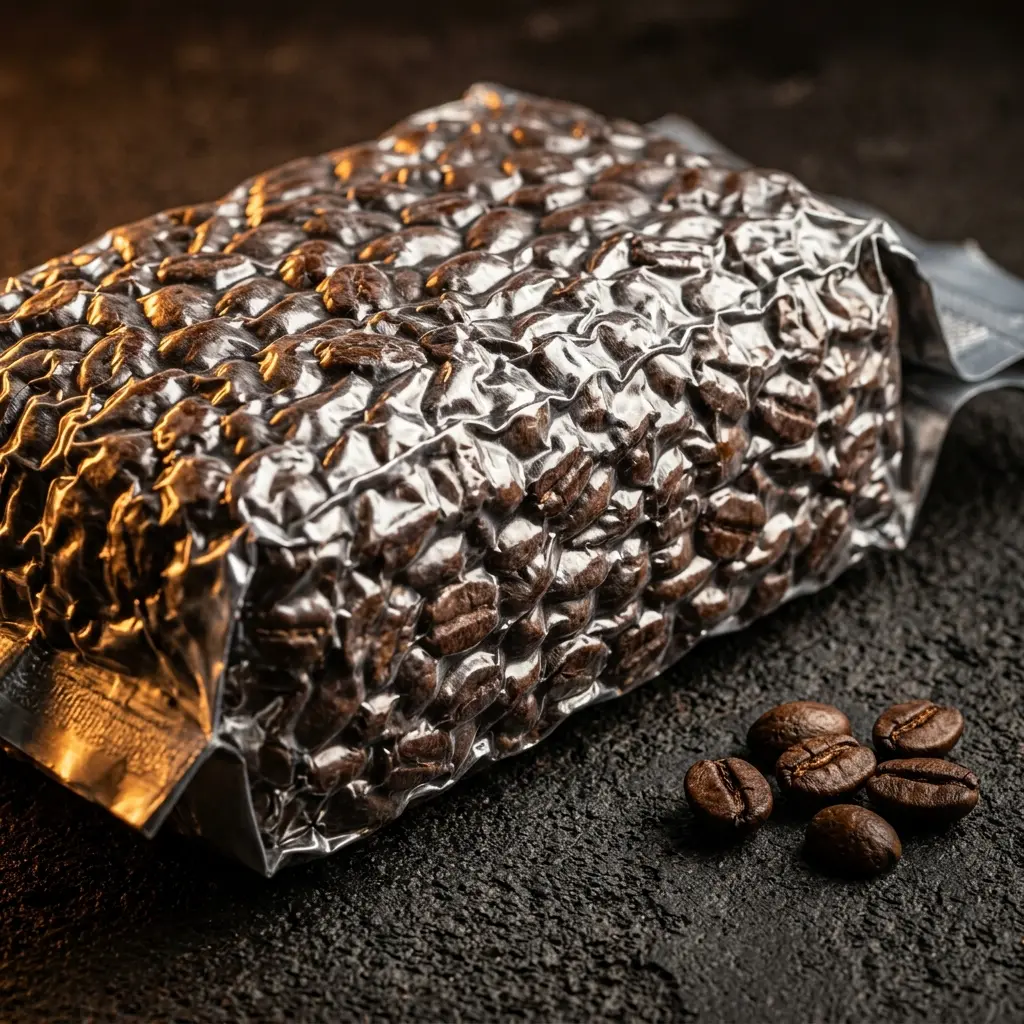
Vacuum-packed roasted coffee is the industry standard for bulk preservation. A properly vacuum-sealed brick of whole-bean coffee can retain its cupping score for over a year. The same coffee in a standard degassing valve bag will decline noticeably in 3 to 6 months. The difference matters when you are buying pallet quantities from origin and need the inventory to perform across multiple months of sales, not weeks.
This guide covers the technical mechanisms of vacuum preservation, expected shelf life by format, packaging material comparisons (standard vacuum vs. GrainPro), bulk storage recommendations, degassing protocols, and the specific considerations for buying vacuum-packed roasted coffee from Ecuador for international markets.
How Vacuum Packaging Preserves Roasted Coffee Freshness
Roasted coffee stales through three primary mechanisms: oxidation (oxygen reacting with volatile aromatic compounds), moisture gain (hygroscopic roasted beans absorbing ambient humidity), and volatile loss (aroma compounds escaping). Vacuum packaging addresses all three.
Oxygen Removal
A vacuum pack removes approximately 99% of the air from the package. Since air is roughly 21% oxygen, the residual oxygen inside a properly sealed vacuum brick is below 0.5%. By comparison:
-
Standard valve bag (one-way degassing valve): 2–5% oxygen after flushing; ambient air re-enters through the valve if internal pressure equalizes
-
Folded bag (no valve): Ambient air (21% oxygen) throughout storage
-
Nitrogen-flushed vacuum pack: < 0.3% residual oxygen, the lowest of the formats we run
Oxygen reacts with the volatile organic compounds that give freshly roasted coffee its flavor. The aldehydes and esters that produce fruity and floral notes in high-scoring Typica Mejorado or Sidra are particularly vulnerable. Once oxidized, these compounds break down into stale, papery, or cardboard-like flavors that are irreversible.
Moisture Barrier
Roasted coffee is hygroscopic, it absorbs moisture from the surrounding air. The standard multi-layer laminate used in vacuum bricks (polyethylene / aluminum foil / PET) provides a water vapor transmission rate (WVTR) of less than 0.1 g/m²/day. This is critical for bulk storage in humid environments, particularly when shipping from Ecuador’s coastal region or into humid US East Coast and Gulf Coast markets.
Aroma Containment
Vacuum packaging physically prevents volatile aroma compounds from escaping into the atmosphere. In a non-vacuum bag, aromatic gases diffuse through the packaging material and valve over time. A vacuum brick retains these compounds inside the package until it is opened.
Expected Shelf Life by Packaging Format
The following table compares expected shelf life for roasted whole-bean coffee stored at optimal conditions (18–22°C, < 60% relative humidity, away from direct light):
| Packaging Format | Peak Freshness | Acceptable Quality | Degraded |
|---|---|---|---|
| Vacuum brick (aluminum laminate) | 0–12 months | 12–18 months | 18+ months |
| Nitrogen-flushed vacuum brick | 0–14 months | 14–20 months | 20+ months |
| GrainPro bag (roasted coffee) | 0–8 months | 8–14 months | 14+ months |
| Standard one-way valve bag | 0–3 months | 3–6 months | 6+ months |
| Kraft bag (no valve, folded) | 0–2 weeks | 2–6 weeks | 6+ weeks |
“Peak freshness” means the coffee cups within 1 point of its original SCA score. “Acceptable quality” means the coffee is still sellable to most consumers, though volatile top notes have diminished. “Degraded” means flat, papery, or noticeably stale, still safe to consume but not representative of specialty grade.
For comparison, green coffee stored properly in GrainPro can retain quality for 12 to 24 months. Vacuum-packed roasted coffee at peak freshness is roughly comparable to 6-to-12-month-old green coffee in cup quality, but it declines faster after the seal is broken.
These numbers assume the coffee was properly degassed before packing. Packing too early shortens shelf life by 20–40% regardless of format.
GrainPro vs. Standard Vacuum Bags for Roasted Coffee
Bulk buyers often ask about GrainPro bags, which are widely used in the green coffee industry, for roasted coffee applications. The answer depends on storage duration and handling conditions.
Standard Vacuum Brick (Aluminum Laminate)
-
Oxygen transmission rate (OTR): < 0.1 cm³/m²/day
-
Moisture barrier: Excellent (WVTR < 0.1 g/m²/day)
-
Reusability: Single-use
-
Best for: Long-term storage (> 6 months), international ocean freight, humid environments
-
Cost: $0.30–$0.60 per brick (depending on size and volume)
-
Puncture resistance: Moderate, requires careful handling and palletizing
GrainPro Bag (Co-Extruded Plastic)
-
Oxygen transmission rate (OTR): 1–5 cm³/m²/day (depending on grade)
-
Moisture barrier: Good to moderate (WVTR 0.5–2.0 g/m²/day)
-
Reusability: Reusable (3–5 cycles with proper care)
-
Best for: Short-to-medium term storage (2–8 months), controlled warehouse environments, trans-shipment between facilities
-
Cost: $2.00–$4.00 per bag (higher upfront, lower per-cycle cost)
-
Puncture resistance: High, designed for bag-to-bag handling in green coffee trade
Recommendation
For bulk vacuum-packed roasted coffee from origin, we recommend standard aluminum-laminate vacuum bricks for most applications. They provide a superior oxygen barrier at a lower per-unit cost, and roasted coffee typically moves through the supply chain quickly enough that reusability is not a primary concern. GrainPro is a better choice for roasted coffee that will be stored in a climate-controlled warehouse and redistributed in smaller lots over 2 to 8 months.
Degassing: Timing the Pack Correctly
Roasted coffee releases CO₂ for hours and days after roasting. If you vacuum-seal coffee before degassing is substantially complete, the accumulated CO₂ will either (a) stretch the package, breaking the seal or compromising the barrier, or (b) be forced back into solution in the bean, carbonating the cell structure and producing a muted, flat cup when brewed.
Recommended Degassing Window
| Roast Profile | Recommended Degassing Time Before Vacuum Sealing |
|---|---|
| Light roast (high density, City / City+) | 12–24 hours |
| Medium roast (Full City) | 8–16 hours |
| Medium-dark roast (Vienna) | 4–12 hours |
| Dark roast (French / Italian) | 2–8 hours |
These windows are guidelines. Actual degassing rate depends on bean density, variety, and processing method. Dense Typica Mejorado from high-altitude Loja degasses more slowly than a lower-density Caturra from a mid-altitude farm.
Degassing Protocol at Our Facility
At our roasting facility in Loja, every private label and bulk production run follows a documented degassing protocol:
-
Coffee is weighed and logged immediately after roasting
-
Bags are left open in a climate-controlled degassing room (20°C ±2°C, 55% ±5% RH)
-
CO₂ concentration in the room is monitored (ventilation active to stay below 0.5% CO₂)
-
At the appropriate window, a sample is tested for residual degassing activity by measuring CO₂ output over 30 minutes
-
Once degassing is confirmed substantially complete, the coffee is vacuum-sealed
Storage After Vacuum Sealing
Even after degassing, vacuum-packed coffee continues to produce trace amounts of CO₂. This is normal and does not compromise the seal. Over 18+ months, the bricks will slightly firm up as internal pressure equalizes. If a brick appears fully tight and drum-hard immediately after packing, that is a sign the coffee was sealed too early, and shelf life will be reduced.
Storage Best Practices for Bulk Vacuum-Packed Roasted Coffee
Once vacuum bricks arrive at your warehouse or fulfillment center, how you store them directly affects how long they stay sellable.
Temperature
-
Optimal: 15–22°C (59–72°F)
-
Acceptable: Up to 25°C (77°F)
-
Avoid: Above 30°C (86°F), accelerated staling, oil migration to bean surface, volatile compound degradation
-
Critical: Avoid temperature swings. Cycling between cool and warm causes condensation inside the package if the seal is not perfect.
Humidity
-
Optimal: 40–55% relative humidity
-
Acceptable: Up to 60% RH
-
Avoid: Above 65% RH, risk of moisture migration through micro-perforations or seal imperfections
Light
- Requirement: Store in opaque packaging or a dark room. UV and visible light accelerate lipid oxidation. Aluminum-laminate vacuum bricks provide inherent light protection, but if you stock transparent pouches, they must be stored in closed cartons or dark shelving.
Stacking and Palletizing
-
Maximum stack height: 6 pallets high for standard vacuum bricks (aluminum laminate)
-
Do not stack vacuum bricks directly on concrete floors, use pallets to prevent moisture wicking
-
Rotate stock: First-expiry, first-out (FEFO) by roast date, not packaging date
Do Not Refrigerate or Freeze
A common question from bulk buyers is whether to refrigerate or freeze vacuum-packed roasted coffee. The answer is generally no for standard bulk storage:
-
Domestic refrigerator (2–8°C): High humidity and temperature fluctuations cause condensation when the package is removed. Condensation on the bean surface accelerates staling.
-
Commercial freezer (-18°C): Viable only if (a) the freezer is frost-free or low-humidity, (b) the coffee is in an oxygen-free, hermetically sealed package, and (c) the package is not opened until it returns to room temperature. Most bulk buyers do not have this setup.
For long-term bulk storage (> 12 months), a climate-controlled warehouse at 15–20°C is more practical and risk-free than freezing.
Grinding at Destination: Why It Matters
If you are buying vacuum-packed roasted coffee in bulk, there is one rule that affects final cup quality more than any storage variable: grind at destination, not at origin.
Here is the data:
-
Whole-bean roasted coffee has an estimated surface area of roughly 10–20 cm² per gram (depending on roast density and grind size assumption)
-
Ground coffee (brew-fine, ~500 micron average particle) has an estimated surface area of 500–1,000 cm² per gram, a 50x increase in surface area exposed to oxygen
-
Staling rate for ground coffee is approximately 10x faster than whole bean under identical conditions
This means that a vacuum brick of ground coffee that was packed 6 months ago will taste noticeably flatter than a whole-bean brick from the same roast date that was opened and ground that morning.
Recommendation: Buy vacuum-packed roasted coffee whole bean. Grind at your cafe, fulfillment center, or production facility within 24 hours of brewing. If your operation requires pre-ground coffee (e.g., foodservice pods, bulk drip blend), request a custom grind spec, and expect ground vacuum-packed shelf life to be 3 to 6 months instead of 12 to 18.
International Shipping of Vacuum-Packed Roasted Coffee
For buyers sourcing roasted coffee from Ecuador, vacuum packing solves the logistics problem that has historically limited cross-border roasted coffee trade: freshness during transit.
Air Freight (Recommended for Roasted Coffee)
-
Transit time: 3–5 business days from Quito (UIO) to major US, Canadian, Middle Eastern, and European hubs
-
Temperature-controlled cargo hold: 15–25°C throughout transit
-
Vacuum brick protection: No moisture ingress, no oxygen exposure, no aroma loss
-
MOQ: From 500 kg (pilot runs) to pallet quantities of 1,000–2,000 kg
Ocean Freight (Viable for Vacuum Bricks Only)
-
Transit time: 14–25 days to US East Coast, 18–30 days to US West Coast
-
Condition: Container temp can reach 40–55°C on deck. Vacuum bricks survive this, but shelf life after arrival is reduced by approximately 20–30%
-
Only viable with aluminum-laminate vacuum bricks, standard valve bags or GrainPro will not protect coffee through a 3-week ocean transit in warm conditions
Documentation for Roasted Coffee Export
-
HS code: 0901.21 (roasted, not decaffeinated)
-
Certificate of Origin (for duty preference under US-Ecuador trade agreements)
-
FDA Food Facility Registration for the roasting facility
-
Prior Notice filing for US destinations
See our detailed import guide for the full regulatory pathway.
Vacuum Packing at Our Facility in Loja
At Cafesure, all bulk roasted coffee is vacuum-packed in our facility in Loja, Ecuador. Our packaging line handles:
-
Formats: 250 g, 340 g, 454 g (1 lb), 500 g, 1 kg, and 5 kg vacuum bricks
-
Material: 3-ply aluminum-laminate film (PET / aluminum foil / PE), certified for food contact
-
Seal integrity: Tested each production shift via burst test and vacuum decay method
-
Gas flushing: Optional nitrogen flush for extended shelf life (MOQ 1,000 kg)
-
Labeling: Batch code, roast date, best-by date (18 months from roast), and lot identifier printed on each brick
We maintain a degassing room at 20°C / 55% RH with active ventilation and CO₂ monitoring. Every batch is logged with degassing start time, seal time, roast profile, and post-seal QC results.
Build a Bulk Roasted Coffee Program
If you are evaluating vacuum-packed roasted coffee from origin for your retail brand, foodservice operation, or private label program, the fastest path is to request a sample of our current production. We ship 300 g vacuum-sealed samples of available roasted lots along with full lot data, roast profile, Agtron reading, degassing protocol, and cupping notes.
Contact our team to discuss your volume requirements, packaging format, and preferred delivery timeline, or explore our roasted coffee programs page for an overview of production capabilities.
For buyers new to sourcing roasted coffee from Ecuador, our private label manufacturing guide covers the full program structure, and our import guide covers the regulatory pathway. If you’re weighing in-house roasting versus packaging at origin, see our roastery vs. packing center economics for a side-by-side cost breakdown.