El Niño 2026 & Global Coffee Market: Buyer Guide
Quick Summary: For coffee buyers, El Niño is a market story. While global production forecasts suggest record volume, regional climate risks in major producing countries create tight availability for specific origins and profiles. Origin diversification and direct sourcing partnerships are becoming essential strategies for managing 2026/27 supply risk.
Why a changing climate could matter more for coffee supply, prices, and sourcing strategy
For coffee buyers, El Niño is not simply a weather story. It is a market story.
When a major climate pattern changes rainfall and temperature across coffee-producing regions, the consequences can move through the entire supply chain: from flowering and crop development to export availability, inventories, futures markets, differentials, and ultimately the cost and reliability of green coffee for roasters.
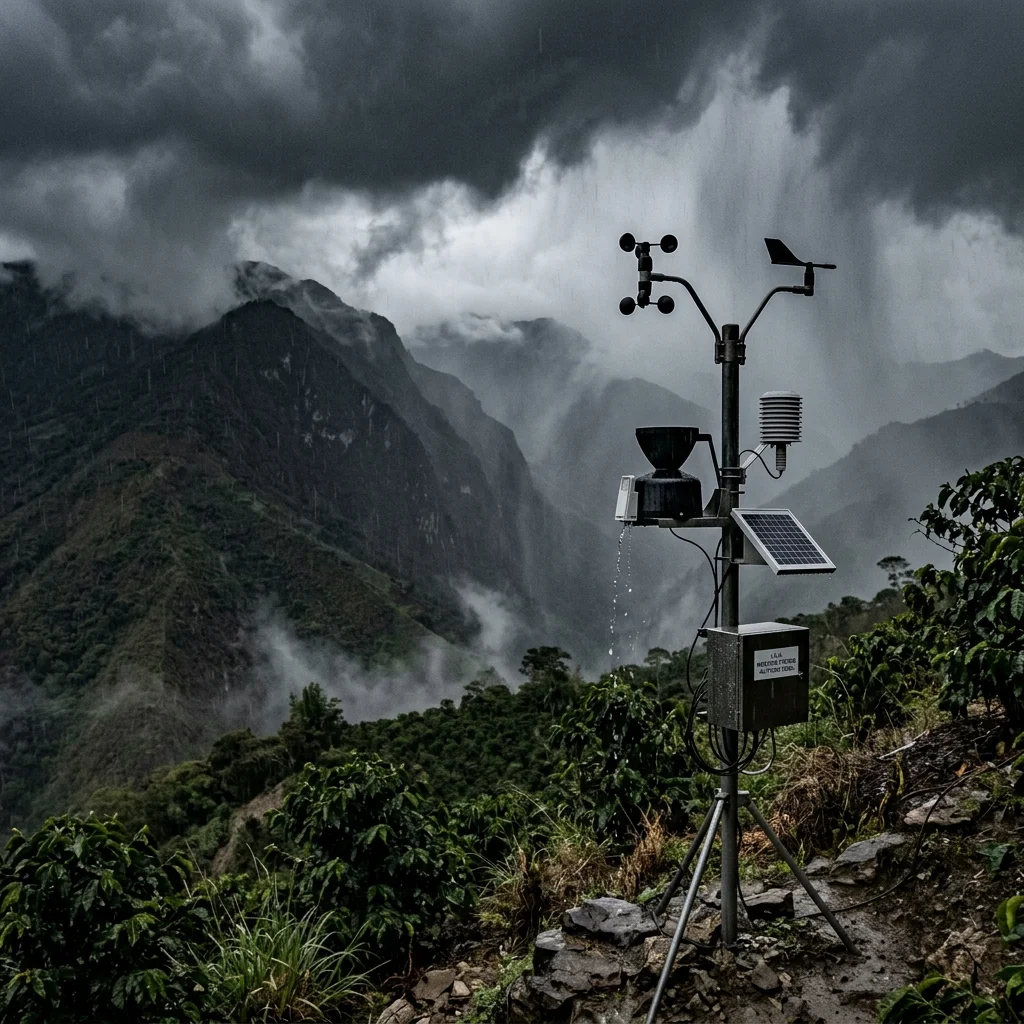
In 2026, that conversation is becoming increasingly relevant. Current forecasts indicate that El Niño is strengthening and is expected to remain present through the coming months, with some models projecting a potentially very strong event toward the end of 2026.
But there is an important distinction for coffee professionals: El Niño does not automatically mean higher coffee prices or lower global production.
Its effects are regional, seasonal, and highly dependent on where and when weather anomalies occur.
For buyers, the real issue is therefore not trying to predict a single market outcome. It is understanding where the risks are developing and how those risks could affect sourcing decisions over the next 6–12 months.
The global coffee market enters El Niño from a different starting point
The 2026/27 coffee market is entering this climate event after several years of weather-related production challenges.
According to the U.S. Department of Agriculture’s July 2026 forecast, global coffee production is expected to reach a record 189.7 million 60-kg bags in 2026/27, up 10.8 million bags from the previous year. Global exports are forecast at a record 131.4 million bags, while ending stocks are projected to increase for a second consecutive year to 26.3 million bags.
At first glance, those numbers suggest a more comfortable supply situation. But the structure of the market is more complicated.
Brazil alone is forecast to produce 71.9 million bags, including 47.5 million bags of Arabica. The USDA notes that Brazil typically accounts for around 40–50% of global Arabica production depending on its biennial cycle, making weather developments there particularly important for the world market.
Vietnam is also expected to reach a record 32.5 million bags, while Colombia is forecast at 13.4 million bags. At the same time, Indonesia’s production is projected to fall by one million bags, with excessive rainfall already affecting flowering and cherry formation in parts of the country.
In other words, the global market is not facing one uniform supply shock.
It is facing different climate risks in different origins at the same time.
Why El Niño matters for coffee differently by origin
One of the defining characteristics of ENSO is that its effects are geographically uneven.
The same El Niño event can bring excessive rainfall to one producing region while increasing heat or drought risk somewhere else.
That matters enormously for coffee because the world’s major origins do not share the same crop calendars, elevations, varieties, or production systems.
Recent reporting on the developing 2026–27 event highlights potential risks to Robusta production in Vietnam and Indonesia from heat and dryness, while Brazilian Arabica faces a different set of risks as the event develops.
This creates an important distinction for coffee buyers: A problem in one origin does not necessarily mean a shortage of coffee globally.
Instead, it may create shortages—or higher premiums—for particular origins, varieties, qualities, or cup profiles.
That is particularly important for specialty coffee.
Commodity supply and specialty supply are not the same market
A global production increase does not necessarily mean that every type of coffee will become more available.
The commodity market can be adequately supplied while specific specialty categories remain constrained.
A roaster looking for a particular profile—such as high-altitude washed Arabica, floral varieties, or distinctive single-farm microlots—cannot necessarily replace a missing coffee with an additional shipment of commodity-grade beans from another origin.
This is where climate volatility can create an interesting dynamic. A climate event may have a relatively modest effect on total global production while having a much larger effect on the availability of specific coffees that are difficult to substitute.
For specialty buyers, that distinction can be more important than the headline global production number.
What could happen to coffee prices?
The market is already showing how quickly coffee prices can respond to changing supply expectations.
The International Coffee Organization reported that its Composite Indicator Price averaged 248.90 US cents per pound in June 2026, down 2.8% from May. During June, the index fell to 231.96 cents/lb before recovering sharply to 272.39 cents/lb by the end of the month.
The USDA’s July assessment also noted that coffee prices had fallen approximately 25% over the previous seven months as additional supplies became available.
This illustrates an important point: Coffee prices do not move because of weather alone.
They respond to expectations about production, inventories, exports, demand, logistics, currency movements, and market positioning.
The same is likely to be true during the 2026/27 El Niño cycle.
If Brazil, Vietnam, Colombia, and other major producers deliver strong crops, increased supply could continue to put pressure on prices.
But if weather begins to materially reduce expected production—particularly in major producing countries—the market can change direction quickly.
This creates a higher-value environment for buyers who actively monitor supply rather than relying on static annual purchasing assumptions.
The Brazil factor
For anyone buying Arabica, Brazil deserves particular attention. The USDA expects Brazil’s 2026/27 crop to reach a record 71.9 million bags, supported by a strong Arabica harvest. Timely rainfall during flowering helped fruit development in Minas Gerais, which produces more than 70% of Brazilian Arabica.
That production increase is important because Brazil’s scale can influence global Arabica availability far beyond its own domestic market.
The question for buyers is therefore not simply whether Brazil has a large crop.
It is whether weather conditions over the remainder of the crop cycle allow those production expectations to materialize.
A significant deviation from expectations could have an outsized influence on global prices.
Vietnam and Indonesia: the Robusta exposure
The other side of the equation is Robusta. Vietnam is forecast to produce a record 32.5 million bags in 2026/27, but climate conditions remain an important risk factor for Southeast Asian production. Indonesia, meanwhile, is already expected to produce less coffee, with excessive rainfall cited as a factor affecting flowering and cherry formation.
Reuters recently highlighted the vulnerability of Vietnam and Indonesia to heat and dryness under the developing El Niño, particularly for Robusta.
For companies purchasing blends, soluble coffee, or coffees heavily exposed to Robusta pricing, developments in Southeast Asia could therefore become increasingly relevant.
And because Arabica and Robusta markets interact through substitution in some segments, changes in Robusta availability can also influence the broader coffee market.
Where does Ecuador fit into this picture?
Ecuador is not going to determine the global coffee balance in the way Brazil or Vietnam can.
USDA’s 2026/27 production table places Ecuador at roughly 350,000 60-kg bags, a small share of world output.
That is not a weakness. For specialty coffee, Ecuador’s value is not primarily its volume.
It is its ability to produce coffees with distinctive genetic material, high-elevation growing environments, diverse microclimates, and differentiated sensory profiles.
That makes Ecuador relevant to a different question: How can buyers diversify origin risk without simply replacing one commodity coffee with another?
A specialty importer does not necessarily need Ecuador to replace Brazil or Colombia.
Instead, Ecuador can function as part of a broader sourcing strategy designed around origin diversification, differentiated quality, and access to coffees that cannot be easily replicated elsewhere.
This is particularly relevant for buyers working with boutique roasters, specialty retail, or premium blends where origin identity and sensory differentiation matter.
For a broader perspective on how Ecuador compares with neighboring origins, see our guide on Ecuador vs Colombia vs Peru coffee.
Why Ecuador may become more interesting to specialty buyers
There is also a longer-term reason to pay attention to Ecuador. The country’s specialty coffee sector continues to receive investment and attention at producer and regional levels. In Loja, local authorities reported strong interest in expanding specialty coffee production and international market access in 2026, including significant investment in coffee seedlings and programs supporting the regional coffee sector.
Ecuador should therefore not be viewed only through the lens of this year’s climate event.
The more interesting perspective is structural: As buyers increasingly think about climate resilience and supply diversification, origins outside the largest producing countries may become strategically more valuable.
Not because they can replace global volume, but because they can provide additional sourcing options.
What should coffee buyers watch over the next 6–12 months?
For importers and roasters, the most useful approach is to monitor several indicators simultaneously:
1. Brazil’s crop performance
Brazil’s production forecast is large enough that meaningful deviations can influence the wider Arabica market.
2. Vietnam and Indonesia
Watch Robusta production, rainfall, and export availability, particularly as El Niño strengthens.
3. Global inventories
The USDA expects stocks to recover, but still below the long-term average. Inventory levels will determine how much flexibility exists if production estimates deteriorate.
4. ICO price movements
The ICO Composite Indicator remains one of the most useful global reference points for tracking market direction.
5. Specialty differentials
Commodity prices tell only part of the story. Buyers should monitor how differentials and replacement costs behave for specific origins, varieties, altitudes, and quality levels.
6. Origin diversification
The most practical response to uncertainty may not be trying to predict the market perfectly.
It may be building a sourcing portfolio that is less dependent on a single producing country.
What does this mean for buyers of Ecuadorian specialty coffee?
From an exporter’s perspective, the biggest opportunity is not to position Ecuador as the “winner” of El Niño.
That would be difficult to justify and unnecessarily speculative. A stronger argument is that climate uncertainty increases the value of flexible and diversified sourcing.
For buyers, Ecuador offers access to a relatively small but increasingly differentiated specialty sector, including high-altitude coffees from regions such as Loja and other producing areas across the country.
For an importer or roaster, that can translate into three practical benefits:
- Diversification. A broader origin portfolio reduces dependence on the weather performance of a single producing country.
- Differentiation. Ecuadorian specialty coffees can bring distinctive varieties, farm identities, and sensory profiles to a portfolio.
- Relationship sourcing. Smaller origins can often be approached through direct, traceable relationships where buyers can work with specific farms and lots rather than purchasing an undifferentiated commodity.
For insights into evaluating harvest calendars and booking lots, see our Ecuador coffee sourcing calendar.
The key lesson for 2026
El Niño should not be viewed as a simple prediction of higher coffee prices.
The more useful interpretation is that the cost and availability of coffee may become increasingly dependent on where, when, and what type of coffee a buyer needs.
Global production may reach record levels while individual origins, qualities, or specialty categories experience very different realities.
For coffee buyers, this makes flexibility more valuable. It means monitoring global production, understanding origin-level weather risk, evaluating replacement options early, and building relationships with suppliers before a shortage becomes obvious in the market.
At Cafesure, our focus is on connecting international buyers with differentiated coffees from Ecuador and providing origin-level information that helps them make better sourcing decisions.
In an increasingly climate-sensitive coffee market, the question is no longer simply:
“What is the price of coffee?” It is: “Which coffee do we need, where does it come from, how secure is that supply, and what alternatives do we have?”
That is the conversation we believe matters most for specialty coffee buyers in 2026.