Experimental Coffee Processing in Loja
Quick Summary: Experimental processing in Loja is less about making coffee taste “fermented” and more about controlling fermentation to create new sensory expressions. Carbonic-style maceration and yeast inoculation can increase aromatic differentiation, fruit intensity and perceived sweetness, but they also increase process risk. The most useful comparison remains simple: evaluate an experimental lot against a washed reference from the same farm and harvest.
The most interesting processing experiments in Loja are not attempts to make coffee more extreme.
They are attempts to make fermentation more predictable. For specialty coffee, that distinction matters.
Anaerobic fermentation, carbonic maceration and yeast-inoculated processes have become part of a broader movement toward controlled fermentation at origin. Instead of allowing microorganisms to act entirely according to the natural conditions of the harvest, producers can manipulate the fermentation environment and, in some cases, introduce selected microorganisms.
The objective is not simply more fermentation. It is a different and repeatable sensory outcome.
Scientific studies support the idea that fermentation conditions and starter cultures can alter coffee chemistry, volatile compounds and sensory profiles. Yeast inoculation has been associated with changes in sensory scores and aroma profiles, while carbonic maceration can substantially alter microbial communities and the chemical environment of the fermentation.
For Loja, the opportunity is particularly interesting because the starting material already has strong characteristics: high-altitude Arabica, pronounced acidity, floral potential and significant diversity among varieties and farms.
The question is therefore not: Can fermentation make Loja coffee more intense?
It can. The better question is: Can fermentation add complexity without hiding what makes the lot uniquely Loja?
The Experimental Wave at Origin
Advanced fermentation is now part of specialty coffee’s broader search for new expressions.
Terms such as anaerobic, extended fermentation, carbonic maceration, yeast inoculation and starter culture are increasingly found on specialty coffee offers.
But they are not interchangeable. “Anaerobic” describes an environment with limited oxygen.
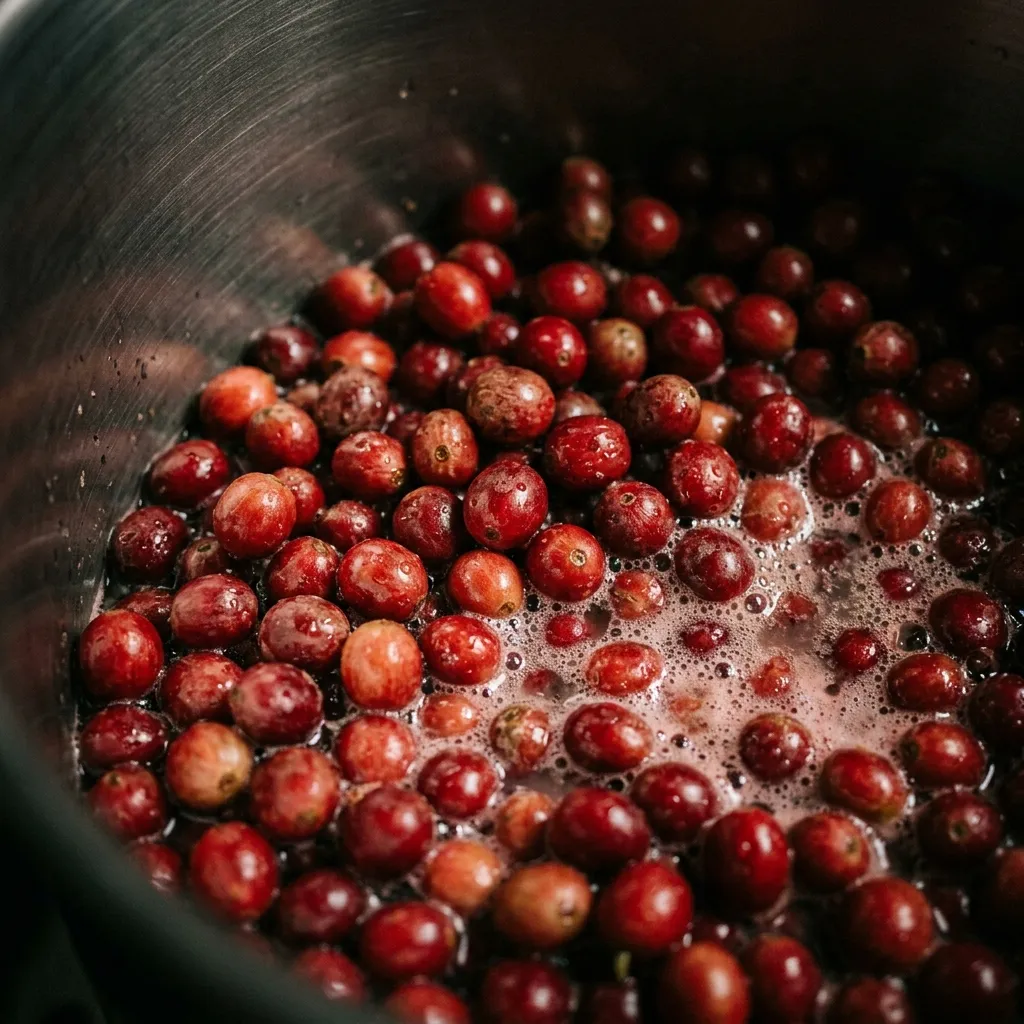
“Carbonic maceration” refers to a fermentation approach adapted from winemaking in which whole fruit is exposed to a carbon-dioxide-rich environment, changing the conditions under which fermentation develops.
“Yeast inoculation” means adding a selected yeast culture rather than relying exclusively on the native microbial population.
These variables can be combined. A coffee can therefore be: whole cherry + anaerobic + yeast inoculated
or: whole cherry + carbonic-style + extended fermentation or: pulped coffee + yeast inoculated + controlled anaerobic fermentation.
That is why the process name alone is not enough to evaluate a coffee.
The protocol is the process.
Anaerobic Fermentation in Loja
Anaerobic coffee processing creates an environment in which oxygen availability is restricted. This changes the microbial ecology and the metabolic pathways involved in fermentation.
Research using self-induced anaerobic fermentation and selected yeasts has demonstrated changes in organic acids and volatile compounds, with coffees receiving specialty scores and showing differentiated sensory characteristics. In one study, yeast-inoculated lots produced scores above 80 points, with some treatments reaching the mid-80s.
Another study found that inoculation with Saccharomyces cerevisiae and Torulaspora delbrueckii modified sensory profiles and, under certain conditions, increased beverage scores by as much as five points relative to controls.
That is important because it shows what controlled fermentation can potentially accomplish:
not merely “stronger flavor,” but different flavor architecture. Depending on the substrate, yeast, temperature and duration, experimental lots can move toward:
- more intense fruit aromatics
- increased perceived sweetness
- wine-like or tropical characteristics
- greater aromatic persistence
- more complex acid structure
- heavier or more rounded mouthfeel
But these effects are highly protocol-dependent. There is no universal “anaerobic flavor.”
Carbonic Maceration: A Different Fermentation Logic
Carbonic maceration is particularly interesting because it changes the fermentation environment before asking the microorganisms to do the work.
In its coffee adaptation, whole cherries are placed in a controlled, oxygen-limited environment, often with carbon dioxide present. The resulting microbial succession and metabolic activity can differ from conventional fermentation.
Research on carbonic maceration has shown that temperature and fermentation time can significantly affect both microbial communities and sensory outcomes. One published experiment found a significant relationship between sensory score and a treatment conducted at 38°C for 96 hours, illustrating how strongly protocol parameters can influence the result.
More recent research has reinforced that microbial populations do not remain static during carbonic maceration. Fungal communities can shift substantially as fermentation progresses, meaning that the character of the coffee is not determined at the beginning of the process; it develops dynamically over time.
For producers in Loja, that makes carbonic-style processing attractive—and demanding. A successful lot can produce striking aromatics and a distinctive sensory identity.
An uncontrolled lot can simply become over-fermented.
Yeast: Adding a Variable That Can Be Studied
One of the biggest advantages of yeast inoculation is that it introduces an additional layer of control.
Instead of relying exclusively on whatever microbial population happens to dominate on the day of harvest, a producer can select a yeast strain and evaluate its behavior under defined conditions.
Research has shown that different yeasts can produce different outcomes. In one study, Torulaspora delbrueckii and Candida parapsilosis produced distinct results depending on whether the coffee was natural or pulped, demonstrating that the microorganism and the substrate interact.
That interaction is fundamental. A yeast that performs well in a natural coffee may not produce the same result in a washed or pulped system.
Likewise, changing the variety, cherry maturity, temperature or fermentation duration can shift the outcome.
This is why yeast should not be treated as a flavor additive.
It is better understood as a fermentation tool. The producer is effectively asking:
Which microbial pathway produces the most interesting cup from this particular coffee?
Extended Fermentation: Where Control Becomes Critical
Longer fermentation is not automatically better. As fermentation progresses, the microbial population changes, available substrates decrease and the chemical environment becomes progressively different.
A controlled increase in fermentation time can generate desirable compounds and more pronounced sensory differentiation.
Too much time can move the coffee toward undesirable acidity, excessive alcohol-like character, solvent-like aromas or other sensory defects.
Studies monitoring fermentation have demonstrated measurable changes in pH, temperature, sugars, microbial populations and chemical composition as processing time increases.
That is why a statement such as “96-hour fermentation” does not mean much without context.
96 hours at what temperature? With what substrate? With which microorganism? At what cherry maturity? With what oxygen conditions?
The duration is only one variable.
The Raw Material Comes First
Experimental processing cannot rescue poor cherries. In fact, fermentation tends to expose weaknesses in the raw material.
If a lot contains inconsistent maturity, damaged cherries or poor sorting, an aggressive fermentation protocol may amplify undesirable characteristics rather than hide them.
For experimental processing, the logic is therefore: better cherry → more predictable fermentation → clearer sensory result.
This is why maturity measurement is useful. A Brix reading can help characterize the fruit entering the process, but it should not be treated as a magic threshold.
The proposed 18° Brix minimum can be a useful operational target for selecting ripe material, but there is no universal scientific rule stating that every experimental coffee should begin at ≥18° Brix. Optimal maturity depends on variety, environment, fruit condition and processing design.
In practice, the important point is consistency. A producer who runs the same protocol on fruit harvested at very different maturity levels is not performing a controlled experiment.
They are performing several experiments at once.
The Real QC Risk
The commercial risk of experimental coffee is not that the flavor will be different.
The risk is that it will be different for the wrong reasons.
For a buyer, the major warning signs include:
Over-fermentation. The intended fruit character becomes dominated by heavy alcoholic, solvent-like or decomposed notes.
Poor batch consistency. One portion of the lot tastes excellent while another shows defects or excessive fermentation.
Loss of varietal identity. A delicate Sidra or Typica Mejorado becomes almost indistinguishable from other heavily processed coffees.
Unstable drying. A successful fermentation can still be compromised during drying, producing instability later in storage.
Process dependency. The coffee tastes impressive only at a narrow roast or brewing condition and collapses outside it.
This is why QC must extend beyond the fermentation tank. The final green coffee needs to be evaluated for moisture stability, water activity where available, physical defects, sensory consistency and storage behavior.
Fermentation quality is only part of processing quality.
Experimental vs Washed: The Most Useful Comparison
The best way to evaluate an experimental lot is not to taste it in isolation.
Compare it with a washed reference from the same farm, variety and harvest period whenever possible.
The washed coffee provides a baseline. It answers the question:
What does this coffee taste like before experimental processing changes the sensory expression?
That comparison is more informative than comparing an experimental Loja coffee against an unrelated experimental coffee from another country.
| Attribute | Washed reference | Experimental fermentation |
|---|---|---|
| Fruit intensity | Moderate / origin-dependent | Often higher |
| Acidity | Transparent and easier to identify | Can become broader or more complex |
| Sweetness | Often clean and precise | May feel larger or more concentrated |
| Aromatics | Variety and terroir-forward | Often more fermentation-driven |
| Body | Usually cleaner / lighter | Can become fuller |
| Finish | Clean, origin-defined | Potentially longer and more persistent |
| Risk | Lower | Higher |
| Identity | Easier to read | Can be enhanced or obscured |
The objective is not necessarily to select one over the other. A washed coffee may be the better expression of variety and terroir.
An experimental coffee may offer a more differentiated sensory product. For a roaster, both can have value.
What Carbonic Maceration and Yeast Can Add to a Loja Coffee
Loja is particularly interesting for experimental processing because its coffees can begin with high aromatic potential before fermentation intervention.
A well-controlled experimental process can push a coffee toward:
red and tropical fruit floral intensity stone fruit wine-like aromatics cocoa sweetness fermented-fruit complexity
But those descriptors should be treated as outcomes to be measured, not promises attached to the process name.
The same carbonic-style protocol applied to different coffees can produce different results.
This is partly because fermentation is an interaction between: microorganisms × substrate × temperature × time × oxygen × fruit maturity.
That is why origin trials are so valuable. A protocol that works beautifully on a coffee from one farm may behave differently on another coffee only a few kilometres away.
Experimental Processing in High-Altitude Loja
Altitude adds another variable. Cooler environments can change the pace of fermentation and the development of microbial populations. This means that protocols developed under one temperature regime cannot simply be copied into another location without adjustment.
For producers working in Loja’s higher-elevation environments, fermentation therefore needs to be evaluated alongside ambient temperature, coffee-mass temperature and the specific characteristics of each cherry lot.
This is particularly important for extended fermentation. A 48-hour protocol is not necessarily equivalent from one environment to another.
The clock alone does not describe the fermentation.
Temperature does. So does pH. So does Brix. So does the microbial population.
What We Are Looking For in an Experimental Lot
At origin, the most interesting question is not how extreme a fermentation can become.
It is how precisely it can be controlled. For a commercially viable experimental process, the target should be a coffee that combines:
clean raw material with controlled fermentation and repeatable drying to produce a clearly differentiated cup.
That differentiation might be a dramatic fruit profile. Or it might be a more subtle increase in sweetness, aromatic complexity and finish.
The best experimental coffees do not taste like a laboratory experiment. They taste like excellent coffee with another layer of information.
What’s Next for Fermentation in Loja?
The next stage of experimental processing is unlikely to be simply longer fermentation times.
The more interesting direction is greater precision. That means documenting:
- cherry maturity
- Brix
- temperature
- fermentation duration
- pH
- vessel conditions
- oxygen exposure
- yeast or microbial culture
- drying conditions
- final moisture and stability
- cupping results
Once these variables are recorded consistently, origin processing becomes something closer to research and development.
And that changes the commercial conversation. Instead of selling: “120-hour anaerobic coffee.”
A producer can say: “This Typica Mejorado lot from Loja was harvested at a defined maturity range, processed under a controlled anaerobic protocol with a selected yeast, dried under monitored conditions, and compared against the farm’s washed reference.”
That is a much stronger proposition for a professional buyer.
The Opportunity—And the Discipline
Experimental processing has enormous potential in Loja. Carbonic maceration can create new aromatic pathways. Yeast inoculation can introduce greater microbial control. Extended fermentation can increase sensory differentiation.
But none of these techniques guarantees quality. They increase the number of variables.
That means they also increase the need for QC. The goal should not be to make the most fermented coffee possible.
It should be to find the point where fermentation adds complexity without replacing origin identity.
For Loja, that distinction matters. The future of experimental processing is not simply more anaerobic coffees.
It is better-controlled anaerobic coffees, built around exceptional cherries and evaluated against a clear origin baseline.
That is where fermentation becomes more than a trend—and becomes genuine processing innovation.
Explore More About Our Approach to Processing
For a deeper look at how harvest maturity affects fermentation potential, read Coffee Brix, Harvest and Ripening: What the Numbers Actually Tell Us.
To compare how different processing methods can transform the same raw material, continue with The Same Lot, Three Processes: How Processing Changes a Coffee’s Cup.
A Note on Process Terminology
Terms such as “anaerobic,” “carbonic maceration,” “extended fermentation” and “yeast fermented” are not standardized sensory guarantees. They describe processing conditions, not predetermined cup profiles. Scientific studies show that fermentation outcomes depend on temperature, duration, substrate, microbial population and other variables.
For this reason, experimental lots should be evaluated through documented protocols and comparative cupping rather than process labels alone.