Volcanic Soil and the Minerality in Loja's Cup
Quick Summary: Soil matters to coffee quality, but the relationship is more complex than “volcanic soil goes into the cup.” In Loja, volcanic-derived soils occur alongside Inceptisols, Entisols and other soil orders, depending on location. Their structure, organic matter, acidity, drainage and nutrient availability influence plant growth and bean composition, while altitude, climate, variety and processing also shape the final cup. The “mineral” character sometimes perceived in Loja coffee is best understood as a sensory descriptor emerging from this whole system—not as a direct taste of soil minerals.
The most interesting part of Loja’s terroir may be below the coffee tree.
But it is also where specialty coffee marketing often becomes too simplistic.
“Volcanic soil” is frequently presented as a direct explanation for acidity, sweetness, floral aromas and minerality. The scientific picture is more nuanced. Soil absolutely interacts with coffee quality, but it does so through plant nutrition, water availability, root environment and the chemical composition of the developing fruit—not because potassium, magnesium or other minerals simply pass from the soil into the brewed beverage and create a recognizable flavor.
That distinction matters in Loja. The province contains a heterogeneous mosaic of soils. Government planning data for the canton of Loja identify Inceptisols and Entisols as dominant, with Andisols representing a smaller mapped share. At the provincial scale, Andisols also occur alongside several other soil orders.
So the story of volcanic soil coffee in Loja is not “all Loja is volcanic.”
It is more interesting: different geological and soil environments interact with altitude, climate, vegetation and farming practices to create different coffee-growing conditions.
What Volcanic-Derived Soil Brings
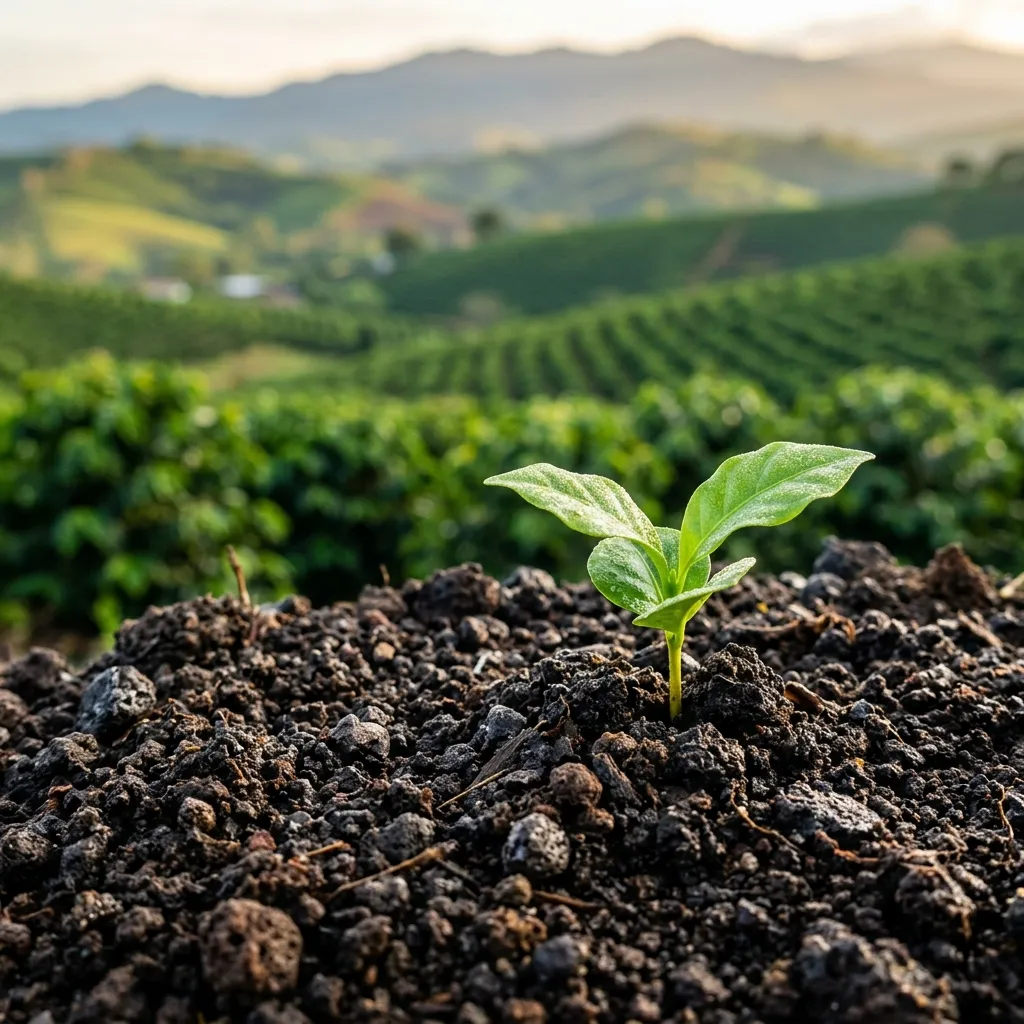
Andisols are soils associated with volcanic materials. They can have distinctive physical and chemical properties, including high organic-matter accumulation, strong water-holding capacity and particular interactions between minerals and organic compounds. Ecuador contains extensive areas of volcanic-derived soils, but their characteristics vary according to parent material, weathering, climate and landscape position.
In Loja, mapped soil systems are particularly heterogeneous. A regional study of southern Ecuador notes that Inceptisols are widespread across the province, especially in slopes and upper reliefs, while Andisols occur where volcanic or pyroclastic materials have contributed to soil formation.
That matters because soil texture and drainage can be as relevant as the word “volcanic.”
A steep coffee slope with shallow soil behaves differently from a deep, organic-rich volcanic soil on a more stable landscape position.
A well-drained profile behaves differently from one with prolonged water retention. And a soil with adequate potassium is not necessarily better than one with excessive potassium.
The agronomic question is always about balance. For coffee, roots need access to water and nutrients while maintaining adequate aeration. Soil pH influences nutrient availability, while texture and structure determine how water and dissolved nutrients move through the profile.
This is where terroir becomes measurable.
Potassium, Magnesium and the Plant—Not the Cup Directly
Potassium and magnesium are essential plant nutrients, but it would be misleading to say that they directly “create” floral or mineral flavors in brewed coffee.
The pathway is indirect. Soil chemistry affects nutrient availability. Nutrient availability affects plant physiology. Plant physiology affects the formation and distribution of compounds in the developing cherry and seed. Those compounds then participate in the transformations of roasting and brewing that ultimately produce sensory attributes.
Research examining 139 paired soil and coffee samples in Mexico found significant relationships between soil and bean concentrations for phosphorus, potassium, calcium and copper. The same study found relationships between bean composition and several cup-quality attributes—but also concluded that variables such as altitude and bean moisture were among the most important factors explaining sensory quality.
That is a useful correction to the simplistic soil-to-cup narrative. Soil is part of the system, not the entire system.
Potassium deserves particular attention because it has an important role in plant physiology and has been investigated extensively in coffee nutrition. Recent research examining potassium fertilization found measurable effects on coffee chemistry and sensory evaluation, although responses varied by cultivar and fertilizer treatment.
In other words, nutrient management can influence the cup. But “more minerals” does not automatically mean “better coffee.”
What Does “Minerality” Actually Mean?
This is where the sensory language becomes more interesting. When a taster describes a coffee as mineral, they are not necessarily detecting magnesium, potassium or another soil element as though tasting water from a geological spring.
Minerality is a sensory concept. Depending on the coffee and the taster, it can be associated with sensations such as wet stone, slate, graphite, chalk, saline impressions, coolness, tension or a clean structural character.
It is therefore useful language, but it should not be confused with a simple chemical fingerprint of the soil.
Coffee sensory perception emerges from hundreds of compounds and from interactions among aroma, acidity, mouthfeel and flavor. The relationship between soil chemistry and cup attributes is demonstrably real, but it is not one-to-one. Studies have found that soil texture, soil pH, nutrient status, altitude, moisture and bean chemistry can all contribute to cup quality.
That makes the idea of a Loja mineral cup profile more defensible when treated as an emergent terroir characteristic rather than a literal transfer of volcanic minerals.
The distinction is subtle, but important for professional buyers.
The Mineral Signature in Loja’s Cup
A coffee that presents a mineral character often feels structurally different from one whose sweetness dominates the entire sensory impression.
Instead of immediately reading as ripe fruit or confectionery, the cup may seem more tension-driven.
Acidity can feel precise rather than simply intense. The finish can feel dry, clean and persistent. Aromatics may be less overtly tropical and more floral, herbal, tea-like or stone-fruit oriented.
But again, this is not uniquely volcanic. Similar sensory descriptions occur in coffee from very different geological environments.
That is precisely why soil should be treated as one layer of terroir.
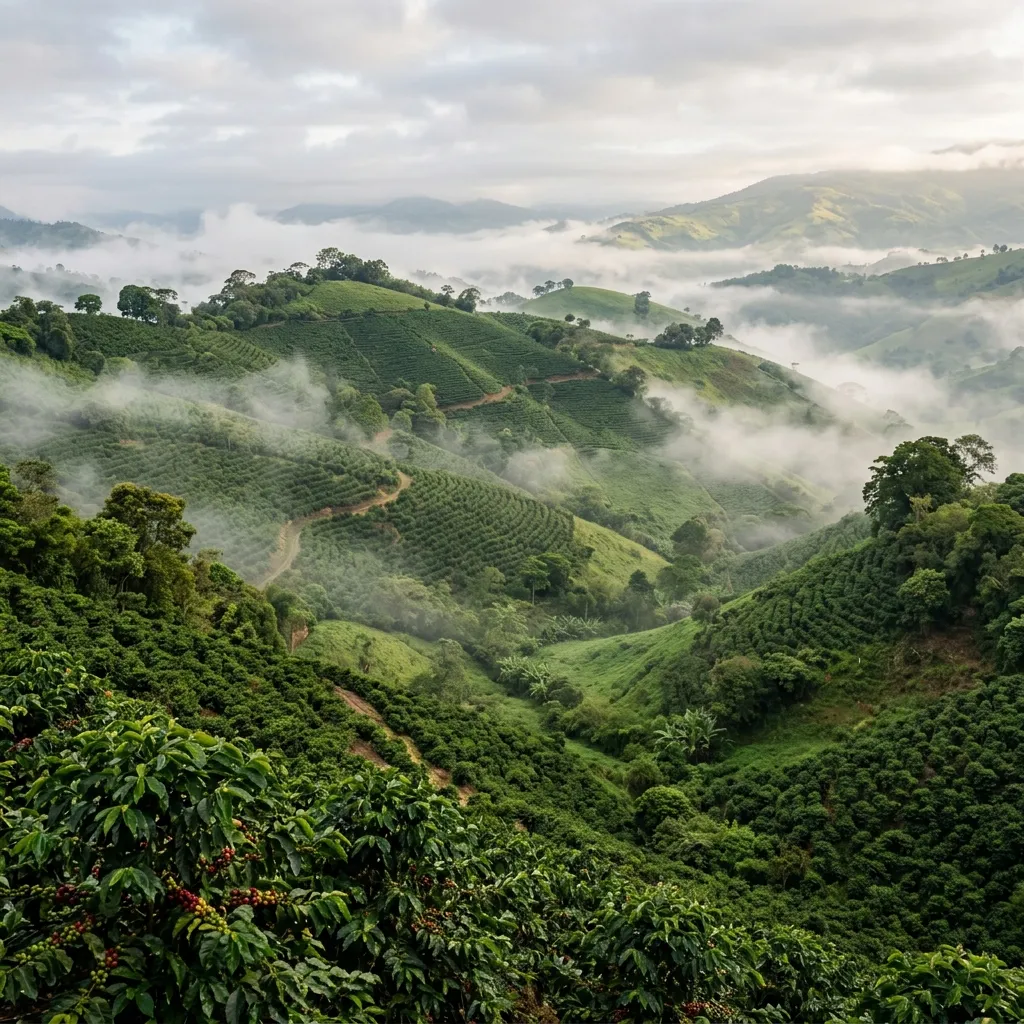
In Loja, the potential interaction is particularly compelling because soil variation overlaps with the province’s strong altitudinal and climatic gradients. Southern Ecuador contains diverse soils and substantial variation in temperature, rainfall and topography.
The result is not a single “Loja minerality.” It is a family of possible expressions.
Altitude Amplifies the Soil Story
The interaction between soil and altitude is more useful than considering either variable independently.
Higher elevation generally means cooler temperatures and a different thermal environment for cherry development. Research across coffee-growing regions has repeatedly found meaningful effects of elevation on coffee quality, while soil characteristics modify the growing environment around the root system.
This creates an important distinction: soil provides the growing medium; altitude changes the pace and environment in which the plant develops.
A mineral-rich, well-structured soil at a warm elevation does not necessarily produce the same coffee as a comparable soil at a cooler elevation.
Likewise, an excellent high-altitude site does not become exceptional simply because its soil is classified as volcanic.
This is why the claim that “the mineral signature becomes stronger above 1,800 masl” should not be treated as a universal scientific rule.
There is good evidence that higher altitude can influence sensory quality, but there is not a robust basis for assigning a specific 1,800-meter threshold at which volcanic minerality suddenly becomes pronounced.
For a serious origin story, the interaction is more valuable than the threshold.
Soil × Altitude × Climate
A useful working model for Loja looks like this: Soil → root environment → plant nutrition and water relations
Altitude → temperature → maturation rate Climate → radiation, rainfall, humidity and plant stress
Variety → genetic potential Processing → preservation and transformation of compounds Roasting → development of the final sensory profile
The cup is the result of all six. That is why attributing a coffee’s acidity exclusively to volcanic soil—or its minerality exclusively to magnesium—is too narrow to be useful.
The better question is:
What combination of soil, climate, elevation, genetics and processing produced this particular expression?
That is the level of analysis a specialty buyer can actually work with.
Process and Mineral Clarity
Processing adds another layer. Washed coffees often make acidity, cleanliness and subtle structural differences easier to perceive because the cup tends to have less of the heavier fruit-derived character associated with some natural processing. Honey processes can occupy an intermediate position, depending on fermentation and drying management.
Naturals can still express high acidity, florality and structure, but intense fruit aromatics can dominate the sensory frame and make subtle mineral impressions less obvious.
That does not mean that the processing method creates or destroys minerals.
It changes the sensory context in which the underlying coffee is perceived.
| Process | Typical sensory context | Potential perception of minerality |
|---|---|---|
| Washed | High clarity, transparent acidity, cleaner finish | Often easiest to identify |
| Honey | Sweetness with moderate clarity and body | Moderate to high |
| Natural | Fruit intensity, heavier aromatics, greater fermentative influence | Can be masked by fruit character |
| Experimental fermentation | Process-dependent, potentially intense aromatic transformation | Highly variable |
The important phrase is potential perception. There is no reliable scientific rule stating that washed coffee contains more “mineral character” than natural coffee. Rather, cleaner sensory profiles can make subtle structural notes easier for a taster to recognize.
This is especially relevant when comparing different processes from the same farm.
Tasting for Soil, Not Just Variety
For buyers, the challenge is avoiding the temptation to assign every distinctive note to genetics.
Imagine tasting three coffees from the same region: Lot A: bright citrus, floral aromatics, tea-like finish.
Lot B: heavier tropical fruit, wine-like character, dense sweetness. Lot C: restrained fruit, lively acidity, wet-stone or mineral impression, long clean finish.
The obvious question is: “Which variety is different?” The more useful questions are:
Were they grown on the same soil? At the same elevation? Under similar shade?
With comparable harvest maturity? Processed in the same way? Dried to comparable moisture and stability?
Only then can soil become a meaningful variable in the tasting exercise.
For a farm-level terroir study, an ideal buyer data sheet would connect:
| Agronomic data | Coffee data |
|---|---|
| Soil order | Variety |
| pH | Harvest date |
| Organic matter | Processing method |
| K (Potassium) | Drying protocol |
| Mg (Magnesium) | Moisture / water activity |
| Ca (Calcium) | Cupping score |
| P (Phosphorus) | Acidity |
| Texture | Sweetness |
| Drainage | Body |
| Elevation | Descriptive notes |
This creates something much more powerful than a marketing claim. It creates a soil-to-cup dataset.
What a Loja Soil Analysis Should Tell You
A soil report for a specialty coffee farm should not be reduced to the question, “Is the soil volcanic?”
The more useful questions are:
What is the soil classification? What is the pH? How much organic matter is present? What are the available levels of K, Mg, Ca and phosphorus? What is the texture? How does the profile drain? How deep is the effective rooting zone? How does the soil vary across the farm?
Those measurements can be connected to leaf analysis, agronomic management and eventually cup results.
That approach is particularly relevant in Loja because soil diversity is real. Official territorial data show that the canton of Loja contains multiple soil orders, with Inceptisols and Entisols occupying much larger mapped areas than Andisols.
So a responsible Loja terroir narrative should never imply that every coffee farm sits on the same volcanic soil.
The Real Loja Terroir Signature
The strongest argument for Loja’s terroir is not that volcanic soil creates a flavor by itself.
It is that soil, altitude and climate overlap within an unusually complex southern Andean landscape.
In some areas, volcanic-derived soils contribute distinctive physical and chemical properties. Elsewhere, Inceptisols and Entisols dominate. Across these landscapes, elevation, slope, rainfall, temperature, vegetation and agricultural management create different growing environments.
That complexity is precisely what makes soil interesting. A coffee’s mineral impression is not the geological material itself speaking directly through the cup.
It is the sensory result of a much longer chain: geology → soil formation → water and nutrient availability → plant physiology → cherry development → bean chemistry → processing → roasting → extraction → perception.
That chain is Loja’s real terroir story. And for specialty coffee, it is a much stronger story than simply saying:
“This coffee grows in volcanic soil.”
Explore the Complete Loja Terroir
Climate is the next layer of the story. Read Loja’s Microclimates: Where the Andes Meet the Amazon to see how altitude, rainfall, humidity and mountain airflow create distinct growing environments across the province.
For a broader view of the origin, explore Loja Coffee: The Southern Ecuador Origin Shaping a New Generation of Specialty Coffee.
And to see how processing can change the sensory expression of the same terroir, continue with The Same Lot, Three Processes: How Processing Changes a Coffee’s Cup.
A Note on Scientific Interpretation
Soil contributes to coffee quality, but no responsible terroir analysis should attribute a cup characteristic to soil alone. Research shows relationships between soil properties, bean elemental composition and sensory quality, while also demonstrating the importance of altitude, moisture, genetics, processing and other factors.
For Loja specifically, farm-level soil analysis is therefore more valuable than generalized statements about “volcanic soil.” A verified soil profile—combined with climate, elevation, agronomic and cupping data—can turn the idea of terroir into something measurable.