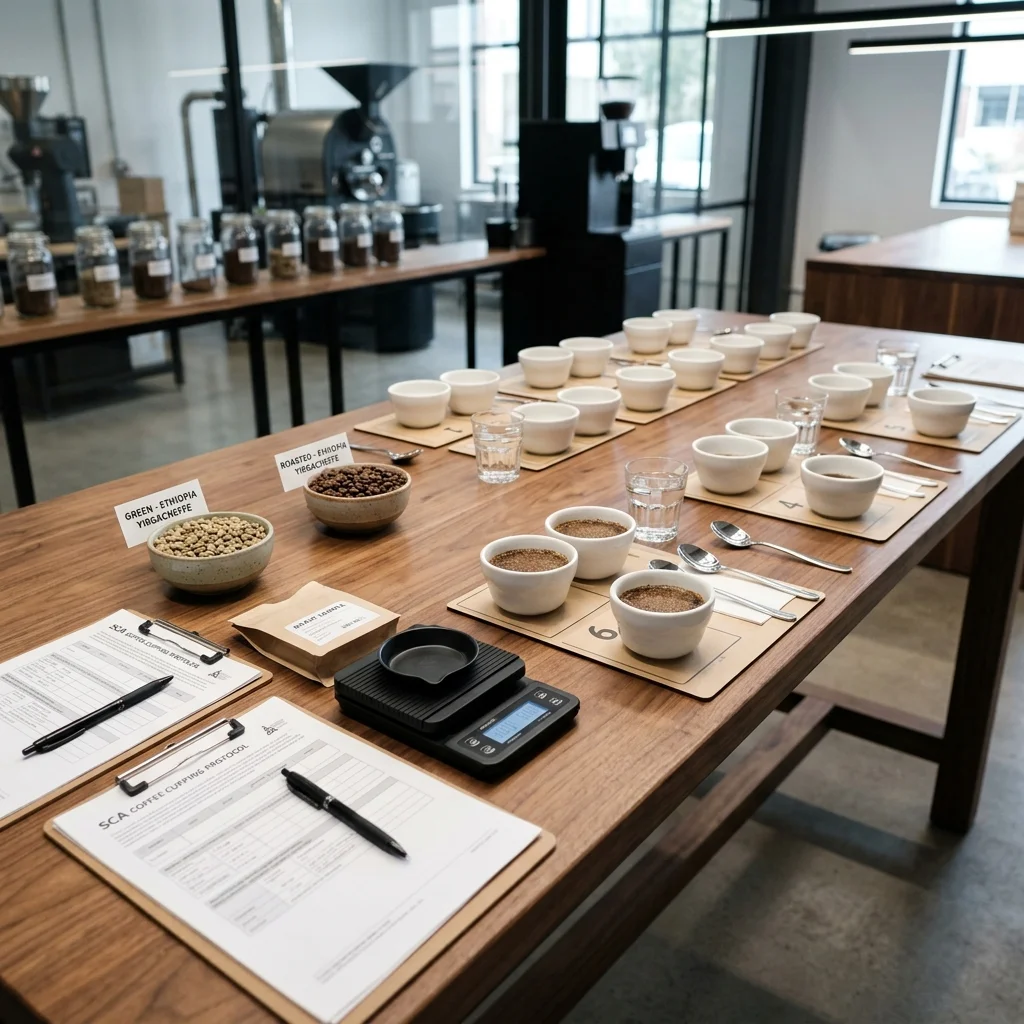
Ecuador vs Colombia vs Peru: Coffee Guide
Quick Summary: Colombia, Peru, and Ecuador play distinct roles in a specialty coffee sourcing program. Colombia provides massive scale and established export infrastructure; Peru excels in certified organic coffee and cooperative networks; Ecuador offers high varietal differentiation, farm-level traceability, and distinctive micro-lots. This guide provides a practical sourcing framework to match each origin with your roastery’s portfolio goals.
How to choose among three major South American origins based on supply, differentiation, traceability, and buyer needs
South America offers several of the world’s most established coffee origins, but Colombia, Peru, and Ecuador do not play exactly the same role in a specialty coffee sourcing program.
For roasters and importers, the best origin is rarely determined by country reputation alone. The more useful questions are:
How much coffee do I need? How consistent does supply need to be? What type of quality or certification am I looking for? How important is farm-level traceability? And where can an origin add something distinctive to my portfolio?
Colombia can provide exceptional scale and an established export infrastructure. Peru offers a strong position in certified organic coffee alongside a growing specialty sector. Ecuador operates on a much smaller production scale, but selected origins and producers offer distinctive genetics, diverse growing environments, and highly differentiated specialty lots.
This guide is designed to help buyers understand where each origin can fit within a sourcing strategy rather than declaring one country universally better than the others.
Sourcing Decision Framework for Roasters
When comparing South American origins, consider five practical factors:
- Supply scale and continuity — How easily can the origin support the volume and purchasing frequency your program requires?
- Specialty differentiation — How much room is there to find distinctive varieties, farms, processes, or sensory profiles?
- Traceability — Can the coffee be connected to a specific producer, farm, lot, or processing record?
- Certification and sourcing requirements — Is organic, Fair Trade, or another certification central to the program?
- Menu and portfolio role — Is the coffee intended to be a core component, a blend, a single origin, or a limited seasonal release?
The right choice depends on how these priorities are weighted.
Colombia: Scale, Established Supply, and Regional Harvest Diversity
Colombia is one of the world’s most important Arabica origins and has an exceptionally developed coffee production and export infrastructure.
Its scale gives buyers access to a broad spectrum of coffees, from commercial and blend components to highly differentiated specialty microlots.
The country’s geography also creates different regional harvest calendars. The Federación Nacional de Cafeteros publishes harvest periods by region rather than treating Colombia as one uniform crop, allowing exporters and buyers to plan around different production windows.
Key strengths
- Scale and market depth: Colombia produces coffee at a scale that makes it suitable for large purchasing programs as well as specialty sourcing. USDA estimates Colombia’s 2026/27 Arabica production at approximately 13.4 million 60-kg bags, placing it among the world’s largest Arabica producers.
- Established infrastructure: The country has a mature producer, milling, logistics, export, and quality-control ecosystem, making Colombia relatively straightforward to incorporate into established sourcing programs.
- Regional diversity: Colombian coffee is not one uniform product. Regional differences in climate, elevation, varieties, processing, and harvest timing create substantial diversity within the origin.
- Strong specialty ecosystem: Colombia has a well-developed specialty sector, with differentiated varieties, producer projects, experimental processing, competitions, and traceable farm-level coffees alongside much larger-volume supply.
Sourcing considerations
Colombia’s scale can be an advantage when a roaster needs continuity, but it can also make differentiation more challenging for a brand that already carries several Colombian coffees.
Weather also continues to affect Colombian production. In 2026, the Federación Nacional de Cafeteros reported that excessive rainfall had affected flowering and grain development, contributing to a lower production outlook for part of the year.
The practical lesson is that Colombia offers strong supply depth, but individual lots still need to be evaluated on their own production conditions and availability.
Best fit
Colombia can be particularly well suited to:
- Core espresso programs.
- Larger-volume specialty purchasing.
- Blending components.
- Consistent regional coffees.
- High-quality single origins.
- Buyers who value an established export ecosystem and multiple regional sourcing options.
Peru: Organic Supply, Cooperative Networks, and Specialty Potential
Peru occupies a distinctive position in the South American market because of its strong organic coffee sector and extensive network of smallholder producers and cooperatives.
The USDA identifies Peru as the world’s leading exporter of organic coffee, with approximately 90,000 hectares certified organic. The country also has an active specialty sector, with producers participating in international competitions and pursuing premium markets.
Key strengths
- Strong organic positioning: For buyers whose program requires certified organic coffee, Peru deserves particular attention because organic production is a significant part of its export identity.
- Producer and cooperative networks: Peruvian coffee frequently reaches international markets through cooperatives and producer organizations. These structures can provide access to substantial volumes while supporting smallholder supply chains.
- Broad specialty potential: Peru should not be reduced to a generic “chocolate and nut” profile. Its producing regions and individual producers can generate a wide range of specialty expressions, and Peruvian coffees regularly appear in international specialty competitions.
- Value across different sourcing programs: Peru can fit organic-certified programs, conventional specialty offerings, blends, and differentiated single-origin coffees depending on the producer and purchasing structure.
Sourcing considerations
Cooperative sourcing can provide useful scale and certification access, but buyers looking for extremely granular farm-level sourcing need to understand how a particular exporter or cooperative constructs its lots.
A cooperative lot and a single-farm microlot are not equivalent products simply because both are traceable to Peru.
Buyers should ask:
- How is the lot assembled?
- How many producers are represented?
- What level of traceability is available?
- Is the coffee certified?
- What processing and quality controls are applied?
Best fit
Peru can be particularly well suited to:
- Certified organic programs.
- Specialty filter programs.
- Cooperative-based sourcing.
- Blends requiring sweetness and balance.
- Buyers seeking an alternative South American origin with strong smallholder participation.
Ecuador: Differentiated Genetics, Diverse Origins, and Direct Access
Ecuador occupies a different position in the South American market. It is a much smaller producer than Colombia or Peru. USDA’s July 2026 outlook places Ecuador’s total coffee production at approximately 350,000 60-kg bags, compared with 13.4 million Arabica bags for Colombia and 4.78 million for Peru.
That difference in scale is important. Ecuador should therefore not be positioned as a replacement for Colombia or Peru when a buyer needs large and continuous volumes.
Its opportunity is different: selected Ecuadorian origins can add differentiation to a specialty portfolio through varieties, microclimates, farm identity, processing, and lot-level sourcing.
Key strengths
- Distinctive genetics: Ecuador has become particularly visible in the specialty market through varieties and selections such as Typica Mejorado and Sidra, alongside Gesha and more established Arabica varieties. Learn more in our guide to heirloom coffee genetics in Ecuador.
- Geographic and environmental diversity: Ecuador’s coffee production spans different regions and growing environments. Within Loja and other specialty-producing areas, farms can differ substantially in elevation, climate, variety, and production practices. Read more in our guide to the Loja coffee region.
- Strong potential for differentiated microlots: Selected producers work with small lots, distinctive genetics, honey and washed processes, and controlled experimental fermentation approaches.
- Origin-based exporter relationships: The level of traceability depends on the supply chain, but buyers working directly with an origin-based exporter can access detailed information about selected lots, including producer, farm, variety, harvest period, processing method, and quality evaluation.
This is an important distinction: direct traceability is a characteristic of the sourcing relationship, not a universal feature of Ecuadorian coffee.
Sourcing considerations
Ecuador’s smaller production base means that specific specialty lots can be limited in volume.
Buyers should therefore avoid treating the country as a source of unlimited replacement volume and instead evaluate each offer according to:
- Producer.
- Farm.
- Variety.
- Process.
- Available volume.
- Cup performance.
- Shipment timing.
Best fit
Ecuador can be particularly well suited to:
- Premium single origins.
- Limited seasonal releases.
- Specialty filter programs.
- Distinctive varieties.
- Competition-oriented sourcing.
- Roasters looking to diversify their South American portfolio.
Side-by-Side Sourcing Comparison
| Sourcing factor | Colombia | Peru | Ecuador |
|---|---|---|---|
| Production scale | Large | Significant | Smaller |
| Supply structure | Broad producer and exporter ecosystem | Strong cooperative and producer networks | Diverse, with producer, cooperative, and exporter-direct models |
| Harvest structure | Multiple regional harvest periods | Regional and seasonal variation | Regional and farm-level variation |
| Organic sourcing | Available | Particularly strong | Available, but not the defining national characteristic |
| Specialty availability | Extensive | Extensive and growing | Strong in selected origins and producer networks |
| Varietal differentiation | Strong | Strong | Particularly notable in selected specialty programs |
| Traceability | Depends on supply chain | Depends on cooperative/exporter structure | Can be highly granular through direct-origin relationships |
| Typical sourcing advantage | Scale, infrastructure, regional diversity | Organic access, smallholder networks, value | Differentiation, specific varieties, origin access |
| Best portfolio role | Core coffees, blends, specialty | Organic, specialty, blends | Premium single origin and limited releases |
This table should be read as a sourcing framework rather than a quality ranking. Excellent coffee can be found in all three origins.
Where Ecuador Can Add Value to a Specialty Program
Rather than asking whether Ecuador is “better” than Colombia or Peru, a more useful question is:
What can Ecuador add to a coffee portfolio that the other origins do not provide as easily?
1. Genetic differentiation
Selected Ecuadorian coffees can offer varieties such as Typica Mejorado and Sidra that create distinctive sensory and marketing opportunities.
The value is not simply the variety name. The strongest lots combine interesting genetics with strong farm management, appropriate harvest maturity, processing, and drying.
2. Lot-level storytelling
For premium programs, a coffee can become more valuable when the roaster can clearly communicate: who produced it, where it was grown, which variety it is, how it was processed, and what makes the lot distinctive.
Origin-based sourcing can make this information more accessible.
3. Portfolio diversification
Ecuador does not need to replace Colombia or Peru. It can complement them.
A roaster could use Colombia as a core South American offering, Peru for organic or cooperative-based programs, and Ecuador for limited specialty lots or distinctive single origins.
This approach reduces the pressure to find one country that does everything.
4. Second-half-of-year sourcing
Ecuador’s principal harvest period can provide Southern Hemisphere fresh-crop opportunities during the second half of the year. That can be useful when structuring an annual sourcing calendar, although actual availability depends on the individual farm, harvest conditions, processing, and export schedule.
Choosing the Right Origin for Your Program
There is no universal winner. The right choice depends on what your business is trying to accomplish.
Choose Colombia when:
You need significant volume, an established export ecosystem, regional sourcing options, or a dependable component for a core program.
Consider Peru when:
Organic certification, cooperative sourcing, smallholder relationships, or a differentiated South American specialty option are important to your program.
Consider Ecuador when:
You are looking for distinctive varieties, highly differentiated microlots, farm-level sourcing opportunities, or a specialty coffee that can add something new to an existing South American portfolio.
In many cases, the best strategy is not choosing one origin instead of the others. It is building a portfolio in which each origin performs a different role.
What Buyers Should Compare Before Purchasing
Country of origin is only the starting point. Before approving a coffee, compare the actual lot across:
- Producer and farm: Who produced it and where?
- Variety: What genetic material is represented?
- Processing: Washed, honey, natural, or experimental?
- Harvest period: When was the coffee picked?
- Lot size: How much coffee is actually available?
- Physical quality: What are the moisture, screen size, defects, density, and preparation characteristics?
- Cup quality: Does the coffee fit the sensory objective of the program?
- Traceability: How much information can the supplier document?
- Shipment timing: When can the coffee realistically be prepared and exported?
This is where origin comparisons become useful: not as country rankings, but as a starting point for identifying the supply chains that best match a buyer’s requirements.
A Practical Sourcing Strategy for Roasters
A diversified South American program might look very different depending on the size and positioning of the roaster:
- A larger roaster may prioritize Colombia for scale, while using Peru and Ecuador for differentiated specialty offerings.
- A specialty-focused roaster may give greater weight to lot-level traceability, genetics, and sensory differentiation, purchasing smaller quantities from several origins.
- A roaster with an organic program may place Peru higher on its sourcing list because of the depth of certified organic supply.
- A boutique roaster seeking distinctive seasonal releases may find Ecuador particularly attractive because selected farms offer rare varieties and small lots that can support limited-release programs.
The important point is that these origins do not need to compete for exactly the same role.
The Bottom Line
Colombia, Peru, and Ecuador each offer different advantages to specialty coffee buyers.
Colombia brings scale, infrastructure, regional diversity, and a deep specialty ecosystem. Peru offers a strong organic identity, cooperative networks, and significant specialty potential.
Ecuador offers a smaller but highly differentiated specialty sector in which selected varieties, farms, microclimates, and processing methods can create distinctive lots.
For Cafesure, Ecuador’s strongest proposition is not that it produces “better coffee” than its neighbors.
It is that the right Ecuadorian lot can add something different to a South American sourcing portfolio.
That may be a distinctive variety, a traceable farm relationship, a limited seasonal release, or a cup profile that complements rather than duplicates the coffees already in a roaster’s program.
For buyers evaluating South American origins, the best question is therefore not:
“Which country is best?”
It is:
“Which origin best fills the role I need in my coffee program?”
Compare Current Ecuadorian Lots
Cafesure works directly from southern Ecuador with producer partners and selected specialty lots.
For buyers currently sourcing Colombia or Peru, comparing a selection of Ecuadorian coffees can be a practical way to evaluate whether the origin adds value to your portfolio.
Request the current Ecuadorian specialty offer and sample selections from our sourcing team.
Explore our harvest guide on Ecuador Coffee Harvest 2026: What Buyers Need to Know and check release windows in our Ecuador Coffee Sourcing Calendar.