Dark-Room Coffee Drying & the Loja Cup
Quick Summary: Dark-room drying shields coffee lots from UV radiation and sudden heat spikes while controlled temperature keeps the moisture loss curve slow and uniform. The result is cleaner aromatics, protected sweetness, and fewer off-flavors—especially for high-altitude and experimentally processed lots where delicate notes are easily lost.
In specialty coffee processing, drying is often the most underrated phase. Producers can harvest cherry at peak Brix, execute a flawless anaerobic fermentation, and select pristine varieties, only to see the lot’s aromatic complexity degrade during drying.
Traditional open-sun patio drying and unshaded raised beds expose green coffee to uncontrollable environmental fluctuations: intense midday ultraviolet (UV) radiation, rapid thermal spikes, windborne dust, and nighttime humidity spikes.
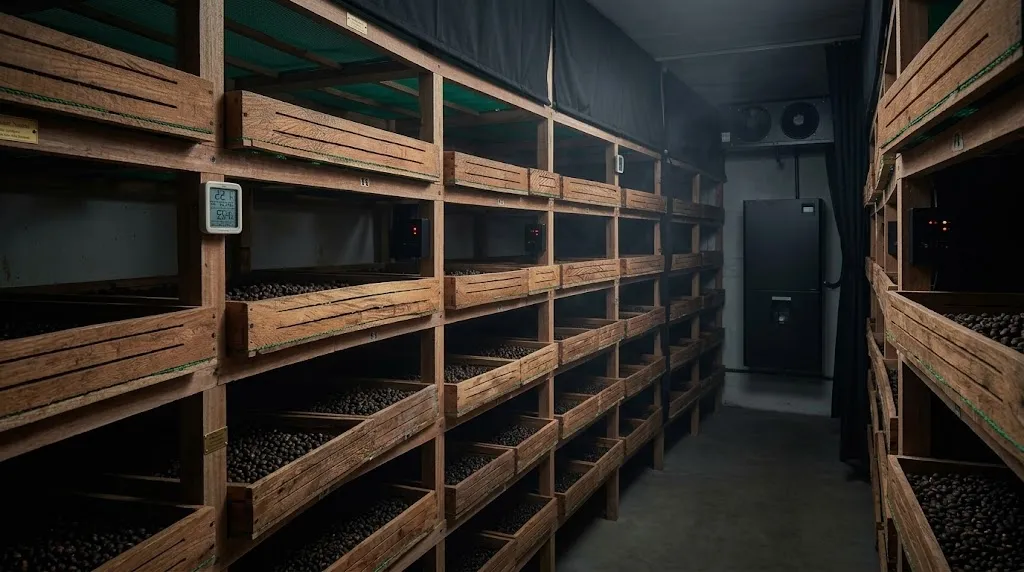
In high-altitude origins like Loja, Ecuador, dark-room drying with controlled temperature and humidity has emerged as a crucial processing protocol for high-tier micro-lots.
By taking the drying stage indoors under total darkness and modulated airflow, producers eliminate thermal stress and preserve the fragile organic compounds that define specialty cup quality.
Why Dry in the Dark?
Sunlight does more than evaporate water from a coffee seed; it delivers intense thermal energy and UV radiation.
When pulped parchment or whole natural cherries are exposed to direct sunlight on open patios, surface temperatures of the seed can exceed 40°C (104°F) during peak afternoon hours.
This rapid surface heating creates three distinct problems:
1. UV Degradation of Volatile Aromatics
Ultraviolet light breaks down delicate aromatic esters, monoterpenes, and organic acids accumulated during slow high-altitude maturation.
2. Case Hardening
Extreme surface heat causes the outer parchment and mucilage layer to dry too rapidly while the inner embryo retains moisture. This uneven moisture gradient stresses the cell structure, leading to premature aging and papery off-flavors in green storage.
3. Lipid Oxidation
Uncontrolled thermal exposure oxidizes the seed’s lipid content, accelerating cup quality decline over time.
By eliminating light entirely, dark-room drying acts as a protective sanctuary for delicate varietals.
Temperature Control and the Drying Curve
Drying coffee is not simply about removing water; it is about managing a controlled moisture loss curve.
In a dark-room setup, ambient temperature, relative humidity (RH), and airflow are actively regulated using dehumidifiers, indirect ventilation, and climate monitoring.
| Drying Phase | Duration (Days) | Target Temp (°C) | Target RH (%) | Target Seed Moisture (%) |
|---|---|---|---|---|
| Phase 1: Surface Water Removal | Days 1–3 | 20°C – 22°C | 60% – 65% | ~50% down to 35% |
| Phase 2: Slow Internal Dehydration | Days 4–15 | 18°C – 20°C | 50% – 55% | 35% down to 18% |
| Phase 3: Moisture Equilibrium | Days 16–25 | 16°C – 18°C | 45% – 50% | 10.5% – 11.5% (Final) |
Unlike rapid 4-to-6-day sun drying, a controlled dark-room drying curve extends across 18 to 28 days.
This slow, linear evaporation allows cellular moisture to migrate from the core of the seed to the exterior at a uniform rate, preventing cellular collapse and locking in metabolic precursors.
What Changes in the Cup?
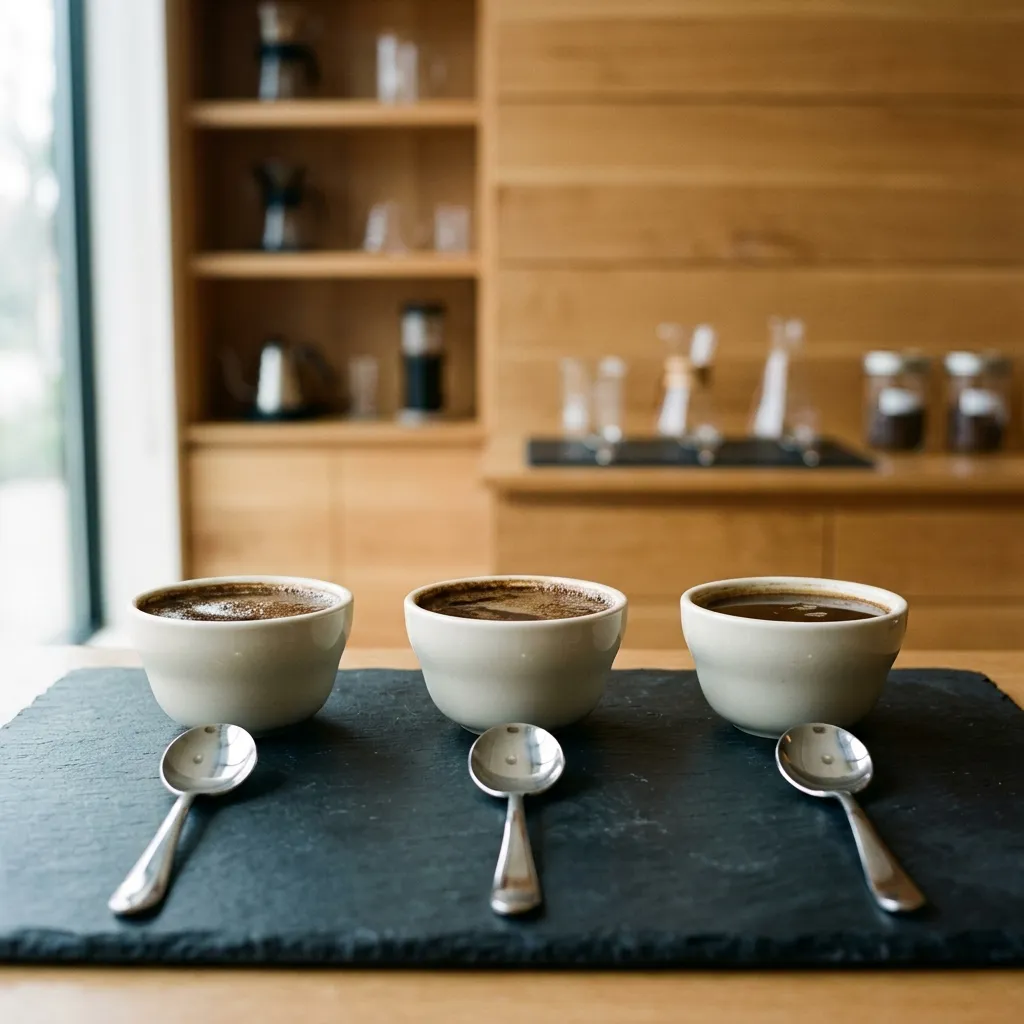
When a lot undergoes controlled dark-room drying, the sensory differences on the cupping table are immediately noticeable:
- Preserved Aromatic Clarity: Delicate floral notes (jasmine, orange blossom) and volatile fruit esters remain pristine rather than cooked or muted.
- Protected Sweetness: Sucrose degradation is minimized, resulting in a cleaner, more vibrant, panela-like or honeyed sweetness.
- Refined Acidity: Citric and malic acids retain their crisp, sparkling structure without developing harsh, astringent notes caused by thermal stress.
- Extended Shelf Life: Uniform internal moisture and intact lipid barriers significantly delay fading, ensuring the green coffee maintains its score long after export.
When Dark-Room Drying Matters Most
While standard commercial lots may not justify the energy and infrastructure costs of dark-room drying, the technique is essential for specific high-value programs:
Delicate Varietals
High-altitude heirlooms like Gesha, Typica Mejorado, and Sidra possess complex, ethereal floral profiles that easily degrade under direct sun.
Honey and Natural Processed Lots
Mucilage-heavy coffees are prone to wild, uncontrolled fermentation if dried in warm, humid outdoor conditions. Dark-room drying stabilizes the fermentation kinetics.
Experimental Fermentations
Lots subjected to carbonic maceration or yeast inoculation require strict environmental control during drying to lock in the intended aromatic architecture created in the fermentation tank.
Reading the Drying Data: What Buyers Should Request
Professional green coffee buyers should look beyond basic moisture percentage when evaluating specialty lots.
When reviewing agronomic spec sheets for dark-room dried coffees from Loja, request the following parameters:
- Drying Duration (Days): Target is typically 18–25 days for washed and up to 30 days for naturals.
- Average Drying Temperature Log: Verifies that seed temperatures never spiked above 22°C.
- Relative Humidity Curve: Confirms stable RH control throughout dehydration.
- Final Water Activity ($a_w$): Target should fall strictly between 0.53 and 0.58 $a_w$ alongside a moisture content of 10.5% – 11.5%.
Understanding these metrics allows buyers to purchase with confidence, knowing the lot’s cup profile will remain stable from origin to roastery.
Explore Related Processing & Origin Insights
For a deeper look at how drying interacts with fermentation, read our guide on Experimental Processing in Loja.
To see how drying impacts different processing methods on the same harvest, explore One Lot, Three Processes: Washed vs Honey vs Natural.
To understand harvest ripeness metrics prior to drying, visit Brix, Ripening, and Fermentation.