How to Import Coffee From Ecuador
Quick Summary: A comprehensive B2B guide for North American roasters and private label brands on how to import specialty green coffee from Ecuador, FDA compliance, air freight, and sourcing economics.
Importing specialty coffee doesn’t have to mean navigating a labyrinth of customs brokers, unpredictable maritime delays, and opaque pricing structures. For modern roasteries and private label brands in the USA and Canada, efficiency in sourcing is just as critical as the cup profile itself.
At Cafesure, we’ve structured our export operations specifically for craft and mid-market volumes (from 40 kg to full pallets), removing the traditional friction of importing green coffee.
Here is the definitive guide on how direct trade with Ecuador actually works in practice, from origin to your roastery door.
1. The Sourcing Economics: Why Import Direct?
Many growing roasteries rely exclusively on local spot inventory from large domestic importers. While convenient, this model forces you to pay significant markups (warehousing, financing, and broker fees) that eat directly into your margins.
By importing directly from an origin partner like Cafesure, you unlock Sourcing Economics:
-
CapEx Savings: You don’t need to travel to origin, build a cupping lab in Ecuador, or hire an export team. We act as your on-the-ground sourcing arm.
-
Margin Expansion: You access farm-gate proximity pricing. Even with air freight factored in, the landed cost of high-end varieties like Typica Mejorado or Gesha is highly competitive compared to spot offerings.
-
Supply Security: You secure your volumes early in the harvest, preventing stockouts of your core menu offerings.
2. Air Freight vs. Maritime Logistics
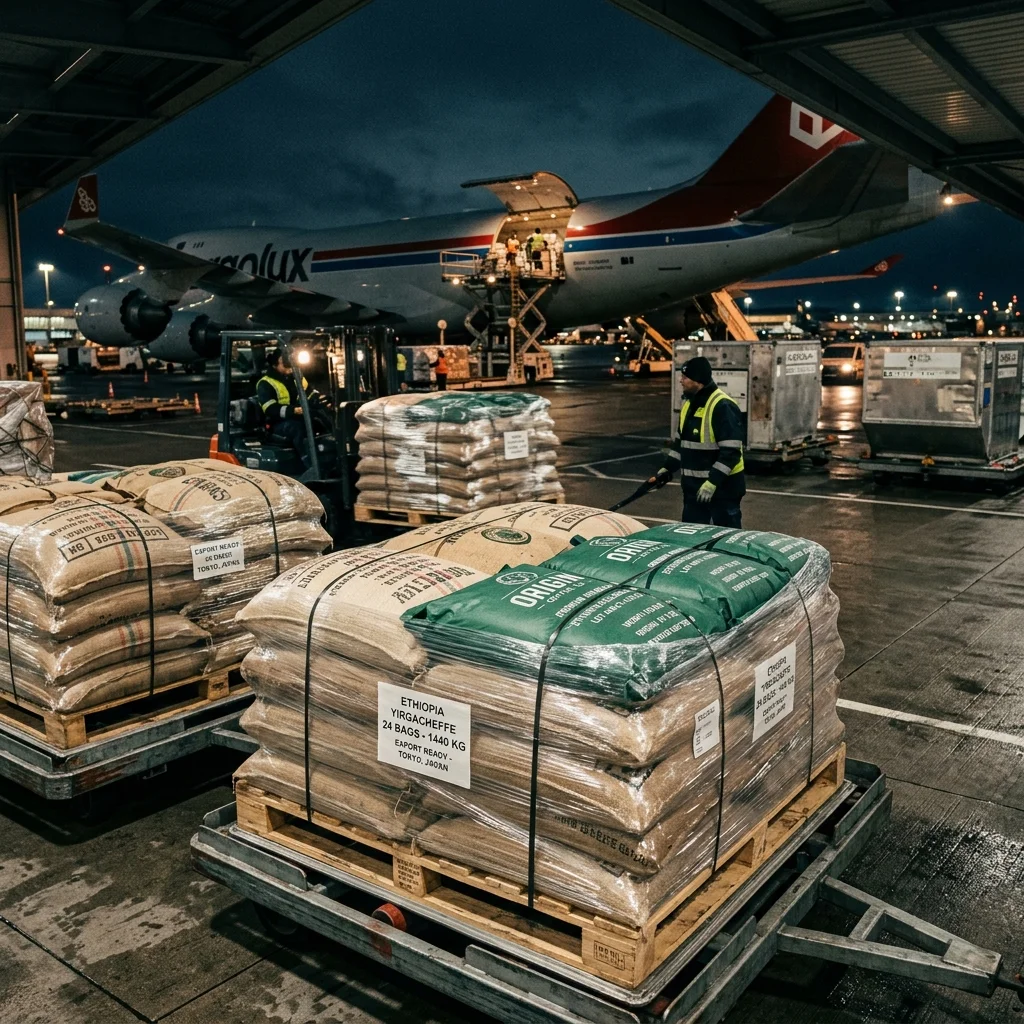
Ecuador’s geography offers a massive logistical advantage for North American buyers. While massive commercial lots still travel by sea, the specialty sector (especially micro-lots and high-value varieties) is increasingly moving via Air Freight.
-
Speed to Roastery: Direct flights from Quito (UIO) or Guayaquil (GYE) to major US and Canadian hubs mean your coffee arrives in 5 to 10 days from the moment of dispatch.
-
Quality Preservation: Air freight minimizes the risk of maritime humidity, extreme temperature fluctuations in containers, and port congestions. Your coffee arrives exactly as it cupped at origin.
-
The Format: We export in vacuum-sealed boxes or GrainPro bags, carefully palletized and wrapped to withstand cargo handling.
3. FDA Compliance & Customs Clearance
The biggest mental hurdle for new importers is the paperwork. “Do I need a special license to import coffee into the US?”
The short answer is: No, as long as your export partner knows what they are doing.
At Cafesure, we handle the heavy lifting on the origin side:
-
FDA Prior Notice: For US-bound shipments, all food imports require an FDA Prior Notice. Our export desk files this electronically before the coffee ever leaves Ecuador.
-
Phytosanitary Certificates: We coordinate with Ecuador’s Ministry of Agriculture (AGROCALIDAD) to issue all mandatory health certificates.
-
Customs Brokerage: While you will need a customs broker on your end to clear the goods upon arrival (a standard, inexpensive service), we provide them with a flawless document packet (Commercial Invoice, Packing List, Bill of Lading/Airway Bill) so the clearance takes hours, not days.
4. The 40kg MOQ: Scalable Volumes
Traditional exporters won’t talk to you unless you are buying a full 20-foot container (19,200 kg). We built Cafesure to serve the scalable mid-market.
Our Minimum Order Quantity (MOQ) is just 2 boxes (40 kg total). This allows craft roasteries to import exclusive micro-lots without tying up excessive cash flow. As your business grows, we scale with you—from a few boxes via DHL/FedEx, to consolidated pallets via cargo airlines, all the way to LCL (Less than Container Load) shipments.
5. How to Start: The Sampling Process
You should never buy green coffee blind. The direct trade journey always starts with the cupping table.
-
Request the Offer List: Contact our export desk to receive the current harvest availability and pricing tiers.
-
Receive Samples: We dispatch 300–350g green samples of our Typica Mejorado, Sidra, Gesha, or regional blends directly to your lab via express courier (3–5 days).
-
Select and Book: Once you approve the cup profile, we draft the contract, vacuum-seal your lot, and prepare the export paperwork.
Ready to streamline your green coffee supply chain? Contact our Export Desk today to discuss your sourcing program.
Ready to taste what you just read?
Request Samples